



BitcoinWorld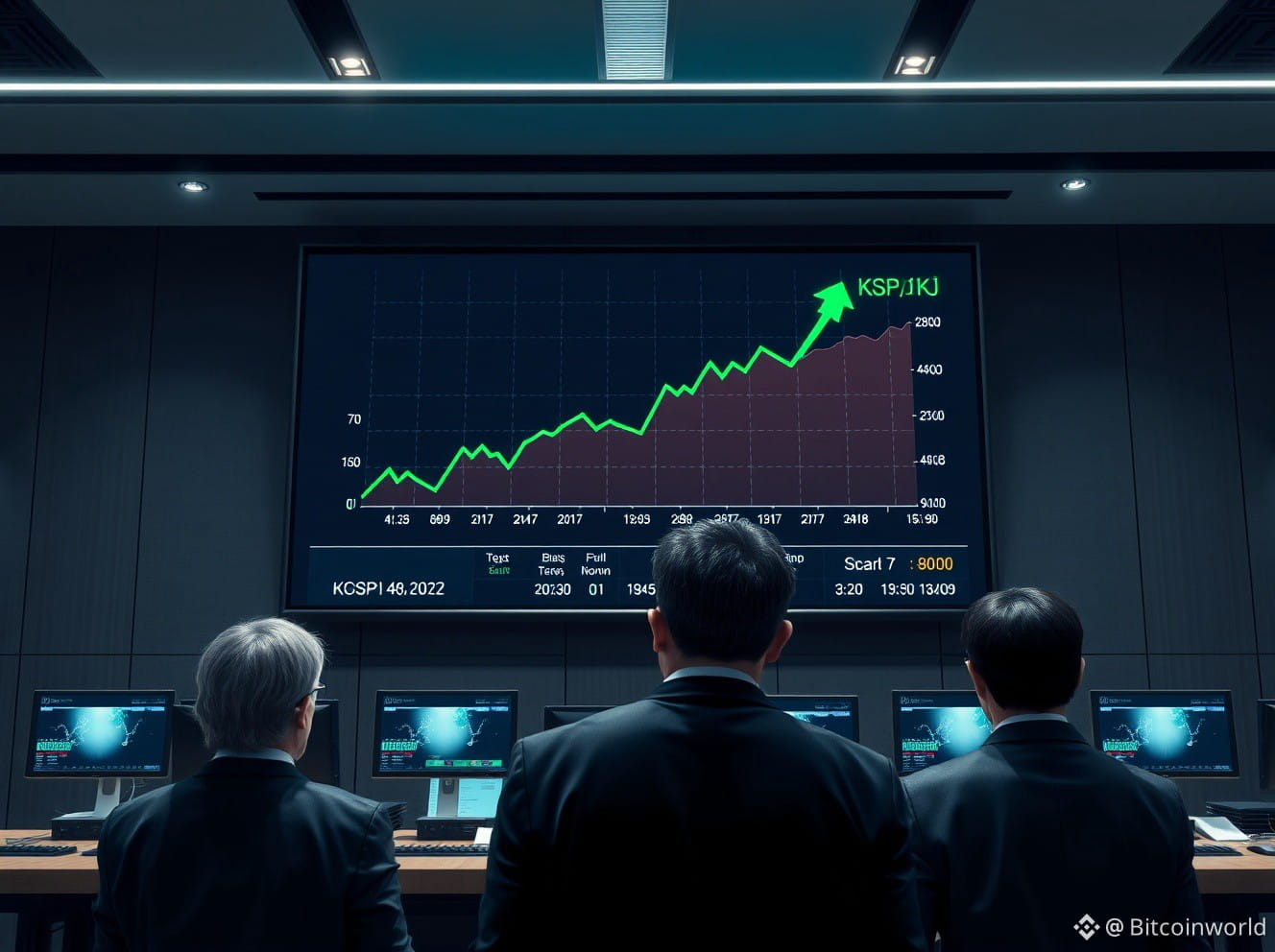 Asian Stocks Surge as KOSPI Skyrockets on Easing Tensions and Powerful Chip Rally
Major Asian equity markets posted significant gains on Tuesday, March 18, 2025, led by a powerful surge in South Korea’s benchmark KOSPI index. This rally was primarily driven by two converging factors: a notable easing of regional geopolitical tensions and a robust, sector-wide advance in semiconductor stocks. Consequently, investor sentiment across the Asia-Pacific region improved markedly, reversing several sessions of cautious trading.
KOSPI Leads Asian Stock Market Gains
The Korea Composite Stock Price Index (KOSPI) closed the session up 2.8%, marking its strongest single-day performance in over three months. This substantial gain propelled the index to its highest level since early February. Market analysts immediately attributed the bullish momentum to concrete diplomatic developments. Specifically, high-level dialogue between key regional powers has de-escalated recent trade and security frictions. Furthermore, institutional investors demonstrated renewed confidence by initiating large net buy orders for blue-chip Korean equities.
The financial sector also contributed to the index’s strength. Major Korean banks and financial holdings companies saw their share prices rise between 1.5% and 2.2%. This upward movement reflected broader optimism about economic stability and corporate earnings prospects. The trading volume on the Korea Exchange exceeded its 30-day average by approximately 25%, indicating strong, conviction-driven buying. Regional peers closely monitored the KOSPI’s performance as a bellwether for Asian market risk appetite.
Semiconductor Sector Rally Fuels Momentum
Parallel to the geopolitical calm, a powerful rally in the global semiconductor sector provided a fundamental boost to Asian technology stocks. This rally originated from stronger-than-expected quarterly guidance from several leading U.S. chip designers. The positive newsflow cascaded across the Pacific, directly benefiting Asian foundries and memory chip manufacturers. South Korea’s Samsung Electronics and SK Hynix, both heavyweight components of the KOSPI, saw their shares jump 4.1% and 5.3%, respectively.
The rally extended beyond Korea. Taiwan’s semiconductor-focused Taiex index advanced 1.9%, with Taiwan Semiconductor Manufacturing Company (TSMC) shares rising notably. In Japan, the TOPIX index gained 1.2%, supported by strength in equipment manufacturers like Tokyo Electron. The following table illustrates the performance of key Asian semiconductor stocks during the session:
Company Country Primary Business Price Change (%) Samsung Electronics South Korea Memory & Foundry +4.1 SK Hynix South Korea Memory +5.3 TSMC Taiwan Foundry +2.7 Tokyo Electron Japan Equipment +2.0
Analysts point to several catalysts for the chip rally:
Strong AI Demand: Unabated demand for high-bandwidth memory and advanced logic chips for artificial intelligence servers.
Inventory Normalization: The cyclical downturn in consumer electronics appears to have bottomed, with inventories returning to healthy levels.
Capital Expenditure Plans: Major firms have reaffirmed aggressive investment plans for next-generation fabrication plants.
Expert Analysis on Market Drivers
Financial experts emphasize the confluence of macro and micro factors. “The market is responding to a dual tailwind,” noted Dr. Li Chen, Head of Asia-Pacific Equity Research at Global Strategic Advisors. “First, the reduction in geopolitical risk premium lowers the cost of capital for export-dependent economies like Korea and Taiwan. Second, the semiconductor cycle is entering a clear upswing, which is fundamental to the earnings trajectory of these markets. The combination is potent.”
Historical data supports this analysis. Periods of eased tensions have consistently correlated with increased foreign direct investment flows into Asian technology hubs. Moreover, the semiconductor industry accounts for a substantial portion of export revenue for South Korea and Taiwan. Therefore, a sector recovery has immediate and magnified effects on their national stock indices. The Bank of Korea’s recent decision to hold interest rates steady has also provided a supportive monetary backdrop for equity valuations.
Broader Asian Market Performance
The positive sentiment emanating from Seoul and the chip sector infected the wider region. Japan’s Nikkei 225 index rose 1.4%, buoyed by tech shares and a slightly weaker yen favoring exporters. Hong Kong’s Hang Seng index climbed 1.1%, with mainland Chinese markets also finishing in positive territory. The CSI 300 index of Shanghai and Shenzhen-listed shares gained 0.8%. Even markets in Southeast Asia participated; Singapore’s Straits Times Index and Australia’s S&P/ASX 200 both closed higher by 0.9% and 0.7%, respectively.
Currency markets reflected the risk-on mood. The Korean won strengthened against the U.S. dollar, while the Japanese yen remained contained. This environment typically benefits regional equities by making foreign investment more attractive and easing financial conditions. However, analysts caution that the sustainability of the rally depends on the durability of the diplomatic progress and the continuation of the global tech upcycle. Monitoring upcoming economic data, including export figures from Korea and Taiwan, will be crucial for confirming the trend.
Conclusion
In summary, Asian stocks experienced a broad-based gain, spearheaded by a significant surge in the KOSPI. This movement was fueled by the powerful combination of easing geopolitical tensions and a vigorous semiconductor rally. The synchronized advance across major indices underscores the interconnected nature of regional markets and their sensitivity to both political and sector-specific catalysts. While the day’s performance marks a strong rebound, market participants will now watch for follow-through in diplomatic channels and corporate earnings reports to validate the optimistic shift. The focus on Asian stocks, particularly the KOSPI surge, highlights the region’s pivotal role in the global technology supply chain and its reactive nature to changing risk appetites.
FAQs
Q1: What caused the KOSPI to surge so strongly? The KOSPI’s strong surge was driven by two main factors: a notable de-escalation of regional geopolitical tensions, which improved investor risk appetite, and a powerful, broad-based rally in global semiconductor stocks, which directly benefits major Korean companies like Samsung and SK Hynix.
Q2: Did other Asian stock markets also rise? Yes, the positive sentiment was widespread. Japan’s Nikkei 225, Taiwan’s Taiex, Hong Kong’s Hang Seng, and mainland Chinese indices all closed higher. Markets in Singapore and Australia also posted gains, indicating a region-wide risk-on trading session.
Q3: Why is the semiconductor sector so important to Asian markets? The semiconductor sector is a critical export engine and a major component of stock indices for several Asian economies, notably South Korea and Taiwan. These companies are global leaders in chip manufacturing, memory, and equipment. Therefore, a rally in chip stocks has an outsized positive impact on their national markets and economic outlooks.
Q4: What are the risks to this market rally continuing? Key risks include a re-escalation of geopolitical tensions, a slowdown in global demand for semiconductors, or a shift in U.S. monetary policy that strengthens the dollar and pressures Asian currencies. The rally’s sustainability depends on continued diplomatic progress and confirmed strength in tech earnings.
Q5: How does easing geopolitical tension affect stock markets? Easing tensions reduce the perceived risk of doing business and investing in a region. This typically leads to a lower risk premium, making stocks more attractive. It can encourage foreign investment, strengthen local currencies, and improve the outlook for trade-dependent companies, all of which support higher equity prices.
This post Asian Stocks Surge as KOSPI Skyrockets on Easing Tensions and Powerful Chip Rally first appeared on BitcoinWorld.