
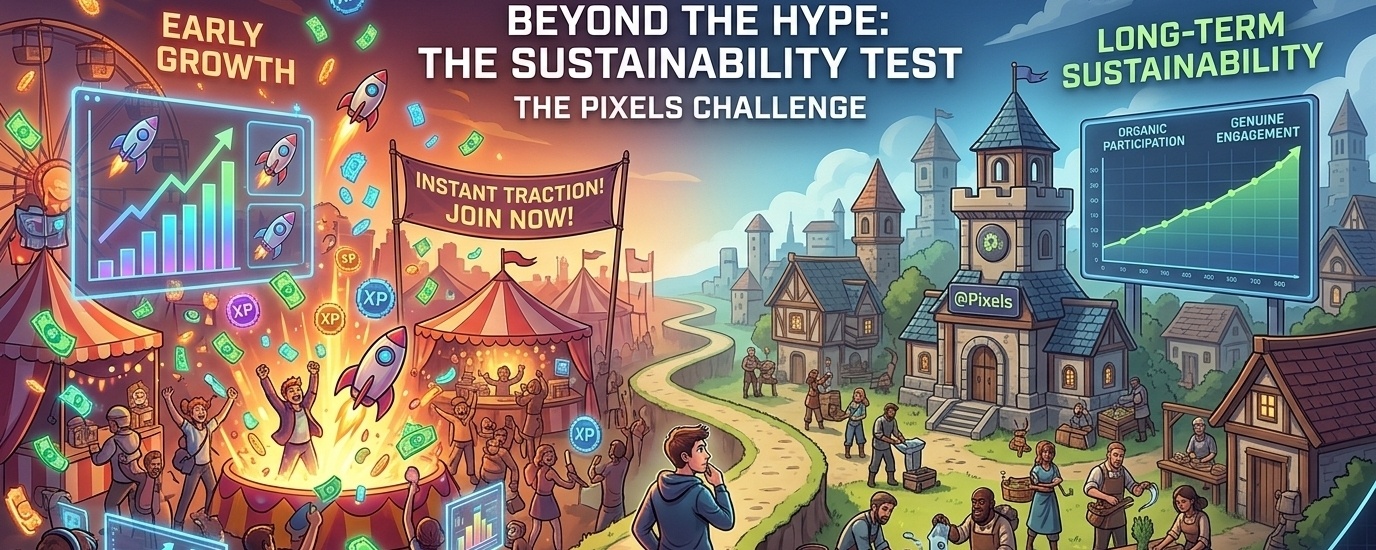
A common mistake in Web3 gaming analysis is placing too much importance on early traction. While initial growth can look impressive, it often doesn’t reflect long-term sustainability. In many cases, early activity is driven by incentives or curiosity rather than genuine engagement.
Over time, this creates a gap between appearance and reality. Once the early momentum slows down, only projects with strong underlying participation continue to hold attention. This is the phase that usually determines whether an ecosystem survives or gradually fades.
When I consider @Pixels from this perspective, the focus shifts away from short-term signals and toward structural design. The key question becomes whether the system can encourage consistent player interaction over time, not just during peak attention.
This is where $PIXEL becomes more relevant in a broader sense. If the ecosystem maintains activity, the token reflects ongoing usage. If not, it risks becoming disconnected from real engagement. That distinction is subtle but important when evaluating long-term potential.