
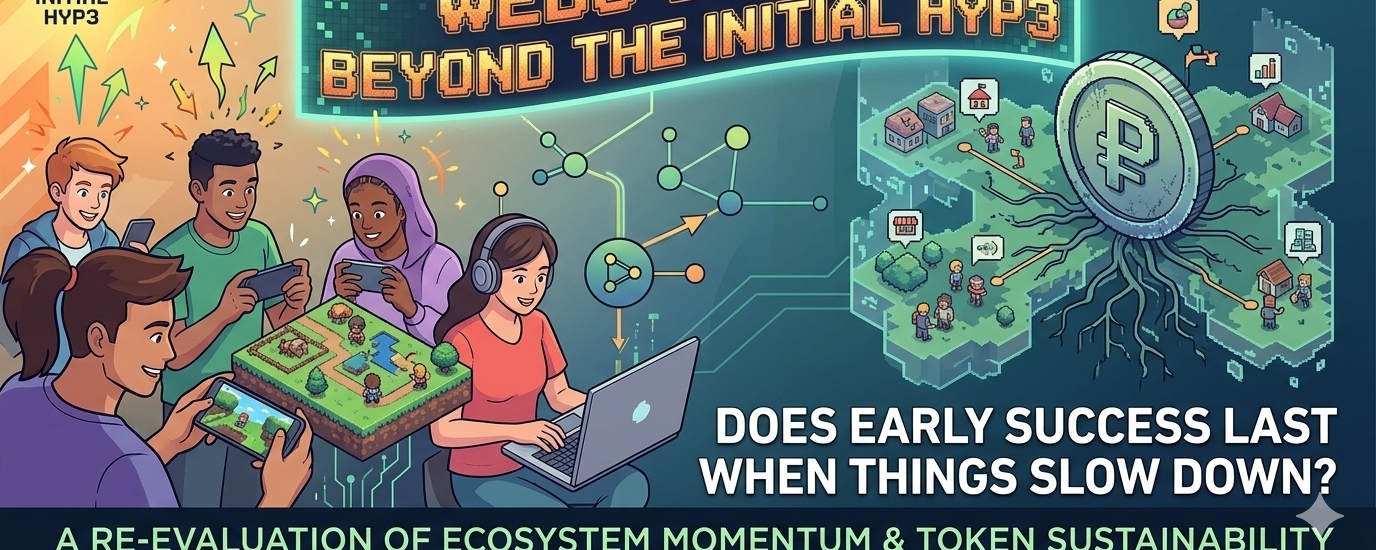
Here’s something I don’t think gets discussed enough — early success in Web3 gaming can be misleading. A project can attract attention quickly, show strong activity at the start, and still struggle to maintain relevance over time.
The reason is simple. Initial engagement is often driven by incentives, curiosity, or speculation. But once those factors fade, only projects with real user involvement continue to hold momentum.
That’s why I’ve been thinking differently about @Pixels . Instead of focusing only on early signals, I’m more interested in how the ecosystem behaves when things slow down. If players remain active and continue interacting, it creates a stronger foundation.
This directly impacts how $PIXEL functions within the system. Its value isn’t just about market attention — it depends on whether the ecosystem stays alive. Without ongoing participation, even strong beginnings don’t mean much.
I’m not saying this approach guarantees success, but it does shift the focus toward something more sustainable than hype alone.