
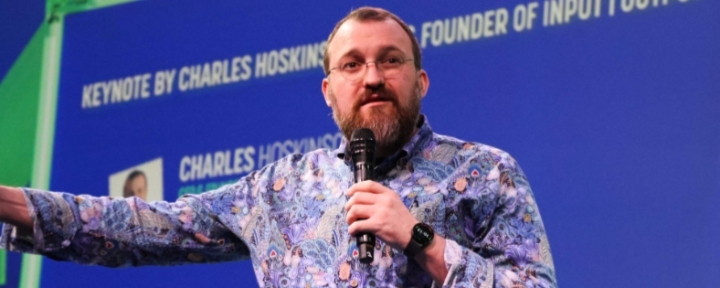
Charles Hoskinson, the founder of Cardano, has sparked fresh debate in the crypto space after raising concerns about the structure and long-term value of XRP.
In a recent podcast, Hoskinson argued that XRP lacks built-in demand drivers that typically support price growth in other cryptocurrencies. He pointed out that XRP does not offer features like staking rewards or ownership rights, meaning holders do not directly benefit from the success or expansion of Ripple.
He further criticized XRP’s initial distribution, claiming that a significant portion of the supply — estimated between 70% and 80% — was allocated to Ripple. According to Hoskinson, the company regularly sells XRP into the market and uses the proceeds to fund its operations, acquisitions, and overall business growth.
This, he explained, creates a “value transfer” where Ripple strengthens its position, while XRP holders do not receive direct financial benefits. He also referenced disclosures from the U.S. Securities and Exchange Commission case involving Ripple, noting that large-scale XRP sales have been part of the company’s strategy.
To illustrate his argument, Hoskinson compared XRP to USDT, stating that just as stablecoin holders don’t benefit from the issuer’s profits, $XRP holders similarly do not gain from Ripple’s business success.
Despite these criticisms, $XRP supporters continue to highlight its strong utility, particularly in cross-border payments and partnerships with financial institutions, as key factors supporting its long-term relevance.
Conclusion
The discussion reflects a broader divide in the crypto industry — whether value should come from utility alone or include direct economic benefits for holders. As debates continue, $XRP remains at the center of attention. #XRP’ #CharlesHoskinson