
I’ve been thinking about PIXELS this closely, and it doesn’t feel like I’m looking at a game anymore. It feels more like watching something quietly move on its own, the way everyday systems do when no one is really paying attention.
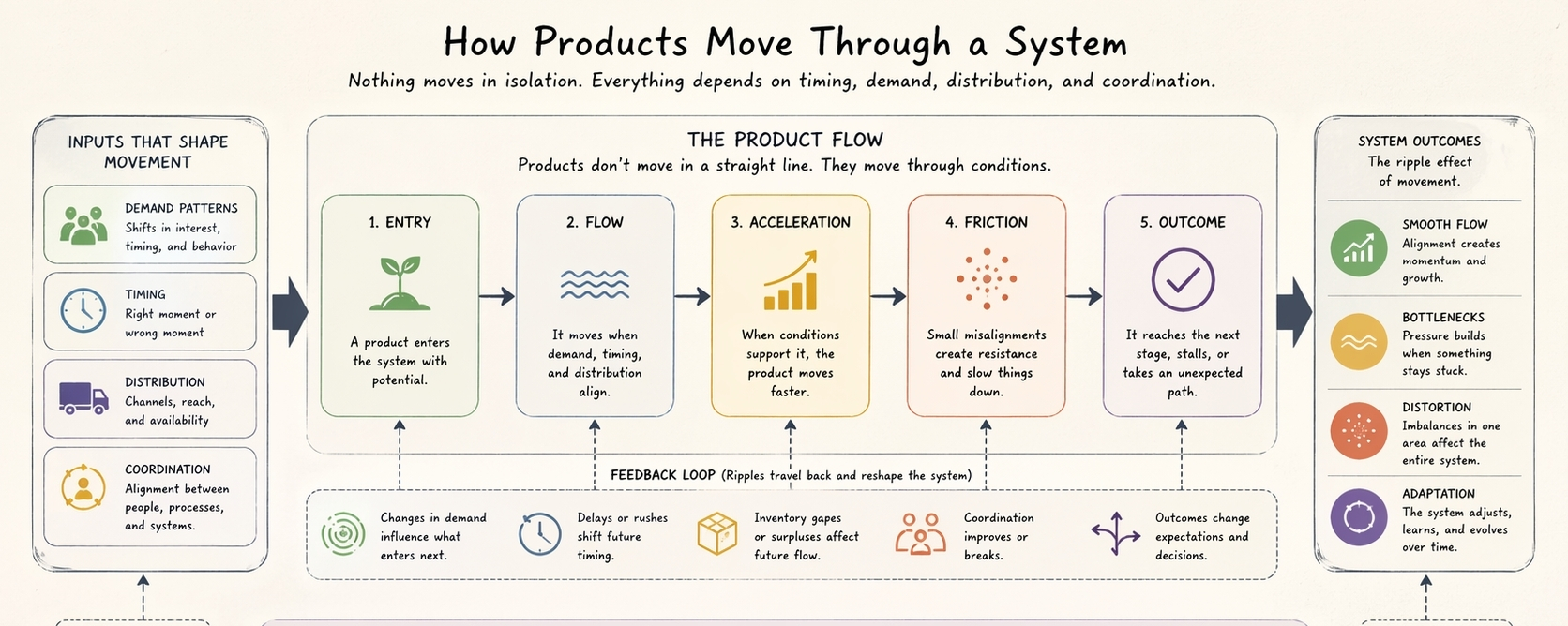
What stays with me is how products don’t really exist on their own. You’d expect them to—each one complete, ready to move when it’s time—but that’s not what actually happens. One product moves quickly, almost effortlessly, while another just sits there, even if there’s nothing obviously wrong with it. And the difference isn’t always clear. It’s usually something small—timing slightly off, demand showing up a little too early or too late, distribution not lining up the way it should.
After a while, it starts to feel less like a straight line and more like a flow that keeps adjusting itself. When one part speeds up, something else slows down. When something gets stuck, it doesn’t just stay there quietly—it begins to affect everything around it. Other products shift to make space, attention moves elsewhere, and before you notice it, the whole system feels slightly different.
I think what makes it interesting is how sensitive it all is. A small imbalance doesn’t stay small for long. It travels. A bit of extra demand in one place can thin things out somewhere else. A product moving too fast can create gaps behind it. And those gaps don’t stay empty—they get filled, sometimes by things that weren’t really meant to be there. So the system keeps correcting itself, but never perfectly.
Then there’s the human side of it. The moment people start trying to improve things, everything changes a little. Decisions become more intentional. People try to predict what will move, what might slow down, where to push and where to wait. But those choices don’t sit outside the system—they become part of it. Trying to optimize the flow ends up changing the flow itself.
And under pressure, all of this becomes easier to notice. The fast-moving products keep going, but sometimes only because they already have momentum. The slower ones start to feel heavier, not just because they’re stuck, but because they begin to influence what happens next. You can almost feel the system stretching to keep things moving, even if it’s no longer as smooth as it was before.
What’s strange is how products seem to change depending on how they move. Something that moves quickly blends into the background. Something that lingers starts to stand out more, even if it wasn’t meant to. It’s not really about what the product is—it’s about how it fits into everything else at that moment.
The more I think about it, the less it feels like something that can be fully controlled. It’s not messy, but it’s not fixed either. It keeps shifting, responding, adjusting to small changes that don’t seem important at first. And over time, it starts to reflect not just the products moving through it, but the way people react to those movements… and how those reactions quietly shape what happens next.