1. General Overview
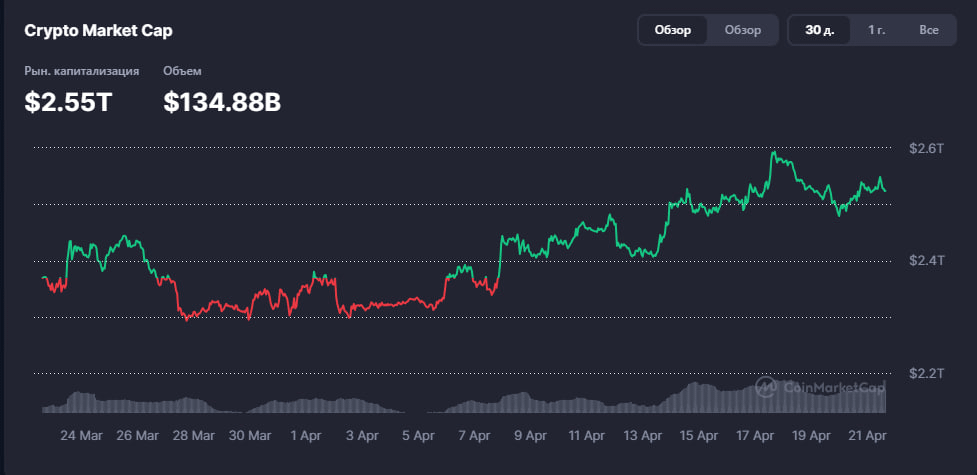
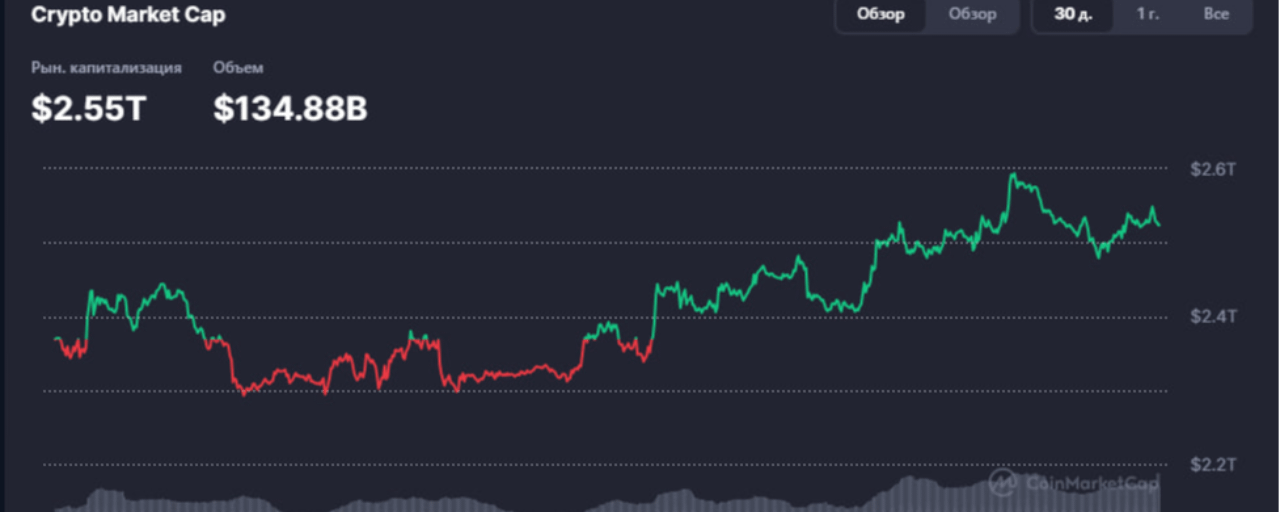
BTC is currently around $75.7k, having risen to $76.8k during the day. This means that the market is holding above the local demand zone, but still remains in a state of nervous volatility: institutional demand is strong, and the external risk environment is still unstable. ETH is trading around $2.30k.
2. Spot ETFs: this is currently the main supporting factor
For American spot BTC-ETFs, on April 20, there was a net inflow of $238.4 million. Previously, there were $663.9 million on April 17, $26.1 million on April 16, $186.1 million on April 15, and $411.4 million on April 14. So over the last five trading sessions, the total net inflow was approximately $1.53 billion. The main driver is IBIT from BlackRock: over the same five trading days, it attracted about $1.13 billion.
For ETH-ETF, the picture is also constructive. On April 20, the net inflow was $67.8 million. Before that, there were $127.4 million, $18.0 million, $67.9 million, $53.1 million, and $9.5 million over the previous trading days. This gives a series of six consecutive positive trading days, and over the last five sessions — about $334.2 million in net inflow.
For Solana ETFs, inflows are present, but the scale is different. On April 20 — $3.1 million, before that $13.0 million on April 17 and $15.5 million on April 16. So there is interest, but it is still not the volume that moves the entire market like BTC and ETH ETFs do.
3. Corporations and large capital
The strongest trigger in the last 24 hours has been Strategy. The company announced on April 20 that it bought 34,164 BTC and increased the total balance to 815,061 BTC. According to market publications, this purchase is approximately $2.54 billion, the largest since the end of 2024. This is an important signal: large corporate capital is not exiting on the rise, but continues to aggressively accumulate.
And here is an important shift: in your source, the figures for Strategy are already outdated. Now you need to rely not on 13,927 BTC and 780,897 BTC on the balance, but on 34,164 BTC of new purchases and 815,061 BTC of total reserves.
4. Market sentiment
The Fear & Greed Index remains in the zone of fear. This means one simple thing: retail is still not in a phase of confident risk, although money from large participants is already coming in. This setup often supports the market better than mass euphoria because growth is not driven by overheated optimism, but against a backdrop of doubts.
That is, in terms of sentiment, the market is currently read as follows:
institutions are buying,
corporations are buying,
retail is still afraid.
This is not the end of the bull cycle. This is more of a phase where the market still needs to be pushed up through distrust. The conclusion here is logical, and this is already my interpretation based on flows and news.
5. Macro background
Macro is still pressing. Reuters and other major publications report that the situation around the Hormuz Strait remains unstable, and the oil market reacts with sharp jumps. Against this backdrop, Brent rose to about $95+. This is bad for broad risk-on, as expensive oil exacerbates inflationary and geopolitical fears.
At the same time, a second important process is happening: major banks are strengthening their presence in crypto-ETF. Goldman Sachs has submitted documents for its first bitcoin ETF product, and Reuters separately reports that this occurred shortly after the launch of the spot bitcoin ETF by Morgan Stanley. This is another marker of the institutionalization of the market.
Regulation needs to be formulated carefully. Correctly: in March, the SEC issued a clarification describing the regime for handling different types of crypto assets and separately used the term 'non-security crypto asset'. This enhanced regulatory clarity, but saying that the SEC has just separately and officially issued a fresh single verdict specifically on Bitcoin is too crude and inaccurate.
6. What does this mean for the market right now
The market is currently standing between two forces:
For growth
strong inflows into BTC-ETF and ETH-ETF;
new large purchase Strategy;
expansion of traditional banks' participation in crypto-ETF infrastructure.
Against growth
expensive oil and geopolitics;
overall risk-off background in foreign markets;
fear among retail investors and high nervousness of movement.
7. Tough conclusion
Basic conclusion: the market does not look weak. It looks constrained, but with strong internal support through ETFs and corporate demand. As long as BTC stays above $75k, the structure remains operational towards holding and attempts to go higher. But this is not a pure impulse market. This is a market where any deterioration in the macro background can quickly return sharp volatility.
In essence:
oil and geopolitics are interfering,
but money from large participants is currently outweighing.
This means that the priority now is not in a blind bearish scenario, but in observing whether BTC maintains streaming demand through ETFs and corporate purchases. So far, it is holding.