
I was fixing a loose hinge on a cupboard this morning, the kind that doesn’t break all at once but slowly shifts out of place. It still works, technically. You only notice the misalignment when you try to close it cleanly and it resists, just slightly. Enough to feel wrong, not enough to call it broken.
Later, I opened the CreatorPad task and landed on the staking panel. One click, then another, moving through the interface almost automatically, like I’ve done in other ecosystems. It felt familiar in a way that should have been reassuring.
While interacting with the staking allocation screen and adjusting the RORS distribution across different games, I paused longer than I expected. The numbers didn’t just respond—they leaned. Even small changes tilted outcomes toward the same few titles. Watching the allocation bars shift in real time, it became clear that the system wasn’t spreading growth outward; it was reinforcing what was already ahead. That moment didn’t feel like optimization. It felt like confirmation.
I don’t think continuous development in ecosystems actually distributes opportunity the way we like to believe. It seems to concentrate it, just more efficiently.
That’s the part that sat with me longer than the task itself. There’s a common comfort in thinking that regular updates, new features, and active tuning naturally create fairness over time. That if something keeps evolving, it must also be improving access. But what I saw in that allocation flow suggested something quieter: development doesn’t just build, it selects. And it tends to select based on what’s already performing.
In the case of Pixels, the structure feels alive and responsive, but also directional. The system doesn’t ignore smaller or newer games, but it doesn’t treat them equally either. The feedback loop between player activity, staking weight, and reward optimization subtly narrows the field. Not aggressively, not in a way that looks unfair on the surface, but enough to shape outcomes over time.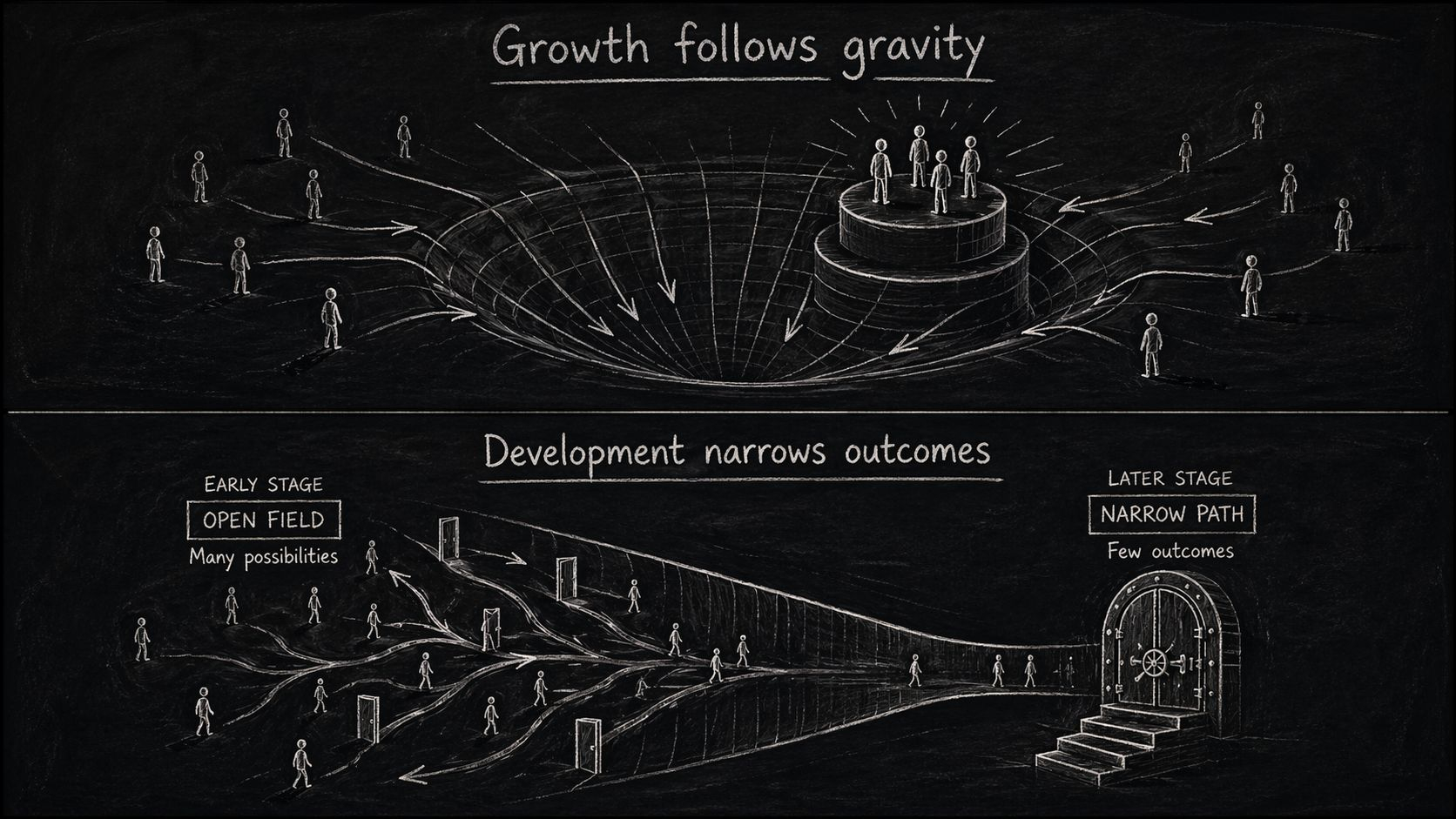
I’ve started to wonder if this is less of a flaw and more of a design truth we don’t like to say out loud. Maybe ecosystems don’t grow like open fields. Maybe they grow like cities, where development tends to cluster, and once something becomes central, it keeps pulling more toward it. Continuous development doesn’t flatten the map—it redraws it, again and again, around the same gravity points.
What made this uncomfortable wasn’t that the system worked this way, but how natural it felt while I was using it. Nothing in the interface suggested imbalance. It all looked smooth, logical, even fair. But the outcome told a slightly different story.
Pixels doesn’t feel broken because of this. If anything, it feels more real. But it also makes me question how often we confuse activity with equality. Just because something is constantly being improved doesn’t mean it’s becoming more evenly distributed.
And if that’s true here, I can’t help but think it’s true elsewhere too.
So I keep coming back to one thought that I haven’t resolved yet: if continuous development keeps rewarding what’s already working, are we actually growing ecosystems—or just refining where the rewards were always going to go?