
I found something interesting in the Pixels whitepaper. It's not about farming or tokens.
It's about data.
Most Web3 games do the same thing. They give rewards to anyone who shows up. You click a few buttons, you get tokens. You leave, you sell. The game keeps paying you even if you never come back.
Pixels realized this was hurting them. Too many players were just extracting value. No reinvestment. No loyalty. Just sell pressure and inflation.
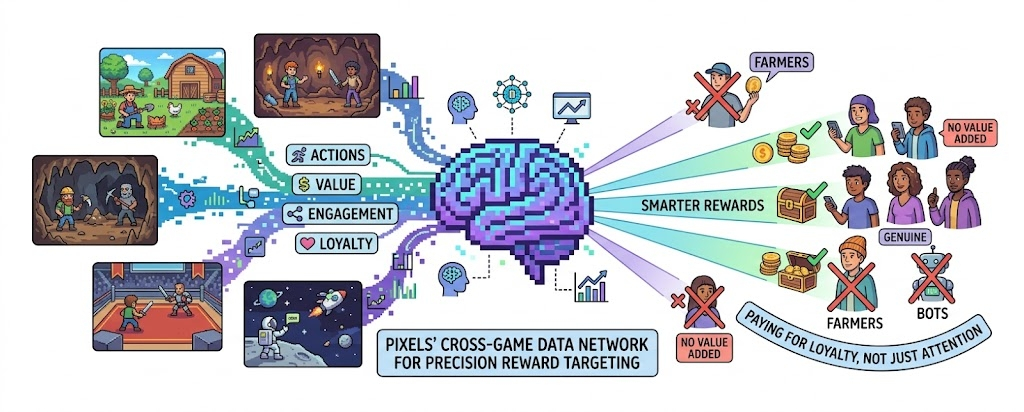
So they flipped the model. Now Pixels tracks player behavior across multiple games in their ecosystem. Not just their own game. Every game that joins their publishing network shares data.
This means they can see who actually adds value. Who plays deeply. Who invites friends. Who creates content. Who sticks around.
And then they send rewards only to those players.
The system works like a smart ad network. Every game sends player action data to Pixels. Machine learning analyzes which actions lead to long-term engagement. Rewards get targeted with precision. No more paying farmers who will dump tokens tomorrow.
What stood out to me is how simple this sounds but how hard it is to build. Most games don't share data. Pixels is making them share.
I think this is smarter than most gaming tokens realize. The old way was paying for attention. The new way is paying for loyalty. And loyalty data from multiple games is way harder to fake.
What stood out is that Pixels is willing to lose users to make this work. That takes conviction.
Cross-game data sharing is still early. But if Pixels pulls this off, they won't just be a game anymore. They'll be the brain connecting many games. And that brain decides who gets paid.
That's a powerful position to hold.
