

Honestly, I used to look at GameFi as a player: where it's more profitable to farm, where there's less pressure on the token. But if you shift the focus to the studio, the picture is harsher - most projects do not earn money; they simply redistribute liquidity through rewards and quickly burn it. In this sense, @Pixels their Stacked looks like an attempt to break this model.
The classic approach is traffic acquisition. The studio pays to attract users, hoping a portion will stick around. In practice, a significant chunk of the budget goes to waste: players come with no intention of staying, the economy fails to 'hook' them, and the money doesn't come back. This creates a gap between expenses and results.
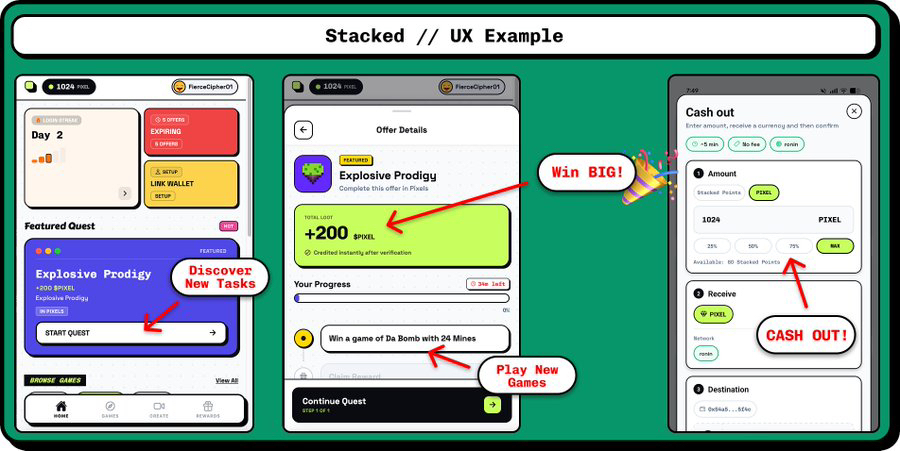
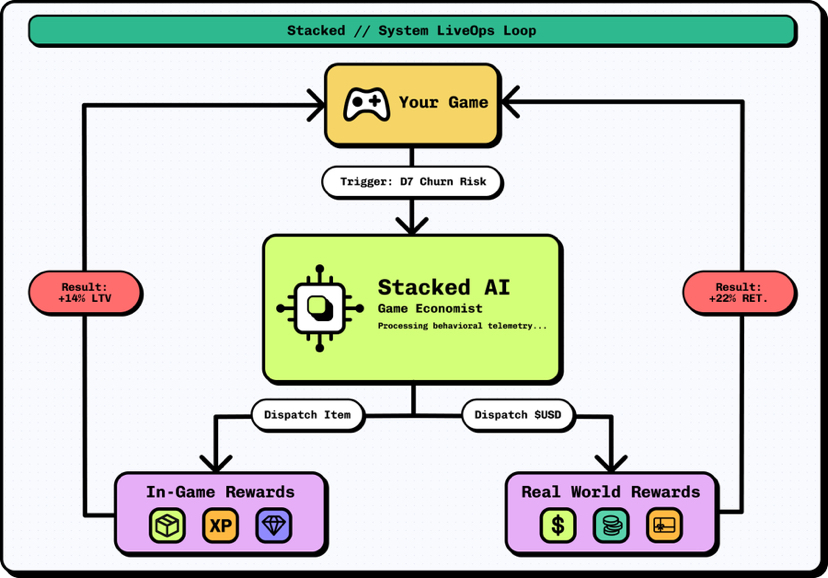
Stacked shifts the budget application point inside the game. Instead of paying for entry, it pays for behavior, but not blindly. The system ties rewards to metrics: retention, return, engagement depth. It's no longer 'did something → got something,' but 'influenced the system → got something.' The difference is that these payouts can be measured and adjusted.
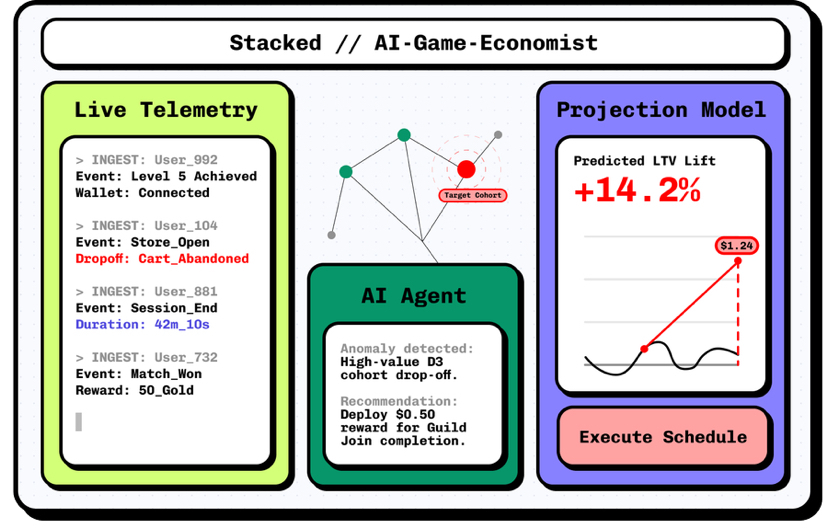
The AI economist here isn't just a decorative layer. It analyzes where the studio is losing money: at what stage retention drops, which actions don't lead to returns, where rewards fail to have an impact. Then come targeted incentives and a rapid testing cycle. A manageable link emerges: behavior → metric → revenue.
And here, the role of $PiXEL is crucial. In the regular model, a token is an expense: it's distributed, it hits the market, and pressure increases. In Stacked, $PIXEL is used as a tool within the system: it enhances the desired actions. If the reward is given on time and to the right segment, the token isn't just 'paid out'; it acts as a lever for retention and engagement. This reduces the share of empty payouts and gives a chance to keep the economy balanced.
A separate layer is the advertising budgets. The industry spends billions on acquisition, but this money settles with the platforms. In the model @Pixels , part of the budget remains inside: redistributed to players through $PIXEL for actions that genuinely affect the product. This isn't charity; it's an attempt to make marketing measurable and manageable.
I don't idealize this approach. Configuration errors can lead to money going to the wrong places. Strong incentives can cause players to game the rewards. Balance is easily disrupted. But even with these risks, the model seems more rational than the classic 'bought traffic - lost half.'
My conclusion: if Stacked maintains the link 'costs → behavior → results,' studios gain a revenue-generating tool, not just a token distribution channel. In this logic, $PIXEL is not just an expense, but a working element of the economy.
