
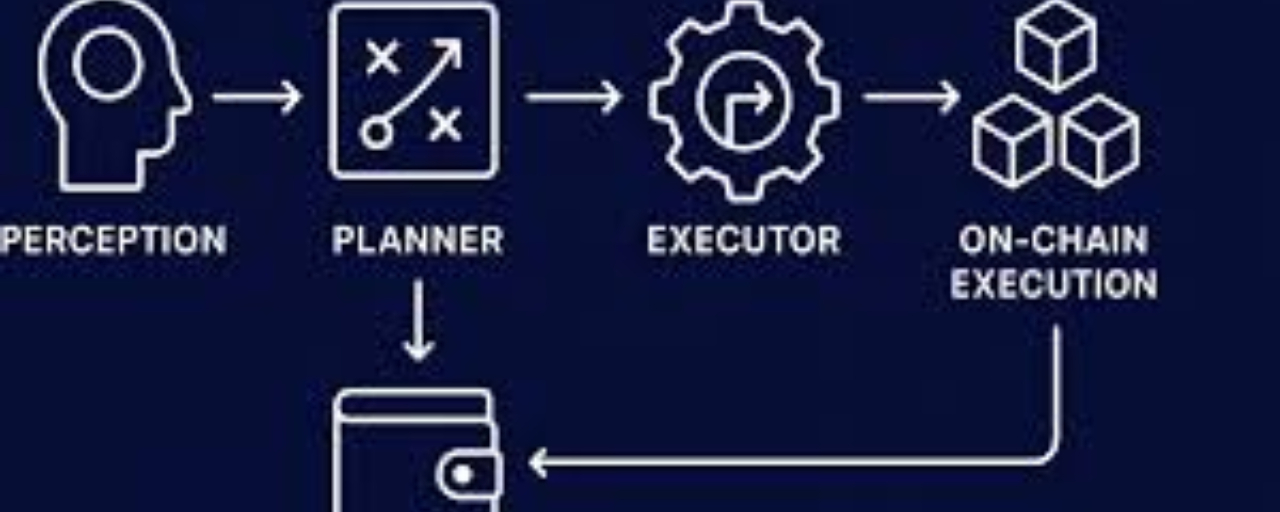
The convergence of artificial intelligence (AI) and cryptocurrency is transforming AI from a passive analytics tool into an active, on-chain participant, with AI agents poised to drive the majority of blockchain transactions by 2030. This synergy does not signal the death of crypto interest; rather, it marks a pivot from speculative trading toward utility-driven "agentic payments" and automated, high-frequency on-chain operations.
How AI Agents Drive On-Chain Transactions
AI agents, autonomous software capable of perceiving, reasoning, and acting, are becoming the primary users of blockchain technology because they require instant, borderless, and permissionless financial rails, which traditional banking lacks.
Autonomous Agentic Payments: Agents can execute 24/7, high-frequency transactions without human intervention. They turn milliseconds into a competitive edge, engaging in micro-optimizations like migrating data to cheaper storage or rebalancing liquidity instantly.
Intelligent DeFi Management: AI agents (like those powered by Coinbase's Agentic Wallets or ElizaOS) monitor DeFi positions 24/7, rebalancing portfolios and executing swaps based on real-time market sentiment and risk profiles, bypassing the manual, emotional limitations of human traders.
Machine-to-Machine (M2M) Economy: AI agents use crypto protocols to pay for their own resources, API access, storage, compute power, without needing a human to manage bank keys.
AI-Driven On-Chain Apps: Agents can deploy smart contracts, launch tokens (such as in memecoin ecosystems), and interact with social media, acting as autonomous economic actors.
Complementary Nature: Why AI Needs Blockchain
AI adoption accelerates crypto interest because AI inherently needs what blockchain provides: trustless, verifiable, and secure infrastructure.
Verifiable AI Outputs (zkML): Zero-Knowledge Machine Learning (zkML) ensures that AI decisions and computations are transparent and trustworthy, mitigating the "black box" problem of AI.
Decentralized Compute & Data (DePIN): AI models, particularly large language models (LLMs), are compute-hungry. Networks like Render and Bittensor turn spare GPU power into a decentralized resource, offering a rebellion against massive centralized cloud providers.
Secure Identity & Accountability: Blockchain provides a permanent, immutable record of agent actions. This allows for "session-based" compliance and reputation systems for agents, crucial for keeping autonomous systems safe.
Why AI Adoption Doesn't Kill Crypto Interest
Rather than replacing crypto, AI adoption is driving the next generation of crypto growth, transforming it from a niche asset class into a foundational technology for a new machine-native economy.
Fundamental Shift in Utility: The research indicates that 2026 will see AI-powered crypto as a "fundamental shift," with agents lowering the bar for developers to launch businesses in days rather than months.
Increased Transaction Volume: The shift toward AI agents is expected to bring a surge in on-chain activity, increasing the demand for blockchain space and reducing transaction bottlenecks, as agents optimize for efficiency.
New Investment Narratives: AI coins are becoming a dominant, explosive crypto narrative, as capital follows the utility of autonomous agents that "think and act".
In summary, AI provides the "brain" (decision-making) while blockchain provides the "body" (execution/accountability), creating a symbiotic, self-sustaining, and highly efficient digital ecosystem.