
When I first looked at the $PIXEL chart, the narrative seemed obvious and, frankly, a bit bleak. The token had touched highs above $1.00, only to settle into the sub-cent range where it sits today. With a market cap hovering around $24.5 million and daily volume at $10 million, the surface-level reading is simple: the hype phase ended, and gravity took over. But after spending actual time inside the game and watching how the mechanics function under pressure, I realized the price chart is the least interesting part of the story.
Most people view $PIXEL as a referendum on whether a Web3 farming game can survive. I see it differently. The game is becoming a laboratory for shaping human behavior within an economy, rather than just acting as a digital currency for buying seeds or land. In most Web3 games, the economy collapses not because people stop playing, but because there is no mechanical friction to stop players from extracting value and leaving. Pixels is trying to solve this by pricing "trust."
The introduction of the staking system in May 2025 was the first sign of this shift. On paper, it looks like a standard yield mechanic: stake your tokens, support ecosystem games, and earn rewards. However, the 72-hour lock-up period after unstaking acts as a "commitment device." It forces players to move away from being spectators and toward being allocators. When I stake my tokens to support a specific game within the Ronin ecosystem, I am making a legible bet on that game’s longevity.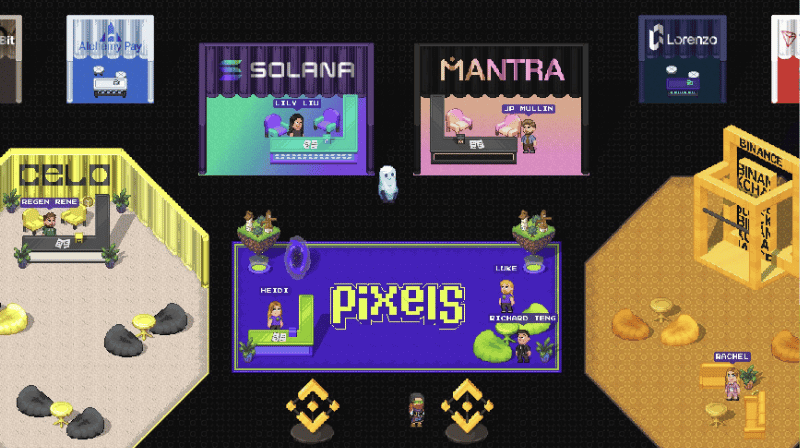
The most aggressive—and arguably most brilliant—move is the Farmer Fee structure tied to reputation. This is where the game moves from "play-to-earn" to "prove-your-worth." If you are a new user or someone with a low reputation score, you are hit with fees between 29% and 49%. If you’ve put in the time, held assets, and contributed to the ecosystem, those fees drop to 5% or 6%. Best of all, 100% of that revenue is cycled back to the stakers.
Think of it like this: if I’m a "tourist" player just looking to dump rewards for a quick profit, the system makes that extraction incredibly expensive. But if I’m a long-term "citizen," I get the best settlement terms in the game. It’s an attempt to make short-termism unprofitable while rewarding staying power.
This level of economic discipline is necessary given the broader market context. We are in an era where capital is clustering around "cleaner" assets. With Bitcoin dominance at 58% and stablecoins like Tether and Circle dominating the $315 billion supply, there is no room for "loose coupons." A game token only survives today if it behaves like a disciplined internal rail.
With over 70 games on the Ronin network and millions of wallet downloads, Pixels isn't just an isolated farm; it's a distribution hub. The risk, of course, is that this reputation system hardens into a rigid class structure that scares off new players. But I would much rather bet on a team that is brave enough to price behavior and friction than a team with a pretty pitch deck and no plan for the "extraction" problem. Pixels is testing whether loyalty can be made legible. Whether it succeeds or fails, it is finally treating game economics with the seriousness the industry deserves.#pixel @Pixels