
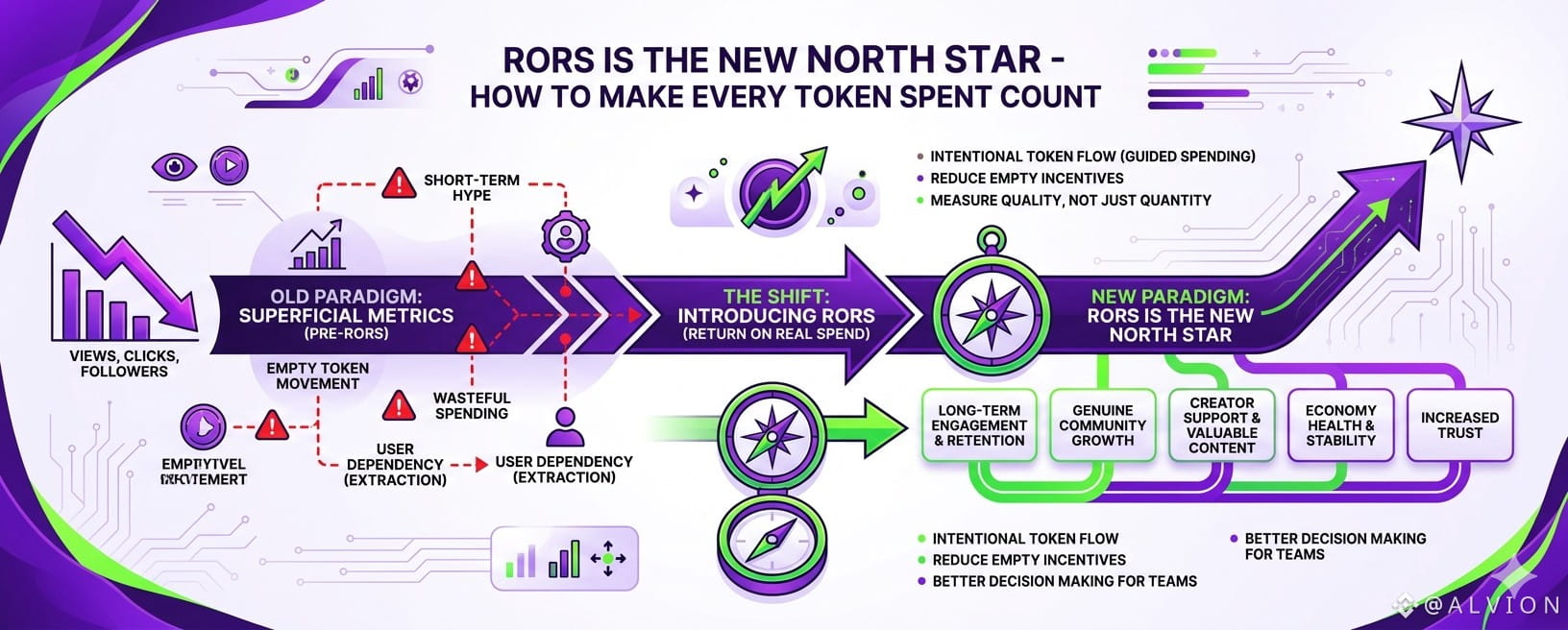

I believe the digital world is changing fast and people now want more than noise hype and empty numbers. For a long time many online projects measured success by views clicks followers and token movement. Those numbers looked strong on the surface but they often failed to show real value. A token could move from one wallet to another many times and still create no lasting impact. A game could show active users but many of them might leave after one short visit. A platform could spend large rewards yet build no true community. This is why a new idea is getting attention now. That idea is RORS.
RORS can be understood as Return On Real Spend. It is a way of asking one clear question. When tokens are spent what real result comes back from that spending. Instead of only counting how much money went out RORS looks at what was created after that cost. Did users stay longer. Did they become loyal. Did the community grow stronger. Did players enjoy the product more. Did the economy become healthier. Did trust increase. These are the outcomes that matter.
This shift is important because many digital projects used to chase speed instead of depth. They rewarded quick actions. They pushed campaigns that created a short burst of activity. They celebrated charts that rose for a day and fell the next week. In that model spending could look successful even when it was wasteful. A large reward pool might bring temporary traffic but no long term value. A token incentive might create farming behavior instead of real participation. RORS challenges that old habit.
Pixels is one of the names helping make this change easier to understand. Instead of treating every token as something to throw into the market and hope for attention Pixels is showing that each token can be connected to purpose. When spending is linked to useful actions the token becomes more than a reward. It becomes a tool for growth balance and stronger engagement.
To understand why this matters we need to look at how many ecosystems fail. Often projects launch with energy. They attract users through rewards. Early numbers rise quickly. Then users begin to leave when rewards slow down. The team responds by spending more. Numbers rise again for a short time. Then the cycle repeats. This creates dependency. Users come for extraction not contribution. The project keeps paying but receives less value each round. Over time trust weakens and resources drain away.
RORS tries to break that cycle. It says spending should be measured by quality not only quantity. If ten tokens create one loyal user who stays for months that may be better than one hundred tokens spent on visitors who disappear tomorrow. If a reward improves behavior and strengthens community culture it may be more valuable than a larger reward that attracts spam. RORS changes the lens from short term volume to lasting outcomes.
Pixels appears to understand that modern communities are smart. Users can tell when a system only wants headlines. They can also tell when a project is building carefully. When rewards are fair meaningful and tied to useful actions users feel respected. That respect becomes retention. Retention becomes culture. Culture becomes resilience.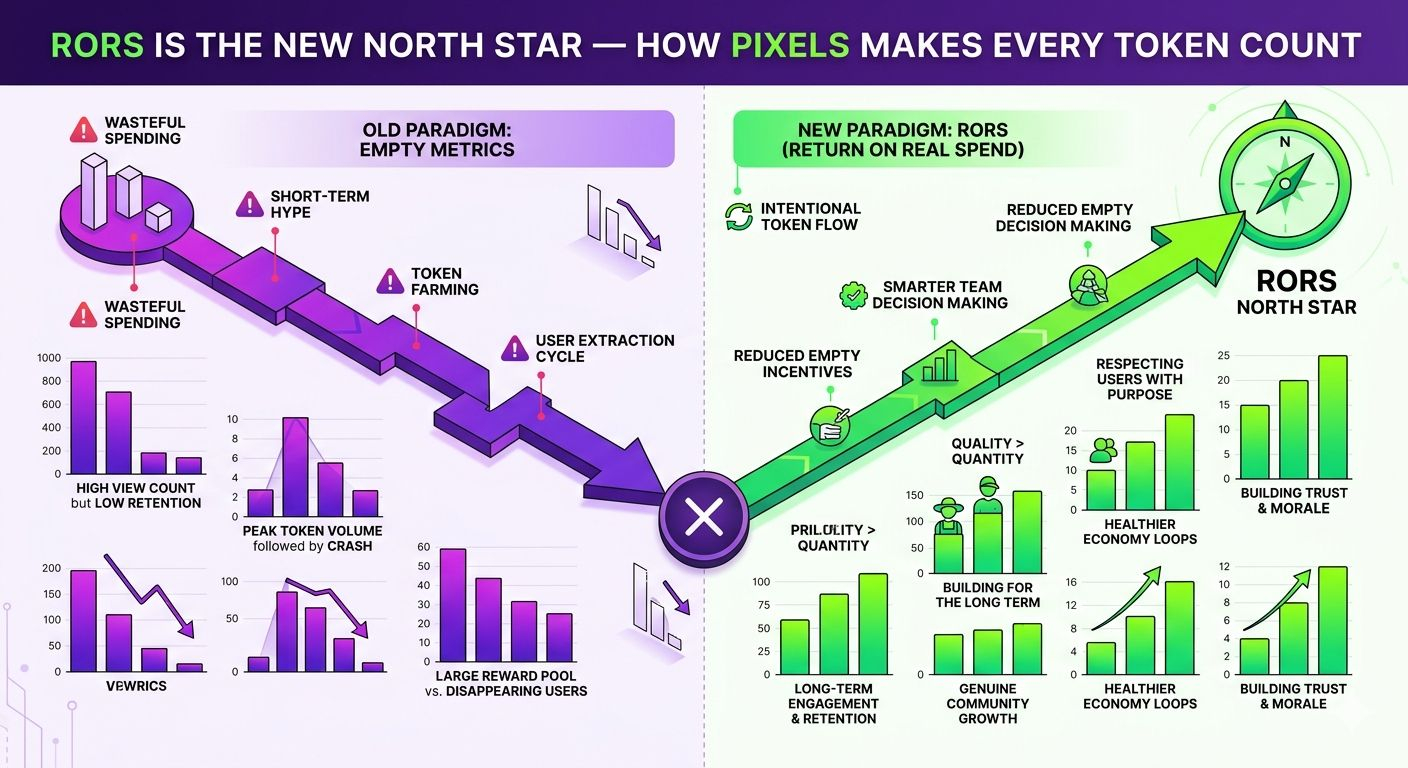
One strong part of this model is intentional token flow. Tokens should not move randomly. They should move where they can improve the ecosystem. For example if tokens are used to reward active creators builders traders farmers or players who add genuine value then the spend has direction. It supports behaviors that help everyone. That creates healthier loops inside the economy.
Another key idea is reducing empty incentives. Empty incentives are rewards with no deeper purpose. They may produce fast numbers but weak foundations. If people only click because they are paid to click the action has low meaning. If users only log in for a claim button the engagement is shallow. Pixels seems focused on making rewards connected to actions that matter. That can include progress contribution skill consistency teamwork and long term participation.
RORS also supports better decision making for teams. When leaders only track surface metrics they may keep repeating expensive mistakes. But when they ask what true value came from each spend they learn faster. They can compare programs. They can improve weak systems. They can remove waste. They can scale what works. This creates smarter growth rather than louder growth.
For users this approach can feel better too. Many people are tired of platforms where rewards seem random or unfair. They want systems where effort has meaning. They want time spent to connect with progress. They want economies that feel alive rather than manipulated. When token spending is thoughtful users notice it. They feel that the platform values real participation.
There is also a trust element here. In digital economies trust is one of the most valuable assets. If users think tokens are constantly wasted confidence drops. If they believe emissions are careless or rewards are unsustainable they may leave. But when spending appears measured and strategic confidence can rise. People are more willing to stay in ecosystems that manage resources wisely.
Pixels helping push RORS thinking may also influence other projects. Good ideas spread when they solve common problems. Many teams today face the same challenge. They have communities to grow and limited resources to use. They need ways to reward users without damaging long term balance. They need metrics beyond vanity numbers. RORS gives a framework that many can understand.
This does not mean every spend must show instant profit. Some of the best returns take time. Community building takes time. Education takes time. Habit formation takes time. Product love takes time. RORS is not only about fast revenue. It is about meaningful outcomes over time. That can include stronger retention healthier economies better user experience and deeper loyalty.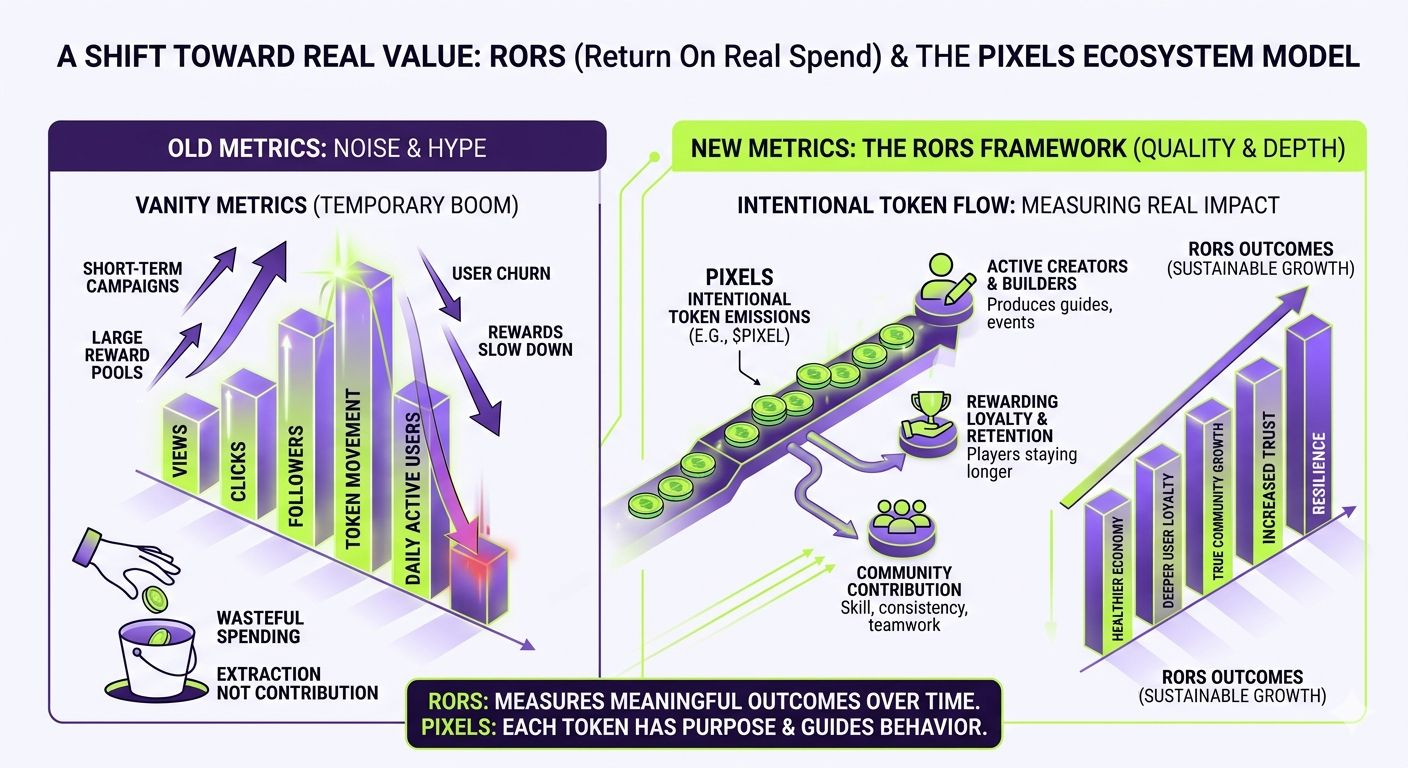
A useful example is onboarding. Imagine two methods. One gives a large reward to anyone who signs up. Many join and many leave. Another gives smaller rewards tied to learning the system completing useful tasks and returning over several weeks. The second method may cost less and create better users. Under old metrics the first might look stronger because signup numbers are high. Under RORS the second may clearly win.
Another example is creator support. If tokens are spent to help creators make guides content events and tutorials the whole ecosystem benefits. New users learn faster. Community energy rises. Knowledge spreads. That spend can create compounding value. One creator effort can help thousands of people later. This is a strong return that surface metrics might miss.
RORS can also improve fairness. When spending is tracked by real impact it becomes easier to reward genuine contributors instead of opportunists. This helps serious members feel seen. It reduces frustration. It can improve morale across the community.
The phrase North Star is powerful because a North Star gives direction. In confusing markets people need a stable guide. Prices move up and down. Trends come and go. Narratives change weekly. But real value remains important in every cycle. If RORS becomes a guiding principle then teams have something solid to follow even during noise.
Pixels showing how every token spent can count is also a reminder that digital assets are resources not decorations. Resources should be used with care. They should solve problems create incentives align people and support progress. When tokens are treated seriously ecosystems become stronger.
There is a wider lesson here for the future of web based economies. Early phases often focus on excitement. Later phases focus on sustainability. That is normal in many industries. First comes experimentation. Then comes discipline. RORS feels like part of that second phase. It suggests the market is maturing. People now ask harder questions. What works long term. What creates genuine value. What deserves continued support.
Users today are more experienced than before. They have seen projects rise and disappear. They have seen rewards programs fail. They have learned to look deeper. Because of this smarter metrics matter more than flashy announcements. Communities respect projects that think long term.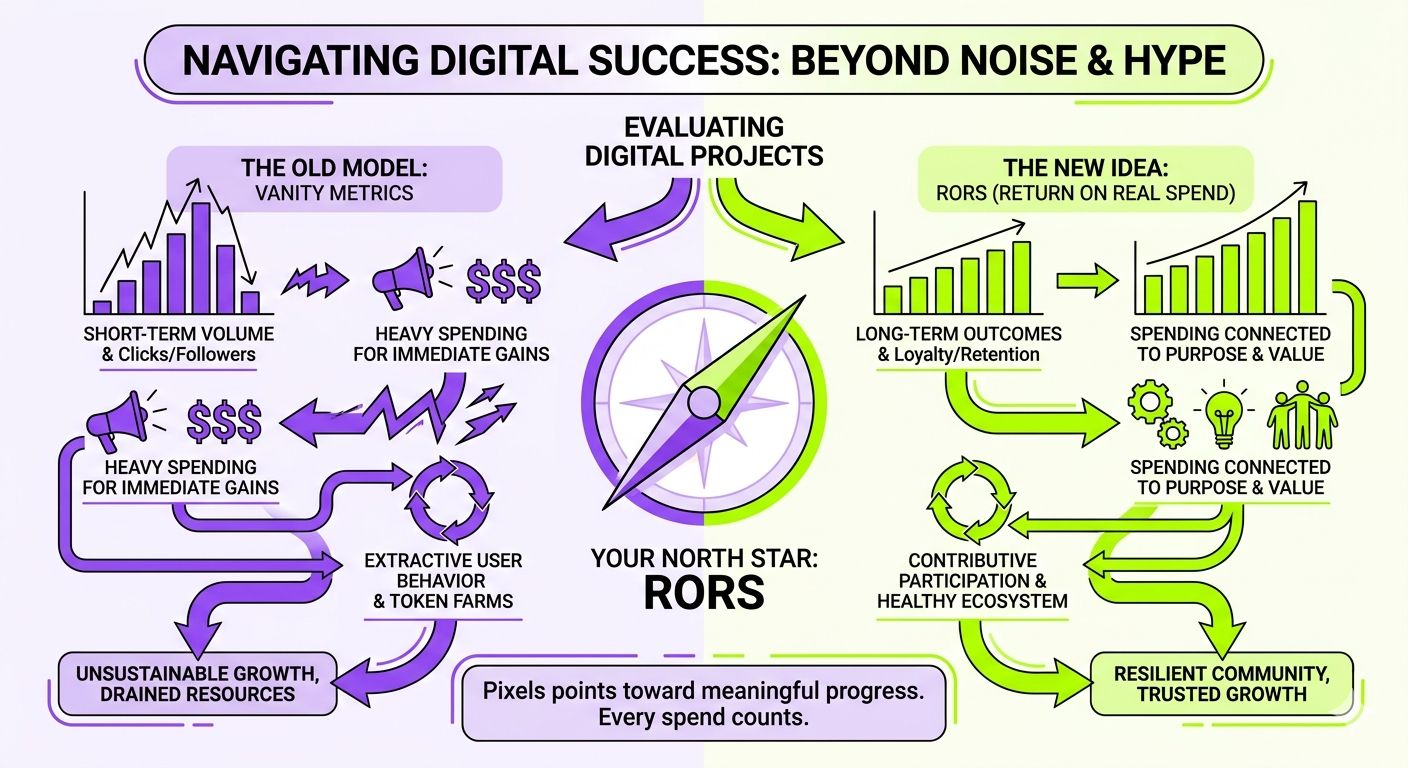
If Pixels continues to connect spending with real outcomes it may help set standards others copy. Standards matter because they shape behavior across sectors. When one project proves efficient spending can build stronger loyalty and healthier activity others often learn from it.
At the personal level this idea matters for every participant too. Whether someone is a player investor builder or community member they should ask where value is being created. Are tokens helping the ecosystem grow or just moving around. Are rewards building habits or just attracting temporary traffic. Are resources being used to improve the product or only to create headlines. These questions help people judge quality.
RORS is simple in spirit even if detailed in practice. Spend with intention. Measure what matters. Reward value. Build for the long term. Protect resources. Respect users. Improve the system each cycle. These ideas are not flashy but they are powerful.
In many ways this is a healthier path for digital economies. Instead of endless chasing of bigger numbers it encourages better numbers. Instead of noise it supports clarity. Instead of waste it supports design. Instead of temporary attention it supports lasting connection.
Pixels being linked with this mindset shows that token systems do not have to be careless. They can be smart structured and useful. Every token can carry purpose. Every reward can guide behavior. Every spend can be tested improved and refined.
That is why RORS feels like a North Star now. It points away from empty movement and toward measurable value. It helps teams focus. It helps users understand quality. It helps communities demand better standards.
The future may belong to projects that learn this early. Not the loudest projects. Not the fastest projects. Not the ones with the biggest short term campaigns. The winners may be those who know how to turn each token into real progress.
Pixels seems to be part of that conversation and that is why many people are paying attention. When every token spent actually counts the whole ecosystem becomes stronger more trusted and more sustainable. In a world full of noise that kind of direction matters a lot...!!!
