
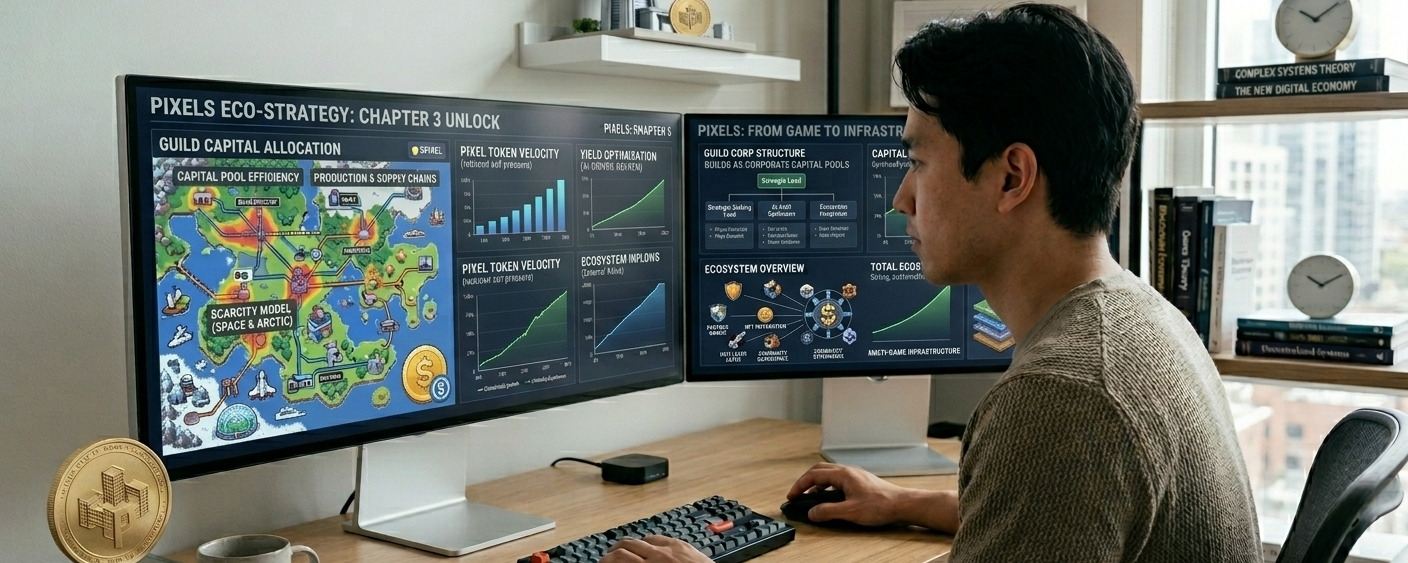

What Chapter 3 really introduced isn’t just new content, it’s a structural shift. The game has moved from simple farming loops into a layered economic system where players coordinate supply chains, manage resources, and operate like digital businesses rather than casual farmers . Guilds now behave more like capital pools, staking $PIXEL collectively and optimizing yield across activities, while new lands like Arctic and Space expand scarcity and production dynamics .
The biggest unlock is how rewards are handled. Instead of recycling inflation back into the token, Pixels is pushing external value like stablecoin rewards and multi game staking, reducing constant sell pressure and giving $PIXEL a more durable role inside the ecosystem . That single shift changes everything because it aligns player behavior with long term sustainability instead of short term extraction.
At the same time, the ecosystem is expanding beyond one game. Pixels is positioning itself as a distribution layer where multiple games plug into the same token and user base, effectively turning PIXEL into an index of activity across a growing network . That’s a very different model compared to isolated GameFi economies that collapse once attention fades.
My take is simple. Pixels is one of the few projects that actually understood why early Web3 games failed and adjusted at the system level. This is no longer about play to earn, it’s about building a closed loop economy where time, coordination, and capital all have real weight.
If they execute on multi game expansion and keep tightening the reward logic, Pixels stops being just a successful game. It becomes infrastructure for Web3 gaming itself. And that’s where the real upside sits.
