

Something has quietly shifted inside @Pixels and it’s bigger than just another update.
The T5 era is changing how the game is played. It’s no longer about who grinds the most. It’s about who understands the system better.
That shift may feel subtle at first, but over time, it creates a clear divide between players.
Right now, two distinct types are emerging.
The first are the earners.
They follow familiar loops: farm, craft, sell, repeat. Their approach is consistent and effort-driven.
The logic is simple the more time you put in, the more you get out. And early on, that works. It builds progress and creates a sense of stability.
But there’s a ceiling.
Because when rewards depend only on repetition, growth eventually slows.
Margins shrink, competition increases, and the same effort starts producing weaker results.
The system doesn’t reward effort alone forever.
Then there’s the second group.
The system readers.
They don’t just play they observe. They track supply, notice demand shifts, and pay attention to inefficiencies. Instead of asking “What should I do next?”, they ask “Where is value about to move?”
That difference is where the edge forms.
Two players can spend the same amount of time in game and walk away with completely different outcomes.
Not because one worked harder but because one thought differently.
This gap becomes clearer with features like deconstruction.
At a glance, it looks like a simple utility. In reality, it changes behavior. It allows players to recover resources, correct mistakes, and reposition without starting over.
For grinders, it’s convenience.
For system readers, it’s strategy.
It turns experimentation into an advantage rather than a risk.
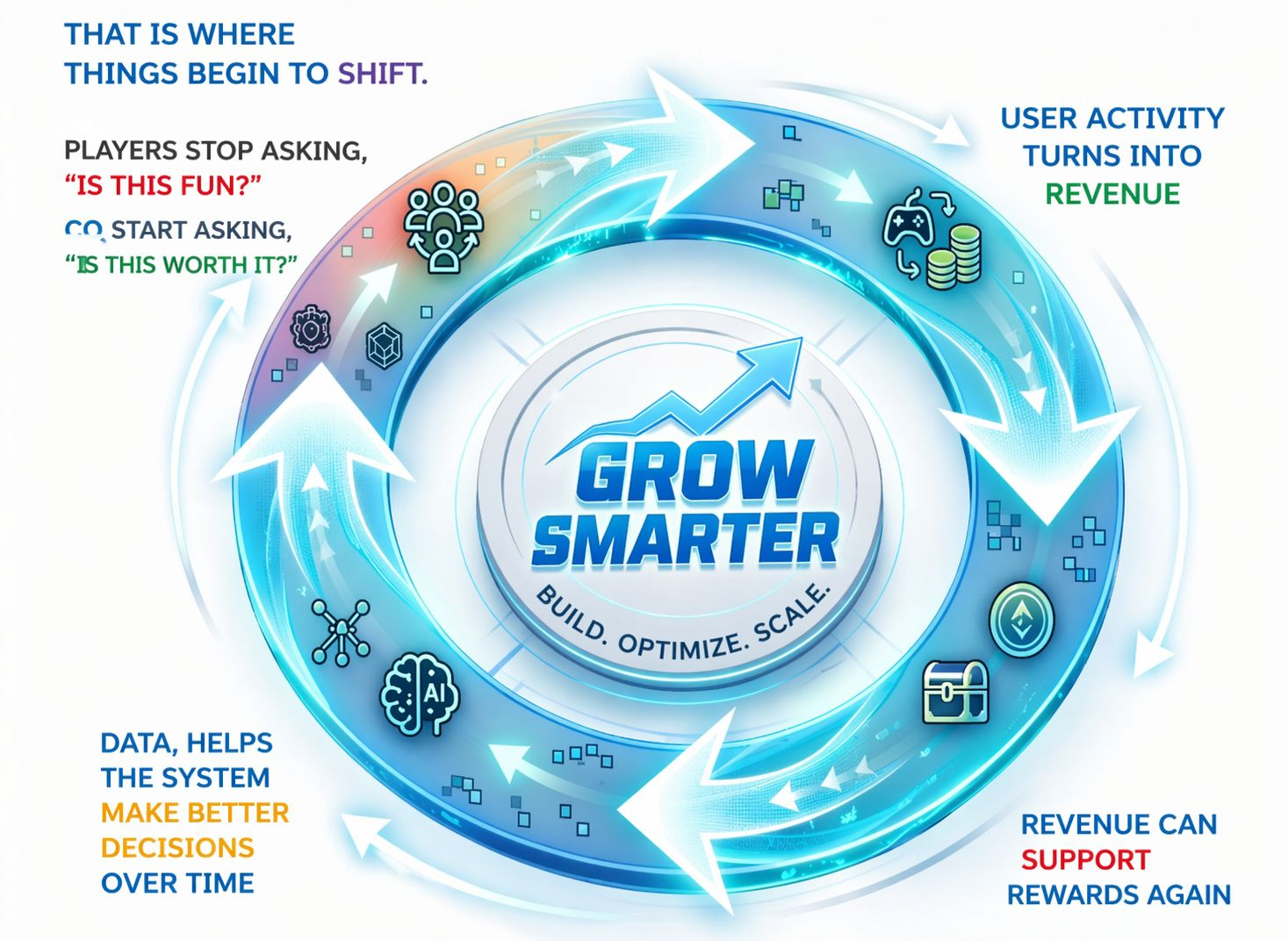
At the same time, updates like Winery expansions and Forestry buffs increase overall activity. More players produce more resources, and the economy becomes more active.
But activity doesn’t always mean value.
When supply rises too quickly, oversaturation follows. Prices drop.
Margins tighten. Players doing the “right” things suddenly earn less for the same work.
This is where many earners feel stuck trapped in loops that no longer pay the same.
System readers don’t wait for that moment.
They move before it happens.
They anticipate where saturation will hit and adjust early.
They look for gaps, bottlenecks, and underused opportunities. Instead of competing in crowded lanes, they shift to where attention hasn’t gone yet.
They’re not reacting to the system.
They’re staying ahead of it.
Now add another layer: new players.
With fiat onboarding increasing, accessibility is expanding. More players means more activity, more trades, and deeper liquidity. But it also introduces instability.
New entrants often overproduce, underprice, and move unpredictably. Markets fluctuate faster. Short-term inefficiencies appear more frequently.
For routine players, this creates uncertainty.
For system readers, it creates opportunity.
Because volatility isn’t just disruption it’s movement. And those who understand movement can position around it.
All of this signals a larger transformation.
Pixels is no longer just a simple play-to-earn loop where effort guarantees results. It’s evolving into a dynamic system one where awareness, timing, and decision-making define outcomes.
But effort without understanding is losing its edge.
And as the system grows more complex, the gap between these two player types will only widen.
So the real question isn’t who is playing more.
It’s who actually understands what they’re playing.