


A buddy of mine, nicknamed 'Ah Shui', has been in the cryptocurrency circle for almost four years. If you ask him how many coins he has traded, he will scratch his head and tell you he can't remember; but if you ask him how many Discord communities or TG groups he has joined, he can pull out his phone and list them for you — from DeFi to NFT, from GameFi to Meme coins, this guy is like a stamp collector, he has to dip his toes into every circle.
Last week he invited me to dinner, and I caught a glimpse of his phone screen showing @Pixels . I said, didn't you stop playing this game a long time ago? Didn't you complain last year that this game was too grindy and farming felt like a job? He chuckled and handed me his phone: 'Look at this.'
On the screen is a Pixels 'guild' page. He pointed at the numbers in the bottom right corner and said, 'See, I bought five guild memberships for about 300,000 BERRY. Now three of them have doubled, and one has increased five times. I'm waiting for it to continue rising, and once it does, I'll sell it.'
I was stunned for about three seconds. What the heck? Can you really speculate on 'guild membership' while playing games?
He said, 'You're outdated. The guild system that Pixels launched at the end of last year is quite similar to FriendTech—the gameplay is that you spend money to buy a membership in a certain guild, and the price is set by the bonding curve; the more people buy, the more expensive it gets. If you don't want to stay, you can sell it, with a 5% fee shared between the guild and the platform. Think about it, isn't this just speculating on social traffic?'
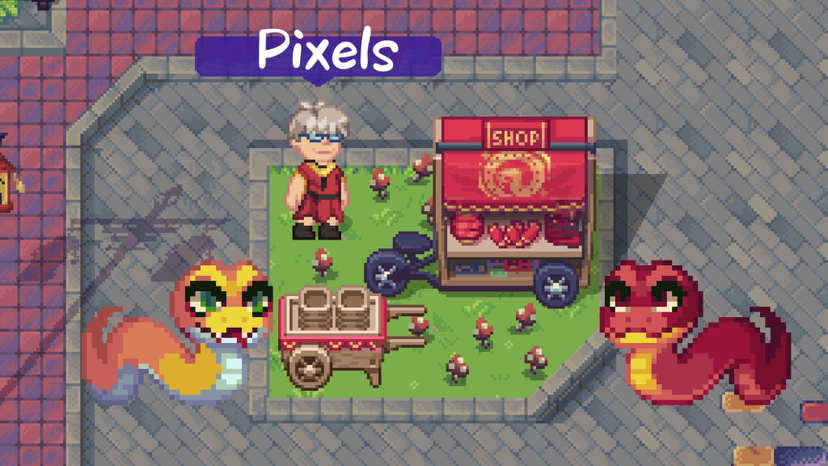
I looked it up, and it really is. In November 2024, #pixel the guild system will officially launch, drawing on the design logic of FriendTech and Stars Arena—turning community membership into a tradable asset. Players spend BERRY to buy guild codes, gather enough people to obtain the guild charter, and then they can officially operate. The top 20 largest guilds can also get the charter and early access for free. Within the guild, there are five role levels, from supporters to owners, each with their own responsibilities.
A Shui says he doesn't play games anymore; now he plays 'buying guilds.' He watches the member growth and membership price fluctuations of the guilds every day, buying low and selling high, like a mini VC. He thinks it's more interesting than speculating on coins—'You can't see or touch coins, but guilds have real people chatting, teaming up, and completing tasks inside. You just need to take a look at Discord to know if this guild is worth it.'
To be honest, his way of playing has indeed made me reevaluate the guild system in Pixels. In traditional games, guilds are just a chat and team-up function module. But under the joint curve model of Pixels, guilds have become a micro social capital market—the value of a guild no longer only depends on its combat power in the game, but on how many real people and social relationships it gathers.
There is a bigger ambition behind this @Pixels . An analysis article in mid-2025 mentioned that Pixels plans to introduce a new 'faction system' on top of the existing guilds in Chapter 3, providing players with clearer faction choices. The combination of factions and guilds essentially creates artificial social stratification and a sense of belonging in the open-world farm of Pixels—you have to choose a side, have your own people, and have rivals. With opposition, there are stories; with stories, players are willing to stay. Pixels CMO Heidi Christine frankly stated in an industry share in 2025: 'Growth is meaningless; growth without retention is simply a waste.' The value of guilds lies precisely in their ability to bind the community together with economic interests.
Of course, A Shui's way of 'speculating on guilds' also carries risks. The joint curve is bidirectional—when more people buy, the price rises, but once a large number of members leave, the price can crash. Whether the few guilds he bought can hold up depends on whether the guild operators have the real ability to build the community. Moreover, the guild system itself is still iterating; the update in July 2025 mentioned that the faction system will 'create more dynamic endgame content,' meaning the functions and positioning of guilds may change.
But anyway, A Shui no longer complains that 'farming feels like working.' He is now the 'guild landlord' in @Pixels , playing another game.
He said, 'In the past, I played games, but now that I've bought a guild, I feel like a small shareholder.'
I don't know if this investment will make money in the end. But at least, Pixels has transformed him from a 'player who just wants to take advantage' into a 'person willing to study the community.' For Web3 games, being able to turn people from speculators into co-builders is probably half the victory. $PIXEL
