
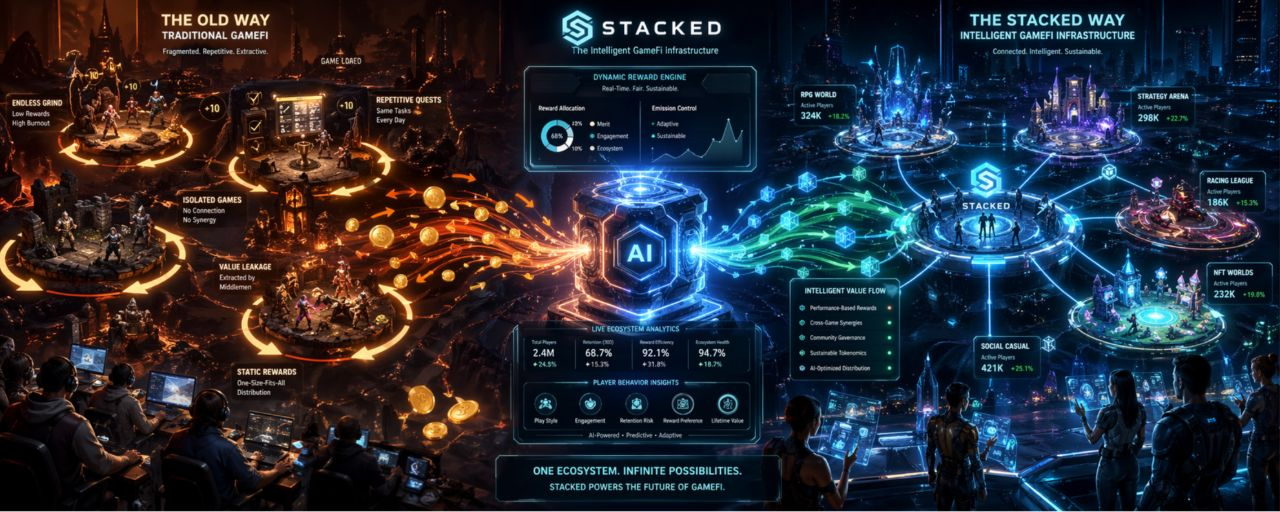
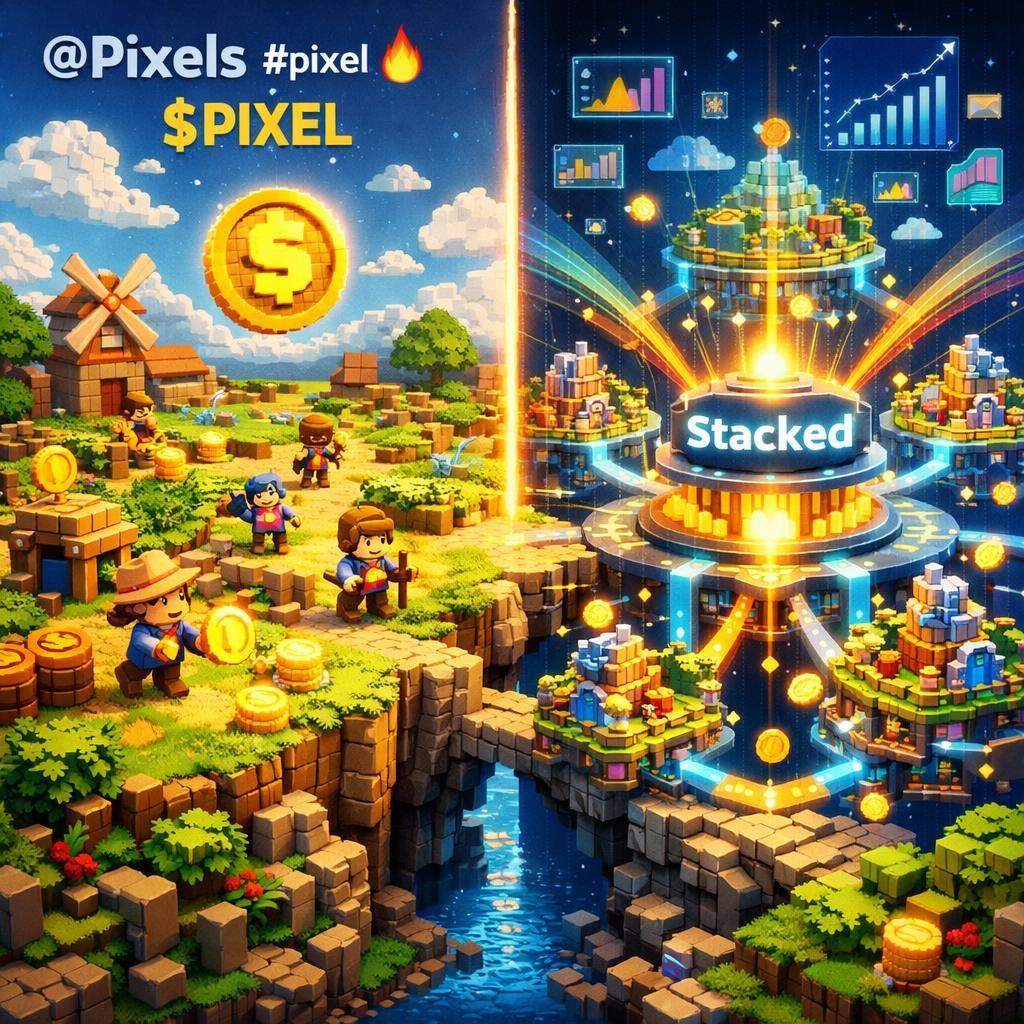
Most GameFi projects tried to build games with tokens 🎮🪙
I’m starting to think Stacked is doing the opposite ⚙️
It might be one of the first real attempts to build infrastructure for GameFi — not just another game loop 🏗️
The misunderstanding around GameFi 🤔
For years, the industry focused on:
→ better gameplay 🎮
→ better tokenomics 📊
→ better reward systems 💰
But most of them missed a more fundamental layer:
GameFi doesn’t just need better games.
It needs better systems to allocate value ⚖️
Because at scale, the real problem isn’t “how to reward players”
It’s:
👉 who should be rewarded, when, and why
What makes this different ⚡
After looking deeper into how Pixels evolved its internal systems, Stacked feels less like a feature…
and more like a separate economic layer 🧩
Instead of:
→ static quests 📜
→ fixed emissions ⛏️
→ linear reward loops 🔁
Stacked introduces something closer to live economic management 📡:
– Rewards are dynamically adjusted ⚙️
– Player cohorts are analyzed continuously 📊
– Experiments are run in production, not in theory 🧪
– Outcomes (retention, revenue, LTV) feed back into the system 🔄
This is not how games usually operate.
👉 This is how platforms operate.
The infrastructure angle (this is the key shift) 🏗️
Most GameFi projects are vertically integrated:
→ one game 🎮
→ one token 🪙
→ one economy
Stacked breaks that structure 🔓
It turns reward logic into something that can be:
→ reused ♻️
→ exported 📤
→ plugged into multiple games 🔌
That’s what makes it look like infrastructure
And infrastructure behaves differently:
– It scales with integrations, not just users 📈
– It compounds with data, not just activity 🧠
– It becomes harder to replicate over time 🔒
The data moat people are underestimating 🧠📊
This system wasn’t built in theory.
It was built inside a live game economy 🎮
Which means:
– Millions of player interactions 👥
– Hundreds of millions of reward events 💰
– Real adversarial conditions (bots, farmers, exploiters) 🤖
Over time, this creates something most GameFi projects don’t have:
👉 behavioral data at scale
And that data feeds directly into the AI layer 🤖
So the advantage isn’t just the product.
It’s the feedback loop:
data → insight → reward → outcome → more data 🔄
That’s a real moat 🏰
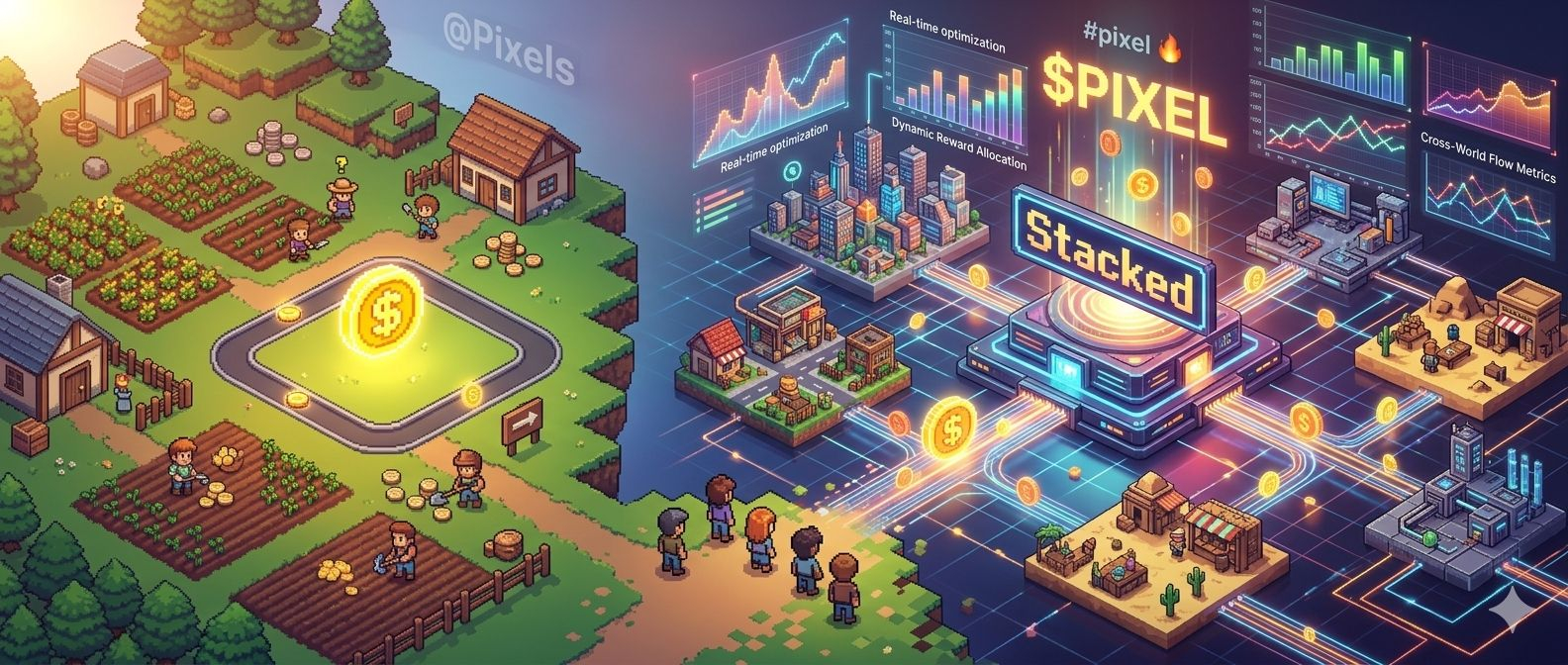
Business angle: where the money comes from 💰
Gaming studios already spend billions on:
→ user acquisition 📢
→ ads 🧾
→ retention campaigns 🔁
Stacked is trying to redirect that flow:
👉 from ad networks → directly to players 👤
If that works, then:
It’s not just distributing tokens.
It’s reallocating marketing budgets
And that’s far more sustainable than inflationary emissions 📉
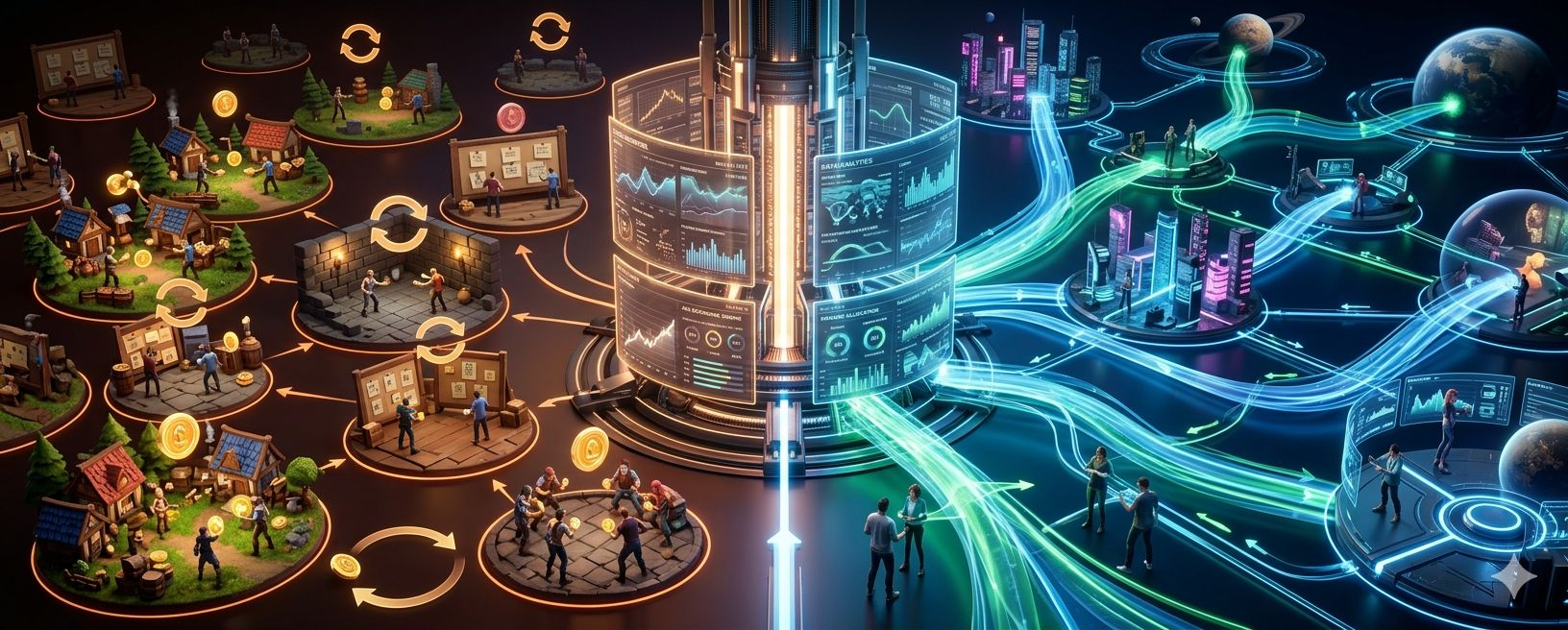
Where PIXEL fits into this 🪙
This is where the token thesis changes:
Instead of being tied to:
→ one game loop
→ one player base
PIXEL arts acting as:
👉 the settlement layer for rewards across the system
That creates a different demand surface:
– players earning 🎮
– studios funding campaigns 🏢
– systems optimizing distribution ⚙️
If Stacked expands, demand could scale with:
→ number of games 🎮
→ number of campaigns 📊
→ capital flowing through the system 💰
Why this might actually matter ⚠️
Most projects compete on:
→ gameplay
→ content
→ short-term incentives
But infrastructure plays compete on:
→ integration 🔌
→ data 🧠
→ network effects 🌐
If Stacked becomes the layer that:
→ decides where rewards go
→ optimizes value distribution
→ connects multiple game economies
Then it’s not just GameFi anymore.
👉 It becomes something like an operating system for incentives 🖥️
Final thought 🧠
I’m not fully convinced this works at scale yet.
But it does feel like a shift:
→ from “play-to-earn mechanics”
→ to programmable incentive infrastructure
And if that shift happens…PIXEL
we may need to value PIXEL differently 👀
👉 Curious if the market is already seeing this…
or still treating it like just another game token?
