
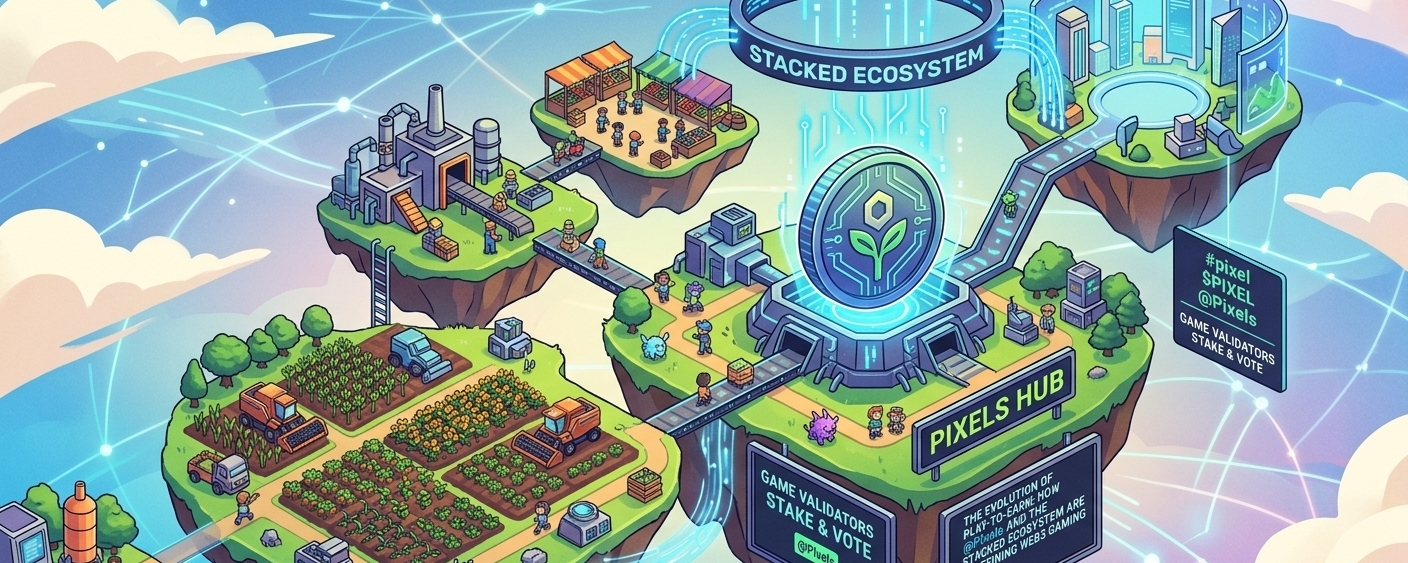
Web3 gaming landscape has undergone a massive transformation, moving away from simple "click-to-earn" mechanics toward sustainable, industrial-scale economies. At the forefront of this revolution is @Pixels, a project that has successfully transitioned from a cozy farming simulator into a powerhouse of decentralized entertainment.
The Power of the Stacked Ecosystem
The "Stacked" infrastructure is the secret sauce behind the current success of the Pixels universe. Unlike traditional GameFi models that suffer from hyper-inflation, the Stacked AI reward engine acts as a smart economist. By analyzing player behavior in real-time, it ensures that rewards are directed toward genuine, active participants rather than automated bots.
This ecosystem doesn't just benefit one game; it allows external studios to plug into the Pixels framework, creating a multi-game environment. Whether you are managing complex supply chains in Chapter 3 or exploring new titles like Pixel Dungeons, the utility of your assets scales across the entire network.
$PIXEL: More Than Just a Reward
The $PIXEL token has matured into a fundamental fuel for this digital economy. With the introduction of "Game Validators," $PIXEL holders now have the power to stake their tokens and vote on which new indie games should receive resources and visibility within the hub. This shift toward a decentralized publishing model ensures that the community—the actual players—decides the future of the platform.
Why It Matters
As we navigate 2026, the focus is on "living" in a digital world rather than just extracting value. By building deep social layers, guild-led trade wars, and specialized land mechanics, @Pixels has created a resilient economy that rewards loyalty and strategic play.
If you haven't explored the Stacked ecosystem yet, now is the time to see how $PIXEL is setting the gold standard for the next generation of Web3 gaming.