
By 2026, in this phase of highly efficient decentralized applications (dApps), if you still regard $PIXEL

If you view it merely as a simple point system, it just shows your lack of basic sensitivity to the 'synthetic asset model' within the Ronin ecosystem.
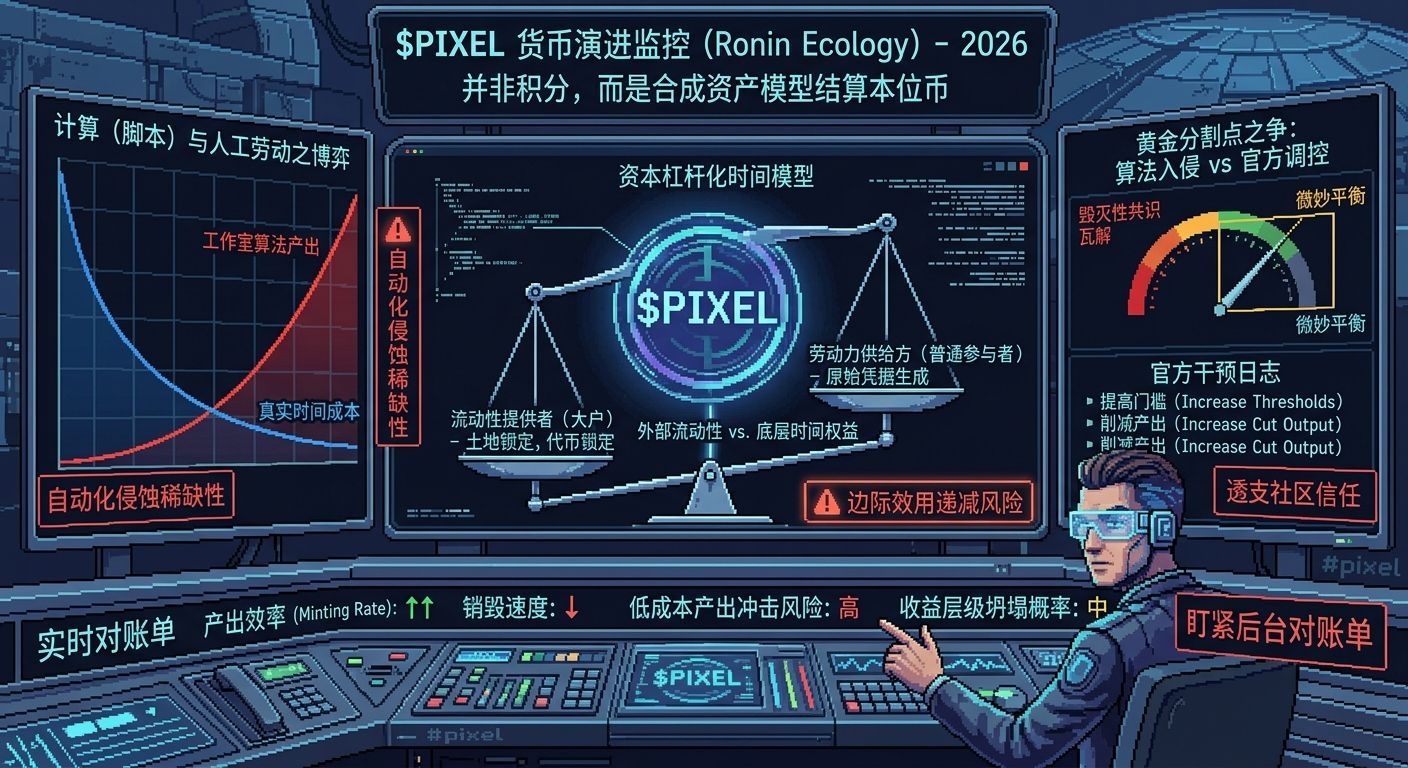
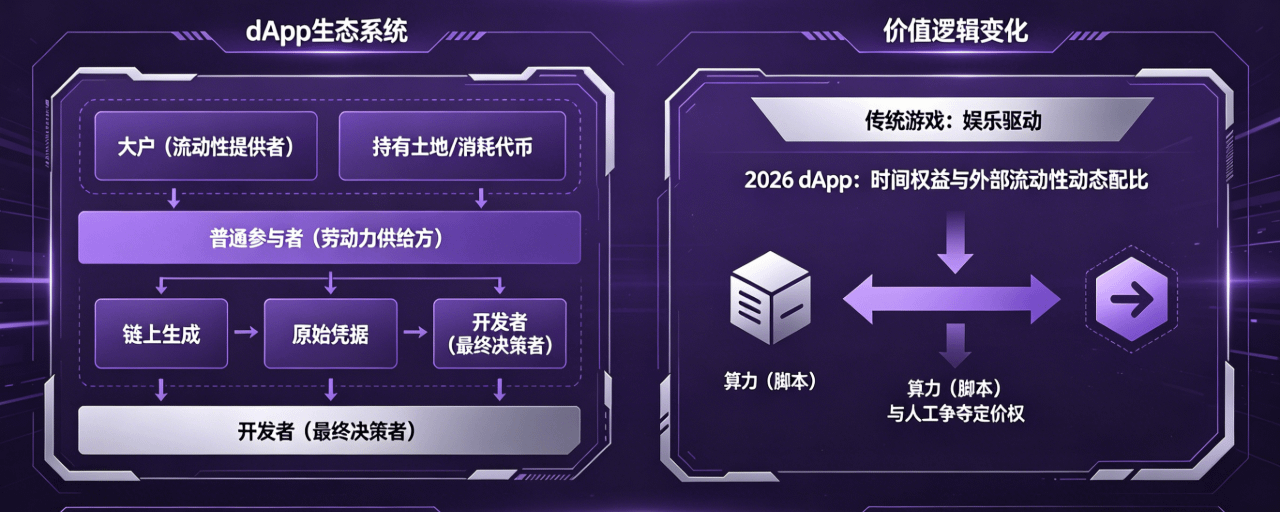
the current $PIXEL has effectively shed the entertainment shell of traditional games, evolving into the settlement currency within this complex cooperative system. Its value logic is no longer driven by 'how fun it is' but rather by the dynamic ratio between underlying time rights and external liquidity. To put it bluntly, this is a battle over pricing power between 'computational power (scripts)' and 'human effort.'
In the architecture built on @Pixels Pixels, players holding significant assets (whales) are essentially liquidity providers, locking in future output expectations by holding land or consuming tokens; while ordinary participants are the labor supply, generating initial raw proof on-chain by investing real time costs. As long as this 'capitalizing on time' logic can maintain positive yields, this internal currency expansion process will continue unabated.
But the current underlying concern is stark: no blockchain economic model can be entirely immune to diminishing marginal utility.
The surge in automation is wildly eroding the scarcity of 'human labor.' When studio algorithms can simulate all high-frequency interactions at near-zero cost, the 'participation duration' that was once used to carry value will rapidly depreciate. Once this low-cost output massively impacts the secondary market, the existing yield tiers will collapse in an instant.
The developers act as the 'final decision-makers' in this micro-economy, with their every move echoing that of a central bank. To combat the escalating asset expansion, the authorities must constantly tweak parameters (like raising thresholds or cutting output) to reclaim liquidity. This heavy-handed intervention may provide a temporary lifeline, but it also overdraws the community's trust. If a certain adjustment directly breaches the core holders' cost line, the resulting consensus breakdown could be catastrophic.
Ultimately, this credit system based on social interaction is extremely fragile. It relies on a subtle balance: players believe their time is valuable, while investors believe in future premiums. In this highly symmetric information environment of 2026, where arbitrage opportunities abound, if this allocation logic cannot find a golden mean between 'algorithmic intrusion' and 'official regulation,' then the so-called ecological blueprint may just be writing a preface for the next liquidity crisis.
What we need to focus on isn't just those pixelated graphics, but the backend ledger concerning output efficiency and burn rate. At this crossroads where truth and falsehood blur, those who can't grasp the logic of currency evolution may end up with nothing but a few strings of increasingly cold code. 🙄 #pixel