I have spent enough time in the trenches of web3 to know that when someone tells you they have built a hit game I should probably check my wallet and look for the exit. Most of these projects are just decentralized spreadsheets dressed up in bad 16-bit drag and their players are usually just mercenaries waiting for the next airdrop to dump. When people talk about Pixels they usually focus on the digital soil and the token rewards as if the world needs another farming simulator. But if you look past the fishing animations and the guild chat you start to see that the game is just a front. Under the hood they are quietly building a behavioral credentialing system for digital identity that is being trained on live player data and it is already being prepped for export to the rest of the industry.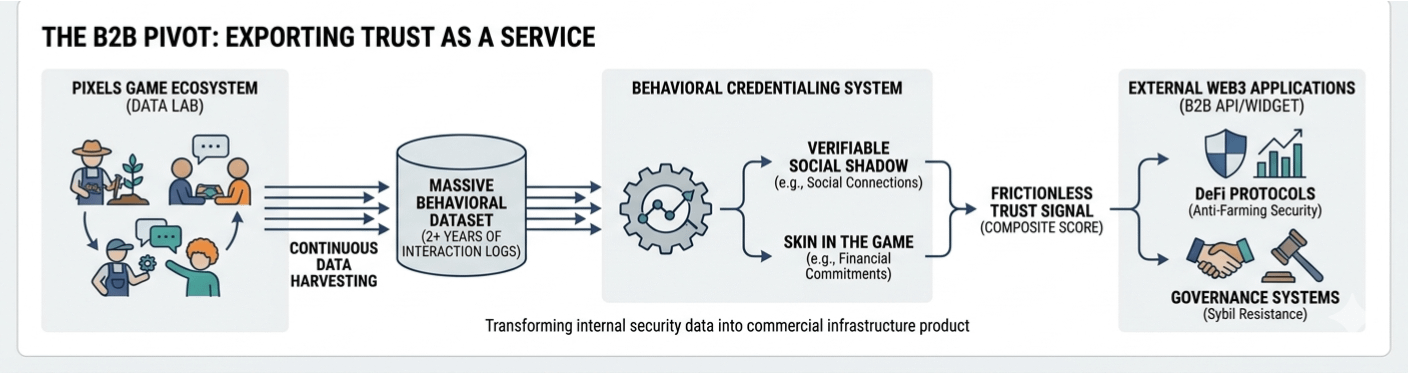
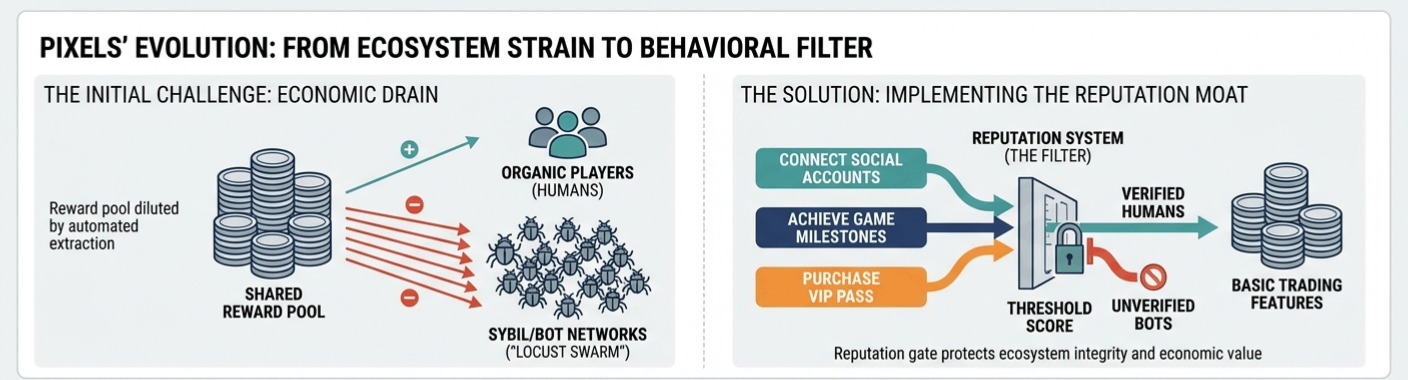
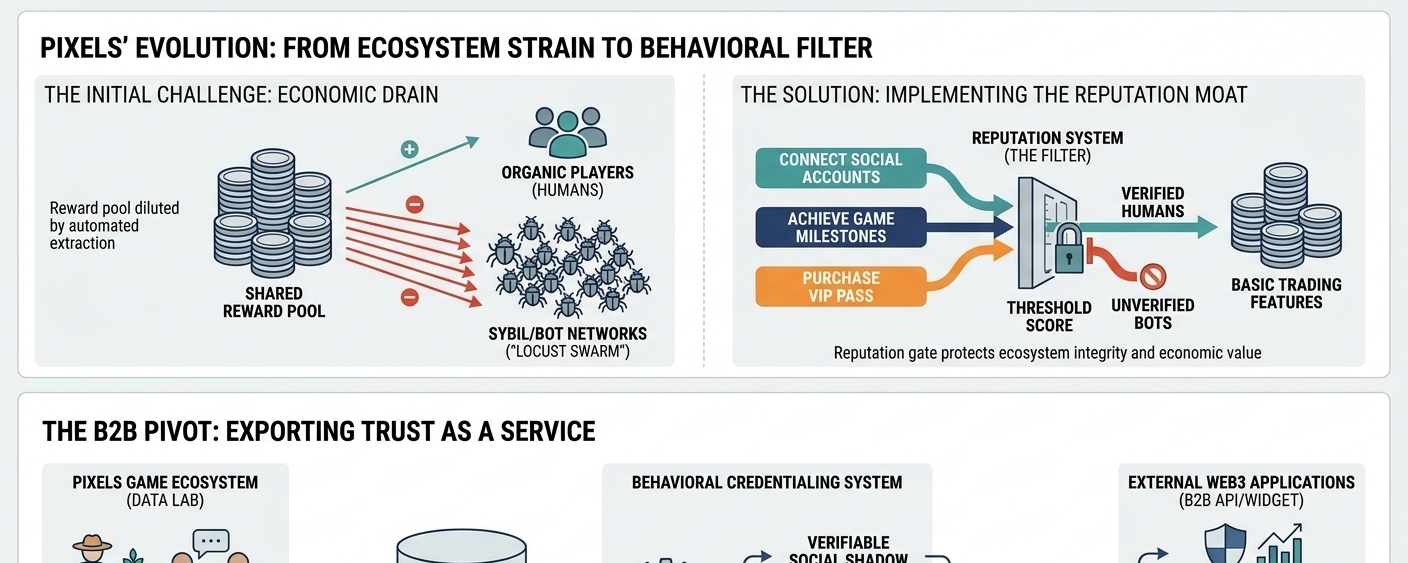
I remember when Pixels hit a million daily users back in May 2024 and everyone in the venture capital world started popping champagne. On the surface it looked like a massive win but for anyone actually running the economy it was a total nightmare. The team realized that an economy built for a few hundred thousand people was suddenly being drained by a locust swarm of sybil accounts and bot networks. The reward pool is a mindless thing that does not care if it is going to a real human or a script running in a server farm. If a hundred fake wallets snatch the rewards meant for one actual player the whole ecosystem just rots from the inside out. They built a reputation system to act as a filter but in the process of trying to save their own skin they stumbled onto a product that is actually worth something to the broader market.
The way this thing works is actually quite clever because it disguises a financial audit as a series of game milestones. You get points for connecting social accounts or buying a VIP pass and you need a certain score just to unlock basic trading features. This is not just about keeping bots out of the marketplace. It is a composite signal that measures whether a wallet has a verifiable social shadow and whether a human has actually put skin in the game by spending real money. We used to rely on formal identity checks which were expensive and annoying or we asked users to manually build their own credentials which was just too much work. Pixels figured out that they can harvest this trust signal as a byproduct of people just playing the game.
The real kicker came when the CEO mentioned that this reputation system would soon be available to other developers via a simple widget. That was the moment the mask slipped. This is not a gaming update but a B2B infrastructure play. They are trying to sell a sybil resistance API where the game itself serves as the giant lab for the data. In a world where DeFi protocols are constantly being farmed by professionalized bot networks a frictionless trust signal is the holy grail. Of course there is a cynical reality check here because once you tell people how the score is calculated the sophisticated bad actors will just start factory farming those specific behaviors. Buying a VIP pass for fifteen hundred points is just a cost of doing business for a high level bot operator.
Even if the signal is probabilistic rather than perfect the sheer volume of behavioral data they have collected over the last two years is massive. They have a map of how millions of wallets interact with a live economy and which fingerprints distinguish a real fan from an extractor. While everyone else is staring at the price of the token I see a project that is building a massive dataset that persists even if the game itself eventually fades away. It is the ultimate pivot from a digital playground to a global security guard. Most players think they are just planting crops but they are actually participating in a massive training set for the next generation of web3 identity. It is less like a community garden and more like a high tech screening room at a border crossing.