
The Russell 2000 index has hit a new all-time high, sparking talks about a possible altcoin season. But this time, the situation is different from past cycles.
The historical correlation between the Russell 2000 and altcoins has turned negative for the first time since July 2016.
This breaks the usual model that traders have been looking at while waiting for altseason. The macro picture looks bullish right now, but the altcoins themselves aren't confirming this scenario yet.
The rise in the Russell 2000 has reignited talks about an alt season amid liquidity influx.
The Russell 2000 index tracks around 2000 American small-cap companies. This segment is usually considered riskier compared to large players in traditional markets.
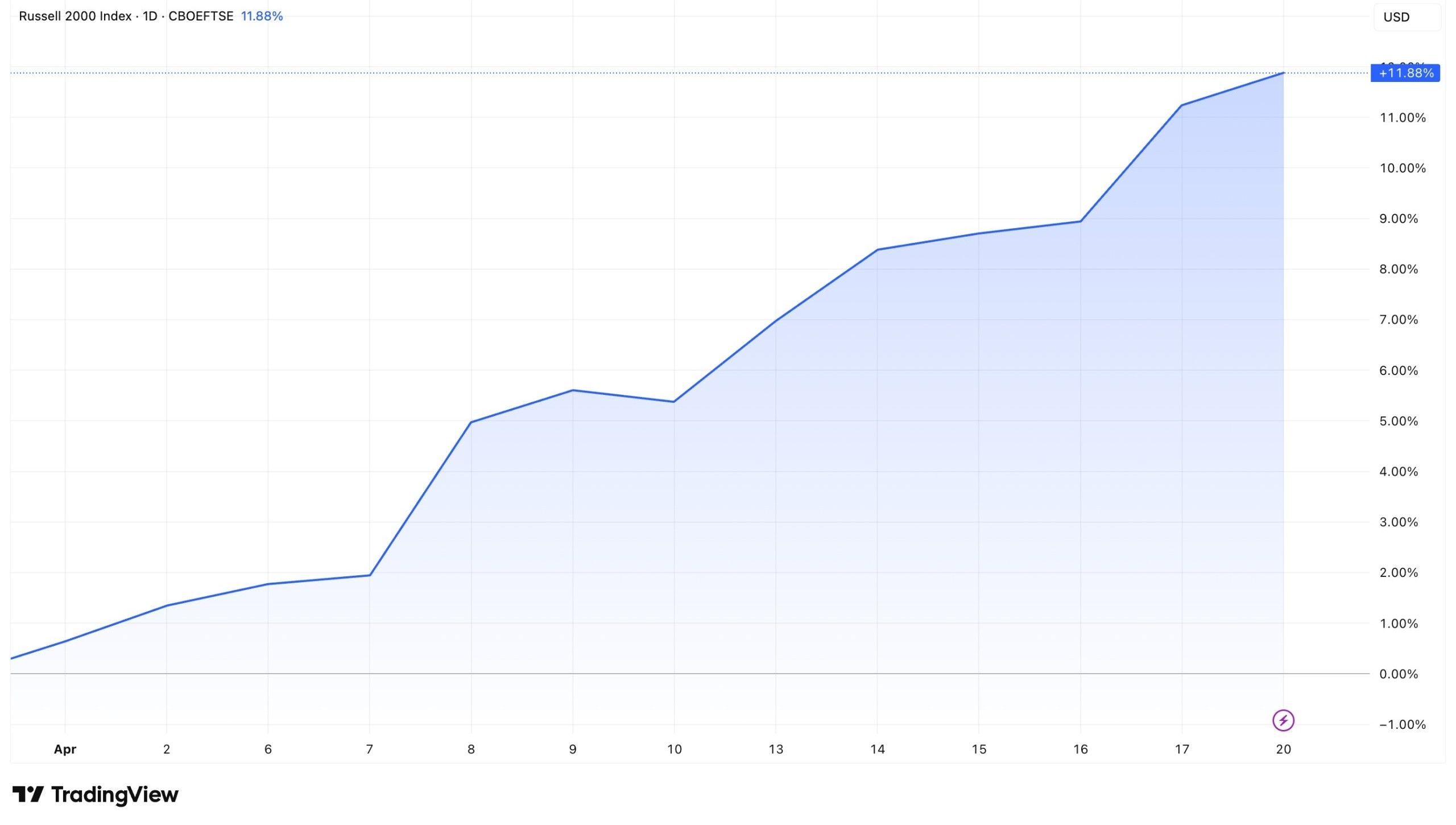
The rise of such companies often signals a transition of the market into risk-on mode, where investors start to actively move into riskier assets in search of higher returns. In April, the index gained 11.8% and on Monday hit an all-time high.
"When small companies are rising while large techs are falling, the market isn't scared. It reallocates. Capital flows into companies that benefit from the recovery of the economy within the country. Cheap oil. Low rates. Possible peace agreements," wrote analyst Bull Theory.
According to him, in previous cycles, such breakouts in the Russell 2000 often preceded altcoin rallies. A similar bullish perspective was supported by Ash Crypto.
At the same time, the dynamics of the Fed's balance sheet only strengthen the bullish scenario.
"One of the key drivers of past alt seasons has been the Fed's balance sheet, and now it is rising sharply for the first time in several years. This week several liquidity injections are expected: $5.058 billion for bond buybacks with regular operations of $5–7.5 billion, $90 billion through TGA, $15 billion for treasury debt buybacks, and more than $40 billion in total purchases for the week. QT is over, the balance is rising again, and risk is returning to the market," noted analyst Mark.
In his view, the alt season hasn't been canceled, it's just postponed due to the expansion of the Fed's balance sheet.
The correlation that traders were relying on has broken down.
Nevertheless, the key link upon which the altcoin growth scenario was built has now changed. According to analyst Tony Severino, the correlation between the Russell 2000 and altcoins has gone negative and continues to strengthen downwards.
"Currently, the correlation between these assets has turned negative for the first time since July 2016. Theoretically, it could reverse, but at this moment, it is clearly pointing downwards," he noted.
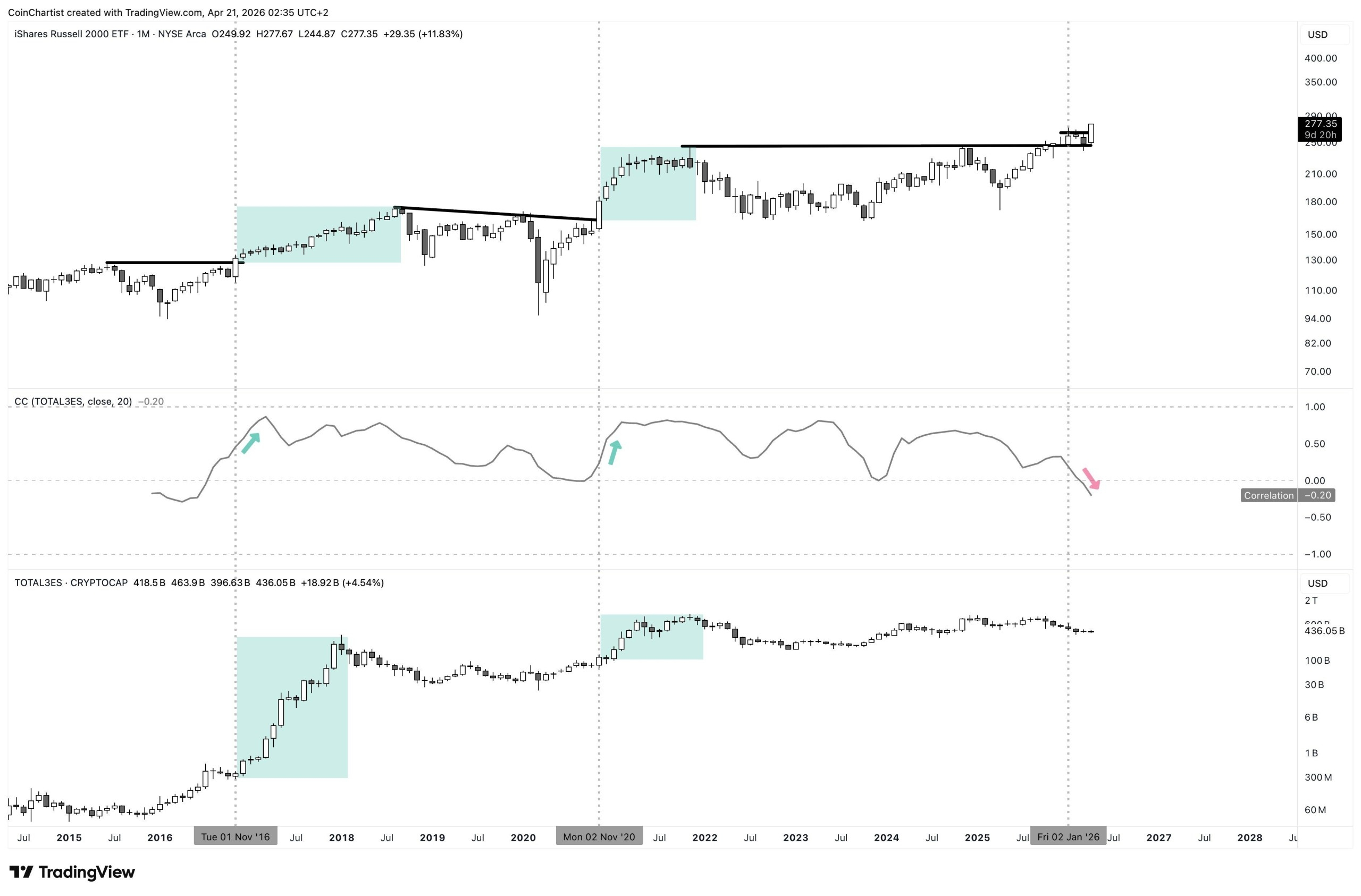
Severino emphasizes that in the current macro conditions, past correlations are no longer providing reliable signals. If the relationship between assets has changed, relying on old models becomes pointless.
A similar weakness is visible on the charts of altcoin market capitalization. Analyst Zach Humphries describes the current dynamics as a bearish retest.
Now it all boils down to one question: is this a temporary deviation or the start of structural changes? This will determine whether the scenario of a delayed alt season holds until mid-2026.
What does this mean for altcoins right now?
In practice, the market has found itself in a suspended state. On one hand, liquidity is returning and the macro outlook seems strong. On the other, altcoins themselves are not showing solid demand and remain under pressure.
This creates an atypical situation where familiar signals stop working. Previously, a rise in the Russell 2000 almost automatically pushed capital into alts. Now, however, money may stay in traditional assets or move into safer segments of the crypto market.
Until altcoins start confirming movement with an increase in market cap and volumes, it's too early to talk about a full-blown alt season. The market is likely waiting for a trigger that will restore confidence and kickstart capital inflow into riskier assets.
#Russell2000 #Altcoin #Write2Earn
