
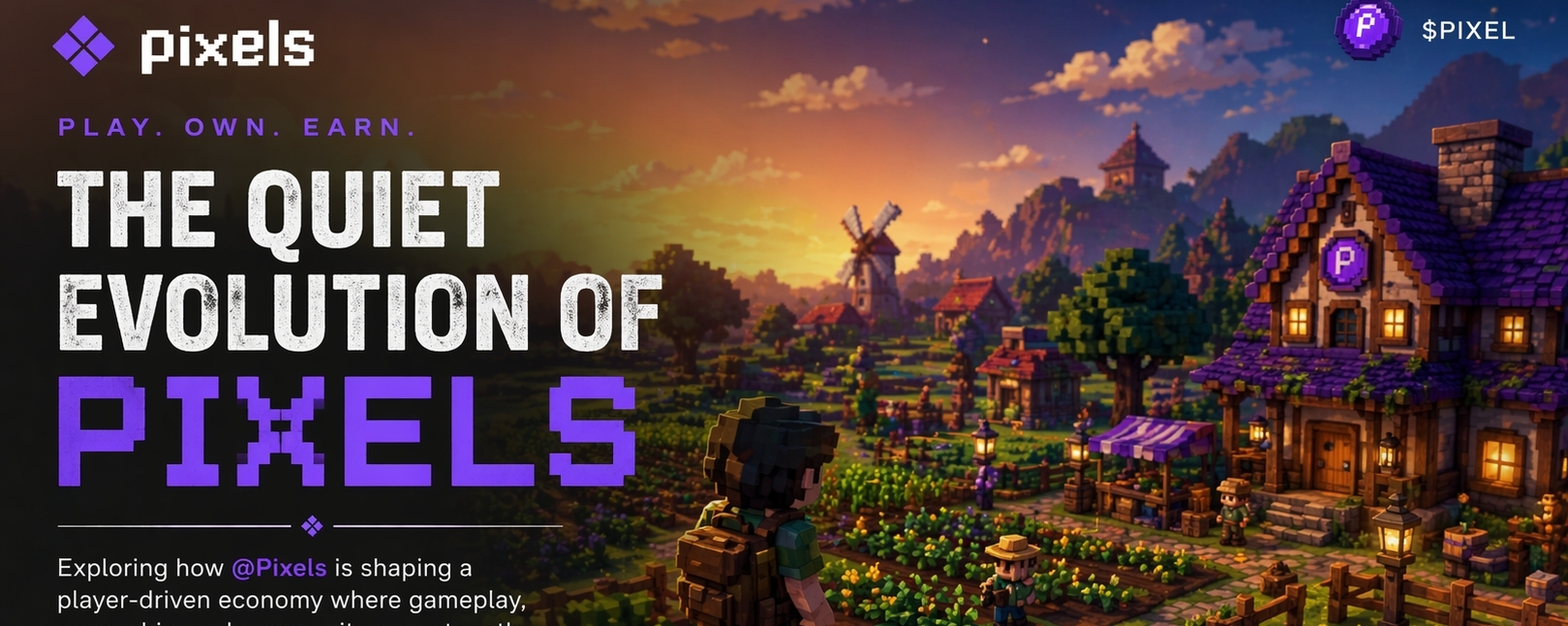
The Evening I Looked at Pixels Differently
Last night I opened @Pixels again after a long day. I wasn’t chasing rewards or planning to grind tasks. I just walked through the map for a few minutes. Farms were active, players moving around, trades happening quietly. It felt less like a “crypto game” and more like a small digital village doing its own thing.
That small moment changed how I looked at it.
Most blockchain games push attention toward the obvious things — tokens, rewards, fast progress. But after spending time inside Pixels, the interesting part feels somewhere deeper. The way farming, crafting, and trading connect starts to look more like a system than just gameplay.
And systems behave differently from games.
Players test limits. They find shortcuts. They push mechanics in ways developers never expected. When that happens, the real strength of a project slowly shows itself.
Watching how $PIXEL moves through the ecosystem made me think about something simple: if thousands more players arrive tomorrow, will the balance still hold?
Because a farming loop can work perfectly with a small community. But once activity grows, supply and demand start shaping everything — land value, item scarcity, even how players choose to spend their time.
That’s the part that keeps my curiosity alive about #pixel.
Not the hype around blockchain gaming, but the quiet experiment underneath it.
Pixels feels like it’s trying to build a world where player activity actually matters to the structure of the game. Where ownership isn’t just a badge, but something tied to how the economy moves day by day.
Maybe it works. Maybe the system will need adjustments as the community grows.
But standing in that digital farm area last night, watching players run their routines, it didn’t feel like a temporary trend. It felt like the early stage of something still figuring itself out.
And honestly, those are often the most interesting projects to watch.