


In the midst of the Web3 project frenzy, most games fall into the same trap: a weak economic model that focuses on quickly attracting users and losing them just as fast. However, the @Pixels project is trying to break this mold by building a real economy based on in-game production, which is very evident with its integration into the Stacked ecosystem.
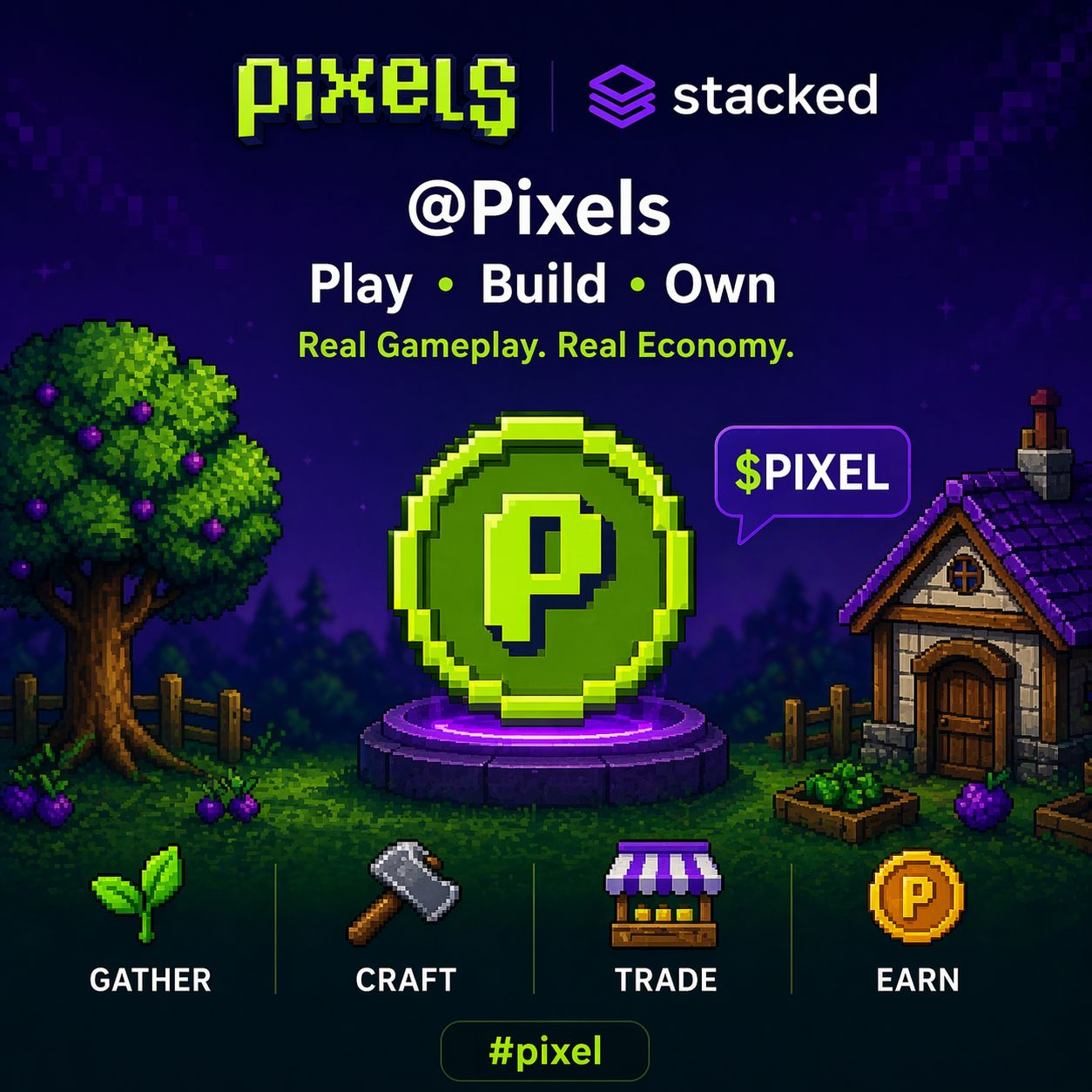
The core idea here is that the player is not just a consumer; they are a producer within the system. Every resource gathered, every land developed, and every action taken in the game contributes to creating real value within the economy. This makes the experience different from any traditional GameFi that relies on pumping tokens without actual utility.
This is where $PIXEL comes into play.

, which is considered the backbone of the system. The token isn't just a reward; it's a core operational tool: it's used for upgrades, exchanges, and resource management. Therefore, the token's value is directly tied to user activity within the game, not just external speculation.
What strengthens the idea further is the entry of Stacked as a supporting system, as it adds infrastructure that allows for expanded usage and connects digital assets with different experiences. This means that Pixels is not a closed project but part of a larger system that can expand and create ongoing demand for assets and tokens.
But let's be clear without sugarcoating: this model is tough to execute. Any imbalance in the economy—whether it's an increase in token issuance, a drop in demand, or a decline in player numbers—could hit the whole system hard. And that's what has happened in many projects before.
So, the real evaluation of a project like this isn't based on the current price, but on deeper indicators:
Are the number of active users increasing or decreasing?
Is there real demand for in-game resources?
Is there a balance between production and consumption?
Does the token have continuous use or is it just temporary?
If the answers to these questions are positive, then $PIXEL could transform from just a game token into an economic asset with lasting value. But if not, it'll end up like many other projects that relied solely on hype.
In summary: @Pixels is trying to build an economy, not just a game. That distinction will determine its future. Keep an eye on real usage before price, because that’s the only factor that will determine if #pixel is a long-term project… or just a wave that will pass.