
Well, it turns out I thought the bear market would only make it hard to afford food, but now I might not even be able to afford a love life! Just in the past few days, the world's largest condom manufacturer, Kangs, announced that due to the Middle East situation affecting their supply chain, they're facing a stock shortage and plan to raise product prices by 20% to 30%. This is not just an inflation warning for the condom industry, but a reflection of the fragility of modern supply chains.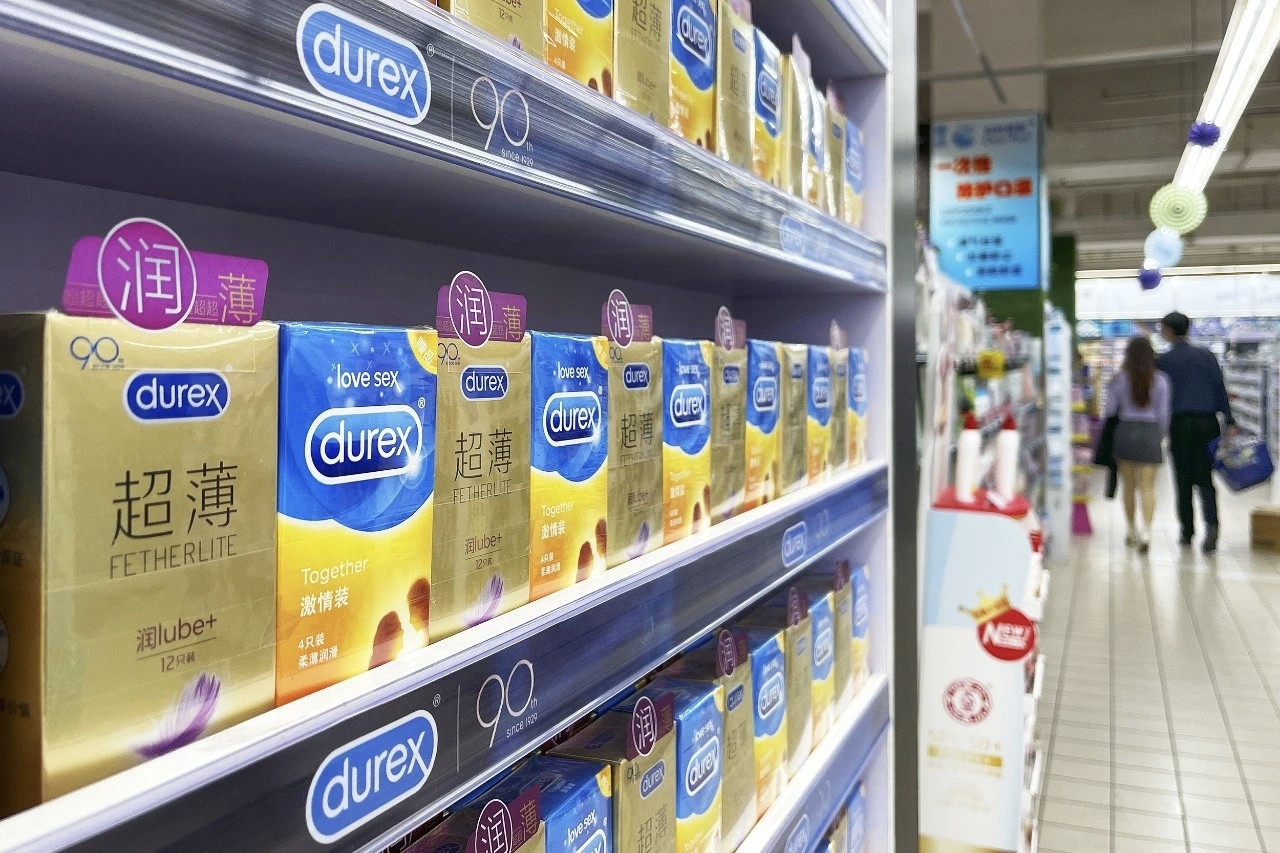
If we project this logic onto blockchain gaming, we'll find that PIXEL's economic model is undergoing a supply chain squeeze akin to what we see in traditional markets. We view in-game resources as digital commodities, and what we call gameplay updates is actually a meticulously designed supply-side game.
1. Long-tail effect of the supply chain: From inventory levels to asset pricing.
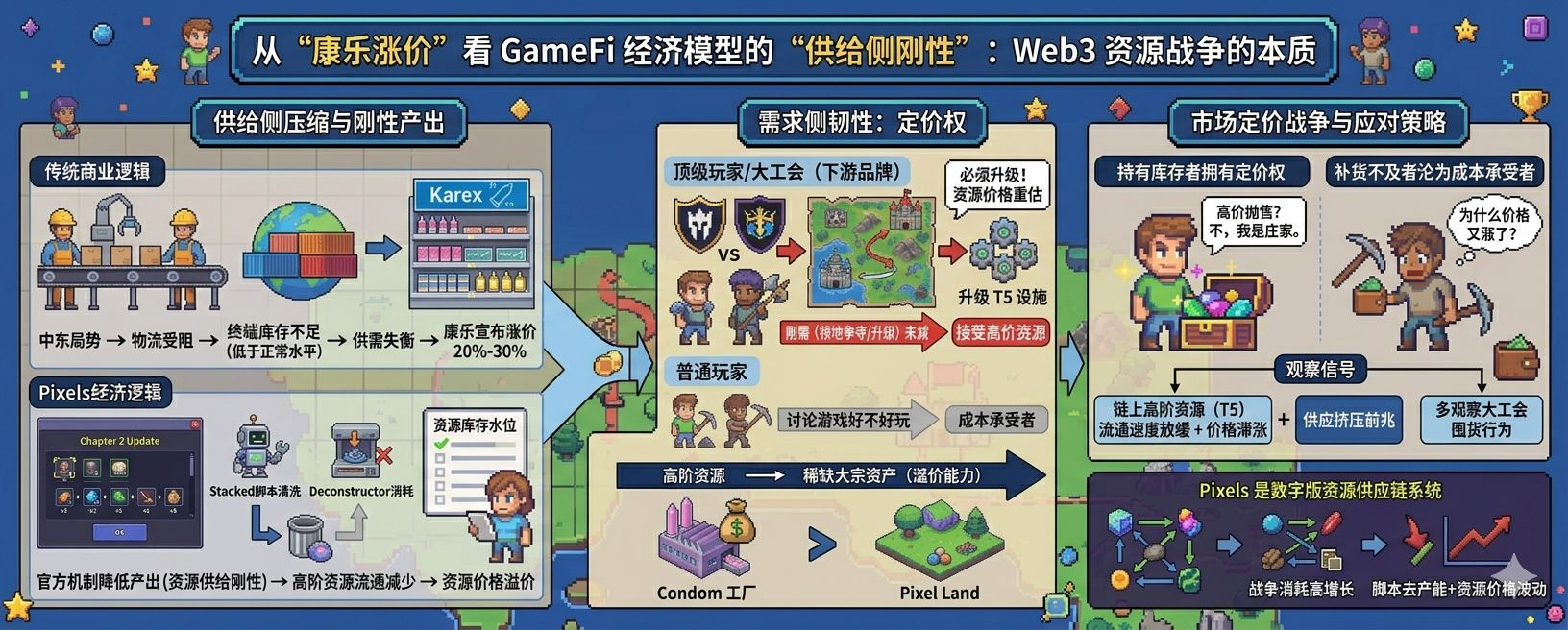
The price surge in Kang Le is primarily due to inventory levels dipping below normal. In the Pixels ecosystem, this corresponds to a rigid supply of resource output.
Traditional business logic: Production capacity hindered (logistics/raw materials) — insufficient terminal inventory — supply-demand imbalance — premium pricing.
Pixels economic logic: Official mechanisms (like Stacked script cleansing + Deconstructor consumption) — resource output rates decline — essential demand (guild wars/T5 upgrades) unchanged — resource price premiums.
While regular players are still debating whether the game is fun, top players are already calculating resource inventory levels. Chapter 2 of Pixels is artificially creating this supply chain tightening through various production cuts and strong consumption mechanisms.
2. Demand-side resilience: Who's footing the bill for the price increases?
The reason Kang Le dares to implement price increases is that its products have essential demand characteristics, with downstream brands heavily reliant on upstream supplies. In the Pixels ecosystem, the true downstream brands are those territories that must be contested and top guilds that need to upgrade to T5 facilities. As the difficulty of obtaining high-tier resources increases (supply-side contraction), the essential demand from downstream (war material consumption) will drive a systematic re-evaluation of resource prices in the secondary market. At this point, the core resources in the PIXEL ecosystem are no longer widely accessible gold mining products but have transformed into scarce bulk assets with premium capabilities.
3. How to respond: Don't be that victim of stockouts.
The events surrounding Kang Le teach us that during a supply-side crisis, those holding inventory possess pricing power, while those unable to restock can only become cost bearers. If you're still maintaining a low-frequency strategy of output and immediate sell-offs in Pixels, you'll end up as a bottom-tier node without inventory buffers, harvested by the supply crisis. You should closely monitor the circulation speed of high-tier resources (T5) on-chain; when the circulation slows down but prices stagnate, it's often a precursor to supply squeeze. Also, pay attention to the resource reserve behaviors of large guilds. By observing their stocking actions, you can gauge inflation signals in the supply chain and understand the essence to stay ahead.
You need to understand that Pixels isn't just a game; it's a digital resource supply chain system. The price surge in Kang Le isn't merely a rise in prices but an inevitable outcome of global supply-side adjustments. Similarly, the fluctuations in Pixels resource prices aren't just secondary market speculation; behind them are structural reforms driven by scripts reducing capacity and high growth in war consumption.
