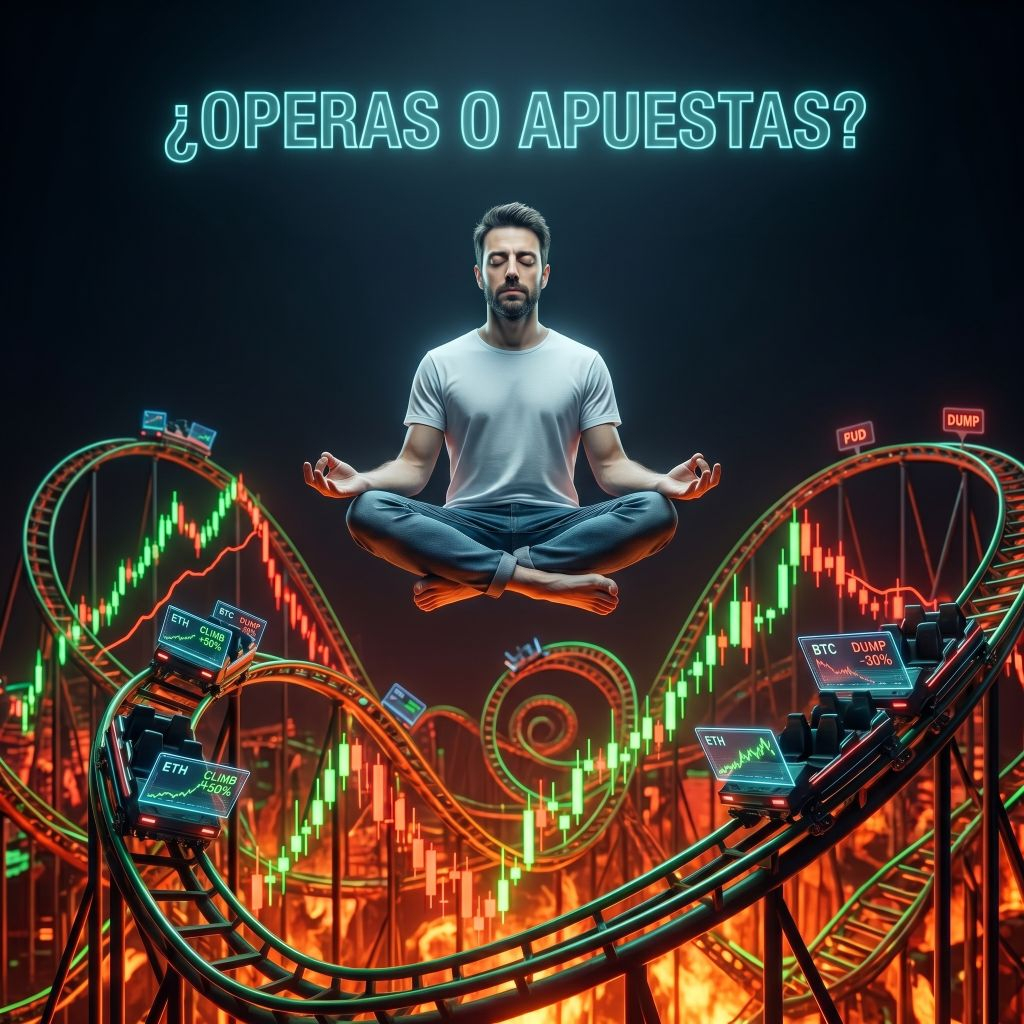
The crypto market is, at its core, a massive experiment in crowd psychology. While we like to think we're making decisions based on charts, technical analysis, or solid fundamentals, the reality is that most traders operate under the influence of primitive biological impulses. In a 24/7 ecosystem where volatility is the only constant, the human mind often proves to be the weakest link in the chain. If you've ever FOMO'd into a coin because 'everyone was talking about it' or sold in a panic during a dip, you've fallen victim to the forces driving this market.
Mastering your digital finances doesn't start with learning to draw trend lines but by understanding how your brain reacts to risk and opportunity. The two major saboteurs of financial success have names: FOMO and FUD. Learning to identify them before they dictate your actions is the difference between an investor who builds long-term wealth and one who merely finances the gains of professionals. Next, we break down the keys to regaining control of your strategy.
The FOMO trap: The euphoria that empties accounts
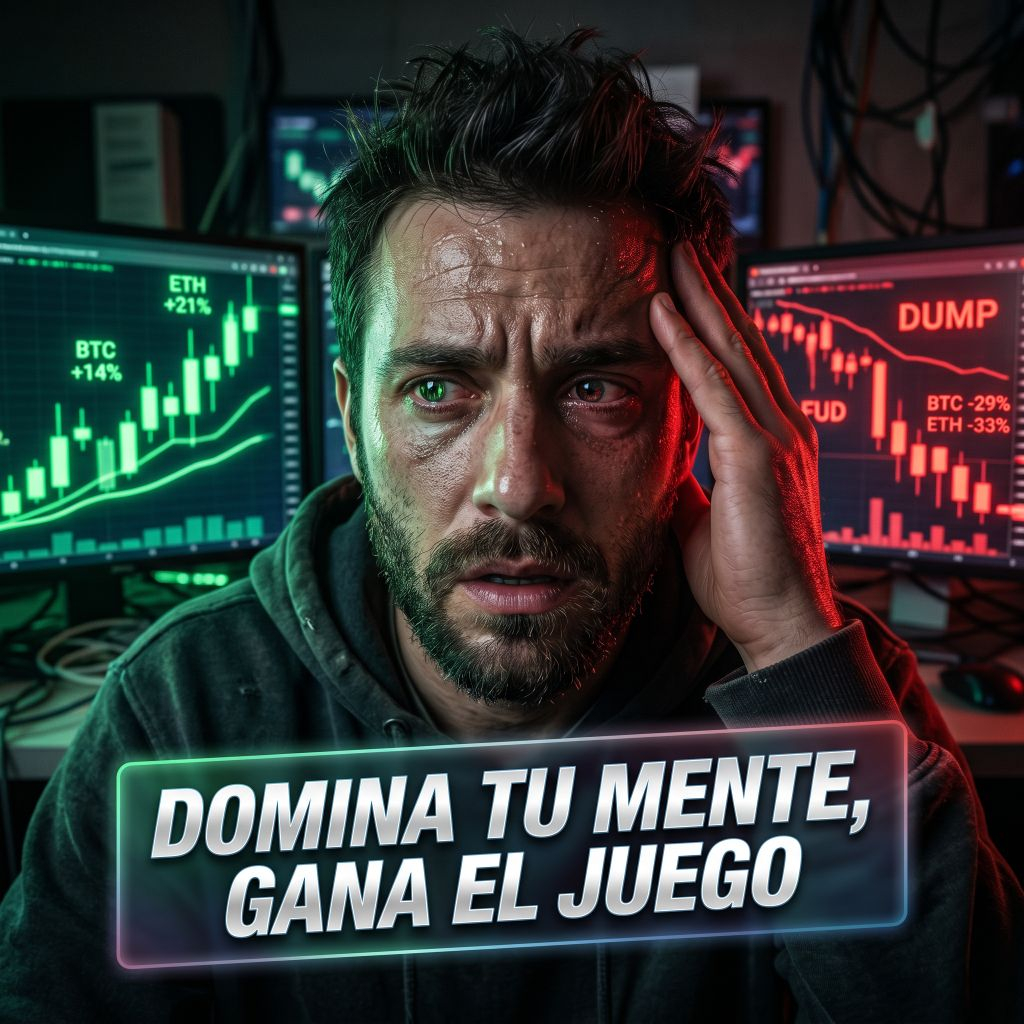
The fear of missing out, better known as FOMO (Fear of Missing Out), is one of the most destructive forces in the crypto world. It manifests as an irresistible internal pressure when we see a giant green candlestick or read about someone who became a millionaire with an unknown asset. The problem is that FOMO often appears when the bullish movement is already mature; that is, it pushes you to buy high, just when experienced investors are starting to sell their positions to take profits.
To combat this impulse, it's vital to understand that the market always offers new opportunities. Trading under the influence of FOMO is gambling, not investing. An effective strategy is to set strict entry rules: if an asset has already risen a significant percentage in recent hours, the safe opportunity window has likely closed. Remember, it's better to miss a pump than to get caught in a steep drop by entering late and without a clear exit plan.
The FUD virus: Irrational fear and decision-making under pressure
On the opposite end, we find FUD (Fear, Uncertainty, and Doubt). This phenomenon occurs when negative news, rumors, or simple market corrections generate a wave of collective panic. FUD clouds judgment and pushes the investor to sell their assets at the lowest point of the cycle, locking in losses that, had they been patient, could have recovered. The media noise is designed to generate clicks and reactions, not to protect your capital.
The key to neutralizing FUD is education and filtering sources. When you feel panic setting in, return to the fundamentals: Has anything real changed in the technology or purpose of the project you invested in? If the answer is no, and it’s just price volatility or unconfirmed rumors, the wisest move is usually to do nothing. The professional investor uses others' FUD as a buying opportunity, while the beginner allows fear to rob them of their position.
Building a defense system: Discipline over emotion
The best way to prevent emotions from taking the wheel is to automate decision-making through a system. Discipline beats intelligence in the crypto market. Tools like DCA (Dollar Cost Averaging), which involve making recurring purchases of a fixed amount regardless of price, eliminate the emotional dilemma of "when to enter." By buying consistently, you average your entry price and reduce the psychological impact of daily volatility.
Moreover, you should never trade without a risk management plan. This includes defining in advance what percentage of your capital you are going to risk and using "stop-loss" orders or profit-taking levels. When you have a written plan, you stop questioning what to do amid the chaos; you simply execute what you decided in a moment of calm and rationality. Operational coolness is the ultimate shield against the highly emotional environment of crypto.
The time horizon as your greatest ally
Most psychological errors occur because investors trade with too short a time horizon. The daily noise is deafening, but when you zoom out the chart and look at the trend over months or years, the picture changes dramatically. Time has the ability to smooth out volatility and filter out erratic movements caused by momentary euphoria or panic. Those who understand they are participating in a long-term technological shift are not rattled by a ten percent drop in an afternoon.
Investing only what you can afford to lose is the fundamental pillar of this tranquility. If the movement of a cryptocurrency keeps you awake at night, it's a clear sign that you are overexposed or that you don't trust your investment thesis. At the end of the day, the market will reward those who have the resilience to stick to their strategy while others get swept away by the tide.
Success in crypto depends less on what happens on the screen and more on what happens in your mind. FOMO and FUD are inevitable; there will always be news that scares you and pumps that tempt you. However, by recognizing these biases and prioritizing a clear rule-based system, you transform investing from an emotional rollercoaster into a powerful financial growth tool. The next time you feel the urge to act impulsively, pause, breathe, and remember that in this market, patience is the scarcest and most rewarding asset.
#PsicologiaDelTrading #Criptomonedas #trading