

Crypto is full of big claims. I have seen enough of them to know that most sound good at first. Then pressure shows up. Then the weak parts appear. Then the story gets smaller. I do not get excited easily anymore. I look first and I wait. I pay attention with caution.
That is part of why Pixels caught my eye. Not because it feels flashy. It does not. It stood out because it seems to be aimed at something more practical than the usual noise. Pixels runs on Ronin. It has already pulled in a large number of players over time. At one point daily activity crossed strong levels that most Web3 games never reach. That does not prove success. But it shows there is real attention to work with.
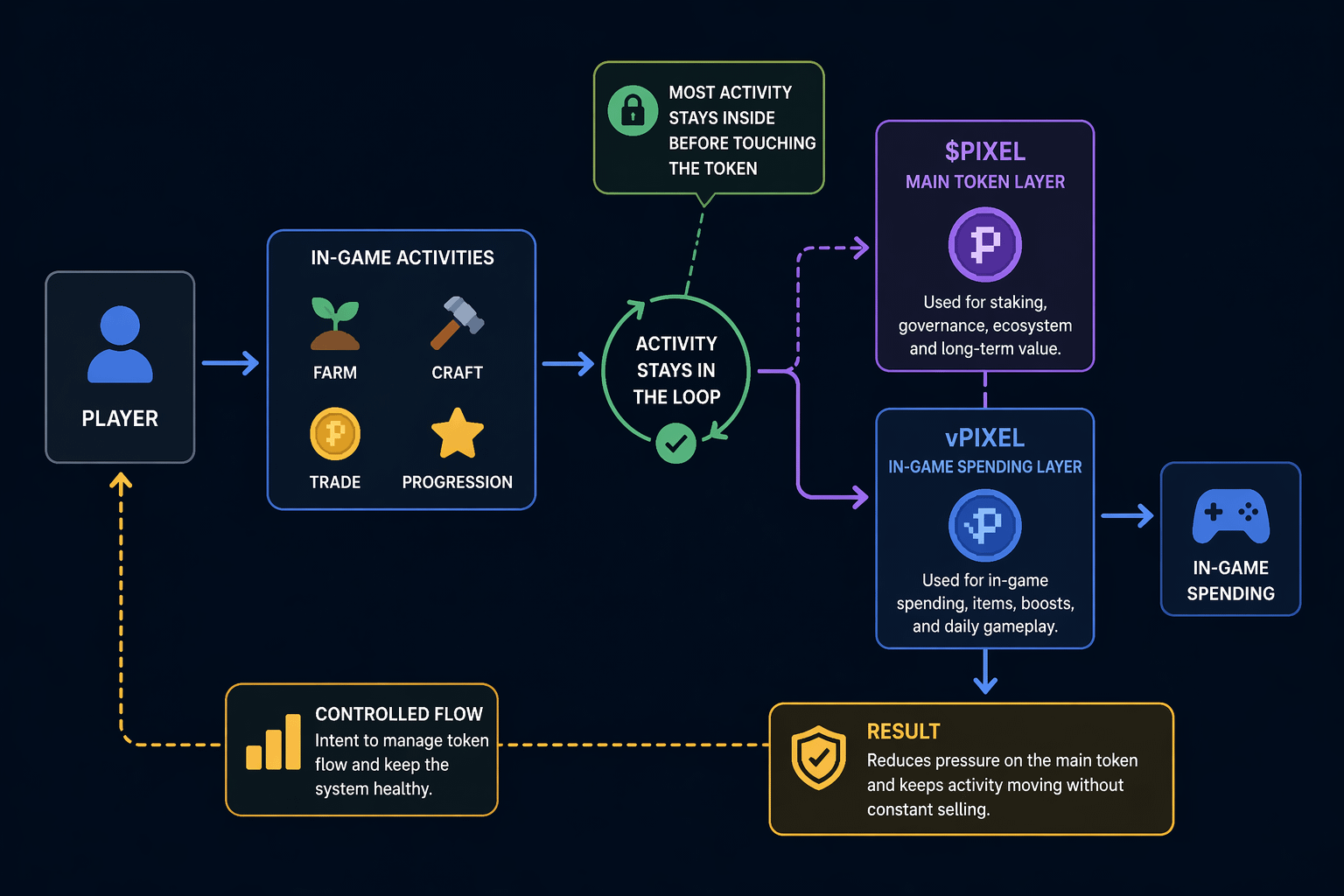
The simple idea feels familiar at first. It can look like farming or routine player activity. But the deeper question is whether that activity is being turned into something the system can actually track. That is the part I find more interesting. In Pixels your time is not just spent. It is recorded through actions. Farming. crafting. trading. progression. These are not isolated steps. They feed into a wider system that tries to observe behavior in a structured way.
That is where $PIXEL starts to feel different. It is present in the system. But it is not forced into every action. A lot of activity stays inside the loop before it ever touches the token. There is also a second layer with vPIXEL which is used for spending inside the game. That split matters. It reduces pressure on the main token and keeps activity moving without constant selling. It is not perfect. But it shows intent to control flow instead of letting it break too easily.
I keep coming back to the idea of structure. Most crypto projects collect attention. Very few organize it. Pixels seems to be trying to turn player effort into something measurable. Something that can be tracked across time. Not just counted once and forgotten. That kind of system could matter more when things slow down. When hype fades. When only real users remain.
That matters because stress is where systems fail. When demand spikes. When users pile in. When rewards start getting extracted too fast. That is when weak design shows itself. Pixels has been adjusting its systems over time. Changes in progression. changes in recipes. changes in balance. These are not always exciting. But they suggest the team is trying to refine how effort moves through the system.
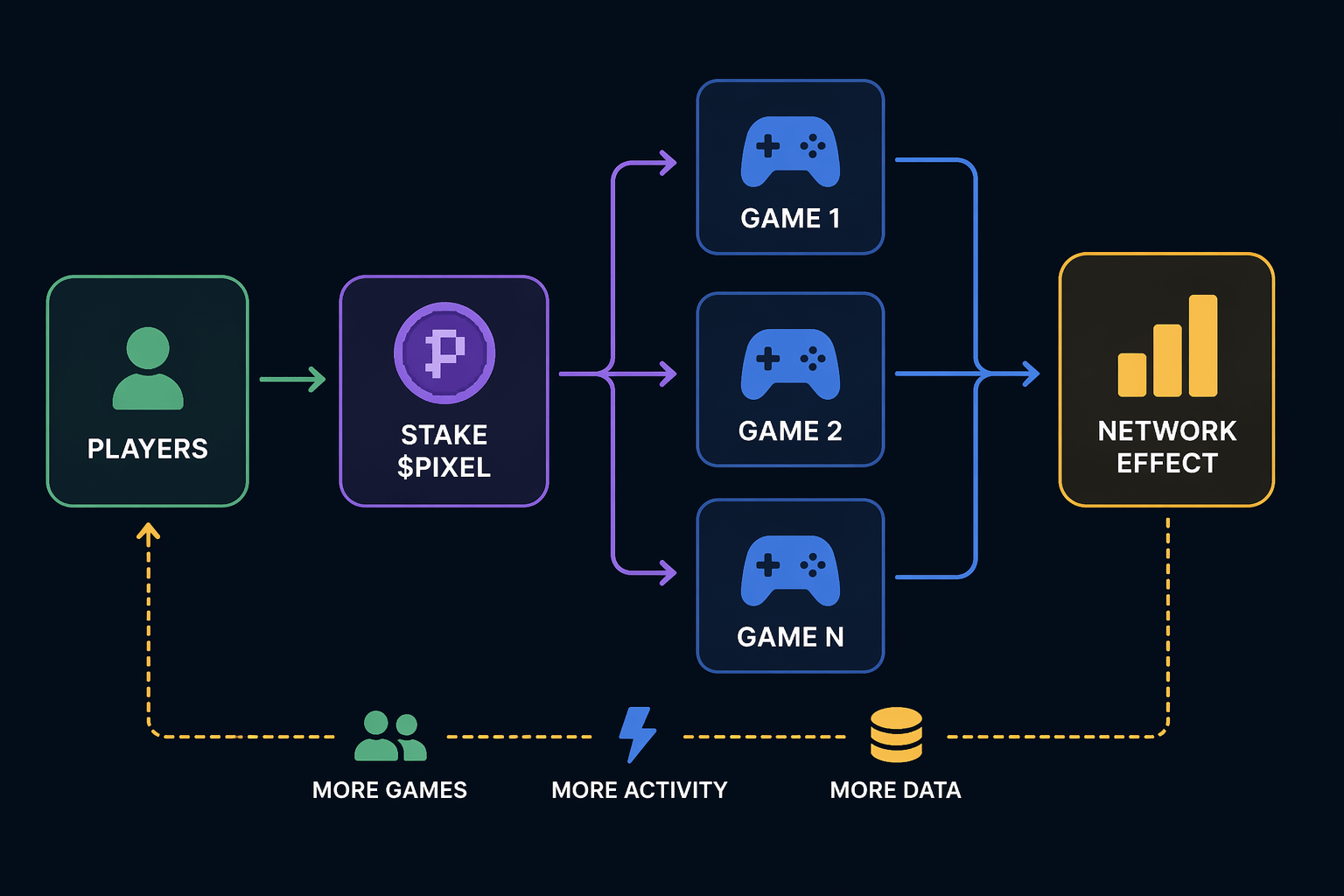
There is also a wider layer forming around it. Players can stake $PIXEL into different game experiences inside the ecosystem. That means support is not locked into one loop. It can spread across multiple directions. In theory that creates a network effect. More games. more activity. more data flowing through the same structure. That is harder to build than a single game economy.
I do not want to make it sound stronger than it is. Serious systems cannot afford weak design. One weak point can damage the whole thing. If rewards are not balanced. behavior can turn extractive again. If players stop finding meaning in progression. activity can drop fast. If growth slows. the system still has to hold together. These are real risks. Not small ones.
That is also why this kind of project feels tied to something bigger in crypto. The market has spent years chasing price first and usefulness later. That order has rarely worked well for long. The stronger direction now seems clearer to me. Real value should come from useful systems. From adoption that does not depend on hype. From infrastructure that holds up when more people arrive. From tools that keep working when conditions get messy.
So I am not treating Pixels as some finished answer. I am treating it as a signal worth watching. It is trying to turn player effort into something more structured. Something that can be followed. Something that might hold value beyond short cycles. Maybe it is early. Maybe some parts will prove harder than they look. That is fine.
I am still watching $PIXEL . I am still learning. And I am still cautious. That has become my default in crypto. Not because I do not believe in progress. But because I know how fragile trust can be. The projects that last are usually the ones that earn belief slowly. One solid step at a time.