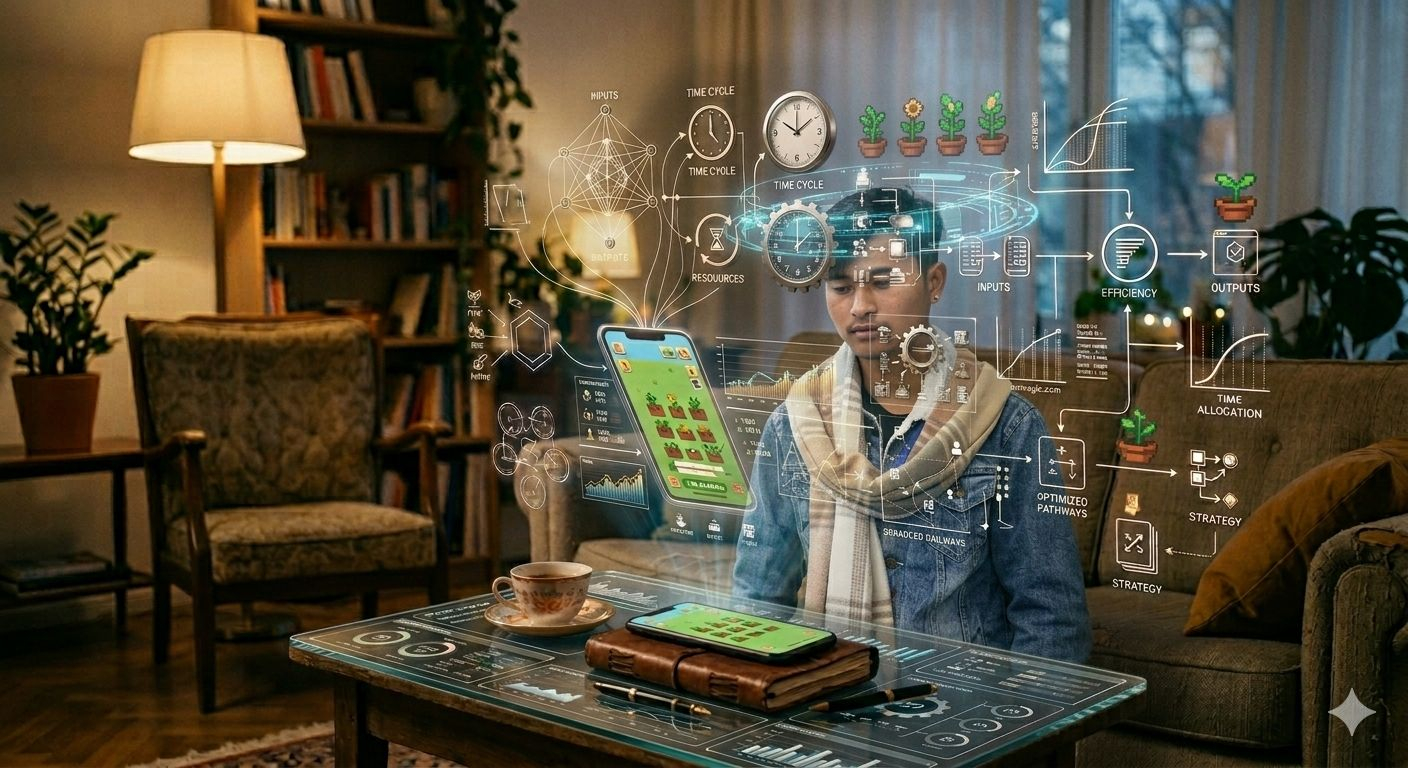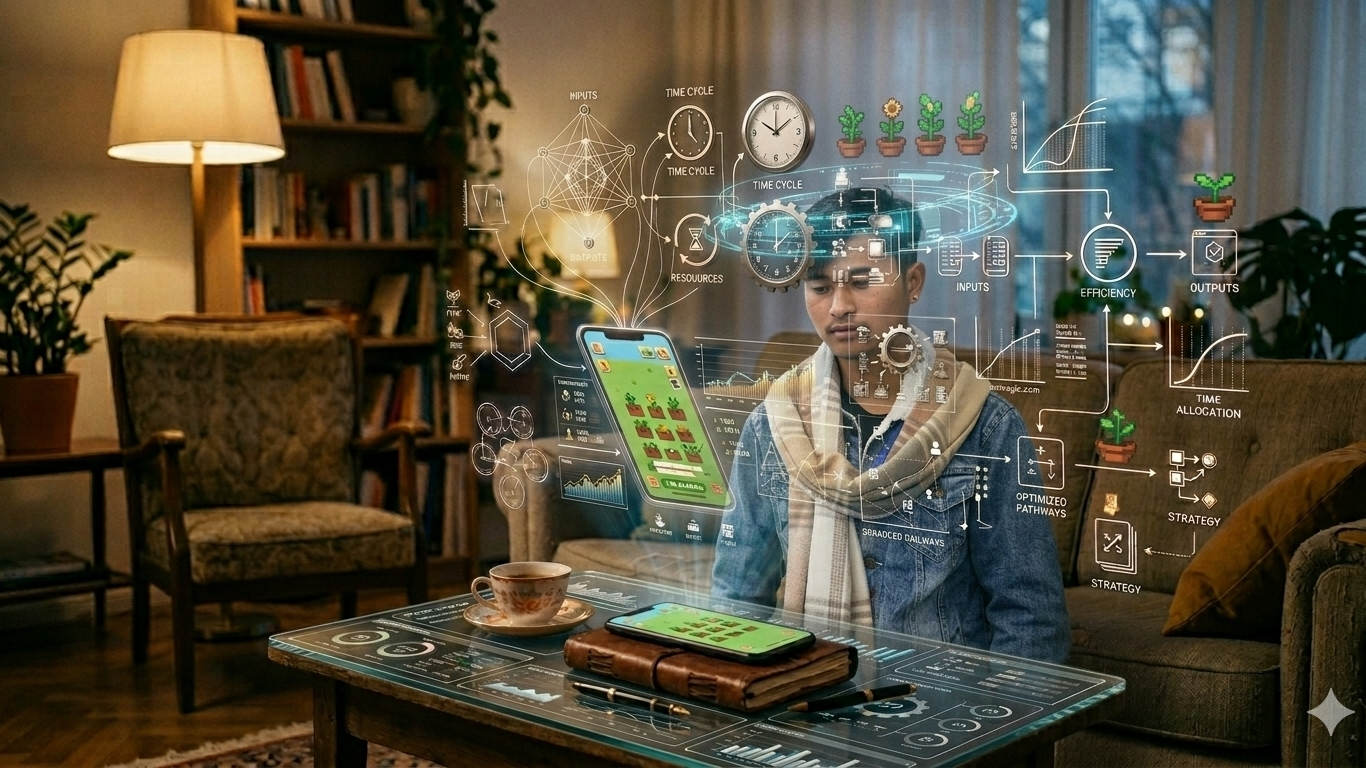
At the beginning, it never feels serious.
You enter a game expecting light interaction—something to fill small gaps in your day. A few taps, a few decisions, maybe a small sense of progress. Nothing demanding. Nothing that asks too much from you. Just a contained loop of action and reward that stays comfortably within the boundaries of “casual.”
But that boundary doesn’t hold for long.
What starts as a simple system—plant, wait, harvest—begins to stretch. Not suddenly, not aggressively, but gradually. New layers appear. Resources multiply. Choices begin to matter in subtle ways. And without any clear signal, the experience shifts from something you *do* to something you start to *manage*.
That’s where the real transformation begins.
At first, decisions feel optional. You plant what you like. You craft what seems interesting. But over time, hesitation creeps in. You pause before selling. You question whether something might be useful later. You begin to see connections between actions—how one choice now affects possibilities later.
This is the moment the system reveals itself.
The game stops being about isolated actions and starts becoming about relationships between them. Crops aren’t just crops anymore—they’re inputs. Items aren’t just rewards—they’re potential. Time isn’t just passing—it’s being allocated.
And without realizing it, your mindset adapts.
You stop asking, “What do I feel like doing?”
You start asking, “What makes the most sense right now?”
That shift is small, but it changes everything.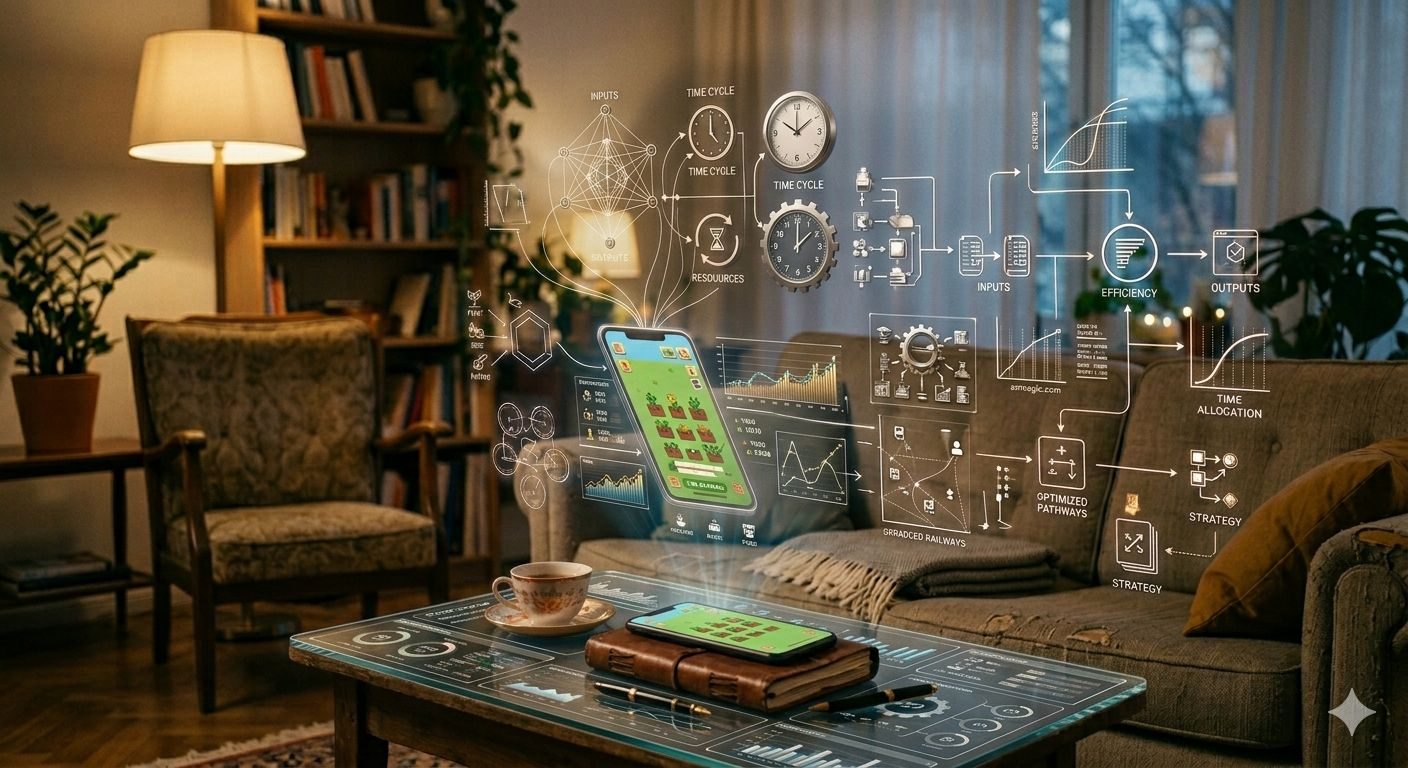
Because once efficiency enters the picture, enjoyment takes a different form. It’s no longer about the immediate satisfaction of completing a task. It becomes about alignment—setting things up in a way that feels optimized, connected, and intentional.
Progress becomes less visible, but more meaningful.
And then something else happens.
Time itself becomes the central resource.
Not in the obvious way, where you wait for timers to finish. But in the way your attention becomes tied to the system. You begin to think in cycles. You log in not just to play, but to *maintain flow*. To prevent waste. To keep things moving.
Missing a moment doesn’t feel like skipping a game—it feels like breaking a chain.
At that point, the experience quietly crosses a line.
It’s no longer just entertainment.
It’s responsibility.
And responsibility carries a different kind of weight.
What makes this shift particularly interesting is that it doesn’t rely on pressure. There are no loud demands, no urgent alerts forcing you to stay engaged. The system doesn’t need to push you—because you’ve already started pulling yourself into it.
Through repetition, through habit, through small patterns of decision-making, you’ve adapted.
And that adaptation extends beyond gameplay.
Because underneath the surface, systems like these often carry deeper structures—economies, ownership layers, value exchanges. But instead of presenting them upfront, they remain invisible at first. You don’t learn them through explanation. You absorb them through interaction.
You don’t think about the system.
You behave within it.
And behavior is more powerful than understanding.
That’s what allows these environments to reach beyond traditional boundaries. They don’t require belief or prior knowledge. They don’t demand technical awareness. They simply offer a space where actions feel natural, and meaning emerges over time.
People don’t join because they understand the system.
They stay because the system makes sense through use.
This is where the real shift happens—not in the mechanics, but in the user.
Because over time, you begin to value things differently. Inventory isn’t just storage—it’s strategy. Timing isn’t just waiting—it’s positioning. Decisions aren’t just choices—they’re investments.
Without ever being told, you start thinking in terms of systems.
And once that perspective sets in, it’s difficult to return to simpler interactions. Not because they’re worse, but because they feel incomplete. You’ve seen how small actions can connect into larger structures, how patterns can create momentum, how attention can shape outcomes.
You’ve moved from playing within a loop to operating within a system.
That’s the hidden evolution.
What appears at first as a casual experience slowly becomes something deeper—not by adding complexity in obvious ways, but by allowing complexity to emerge through use. By letting players discover structure instead of explaining it.
And maybe that’s the most important part.
Because the real transformation isn’t in the game itself.
It’s in how you begin to think while engaging with it.
Not just reacting, but planning.
Not just playing, but managing.
Not just participating, but adapting.
In the end, it’s not about masteri
ng the system.
It’s about realizing when the system has quietly started shaping you.