
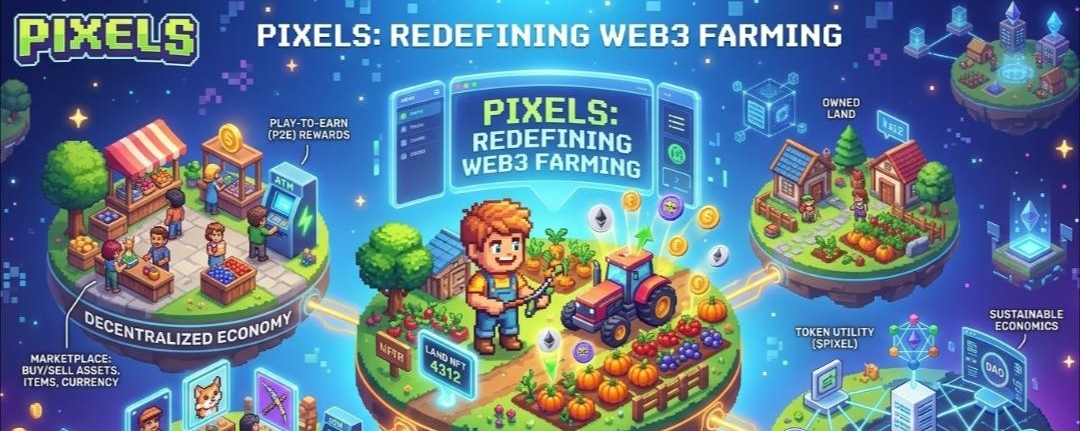


Pixels is quickly becoming one of the strongest names in Web3 gaming. It’s not just another play-to-earn token built on hype. It’s a full ecosystem where players can actually spend time, build progress, and earn in a way that feels natural instead of forced.
At its core, Pixels is a farming and social simulation game where players own land, collect resources, and trade inside a live economy. The key difference here is ownership. Everything you earn and build has real value, and that changes how players interact with the game completely.
The move to the Ronin Network made a big impact. Transactions are fast, costs are almost zero, and the experience feels smooth even for new users. This removes one of the biggest barriers that used to hold Web3 gaming back.
What makes PIXEL stand out is its Stacked or Staked system. Players can stake tokens to earn rewards while also improving their in-game performance. This creates a cycle where playing more leads to earning more, and earning more helps you grow even faster inside the game.
The economy is built in a way that rewards activity. Players farm, trade, upgrade, and interact daily. Unlike older GameFi projects that depended only on new users, Pixels is trying to create a system where the economy runs through real usage.
Still, it’s important to stay realistic. Like all GameFi projects, its success depends on continuous player growth and strong engagement. If activity slows down, the token and the ecosystem can feel pressure.
Overall, Pixels is not just another trend. It represents a shift toward games where players are part of the economy, not just participants. If it continues to grow and maintain balance, it has the potential to become one of the leading ecosystems in Web3 gaming.