

After hanging around in Web3 for a while, you start to get this illusion that you’re just 'playing a game.'
I remember a few years back when Axie was blowing up, those villages in Southeast Asia were filled with 'farmers' just tapping away on their phones. Back then, the narrative was so beautiful—Play to Earn; you were just playing and making money. Later on, Pixels was one of the survivors of that wave, where everyone was farming, socializing in pixelated lands, and some even fought tooth and nail over a few virtual plots. But I’ve got to break it to you straight: that era where everyone could just ride the hype and get free gains is long gone.
Currently, if you thoroughly review Pixels' latest white paper, you’ll find it has evolved from a warm-hearted farm into a coldly rational, even somewhat ruthless, internet traffic harvesting machine.
It no longer talks about 'changing the world' or 'metaverse dreams.' Its current logic is shockingly simple: I give you rewards (gold farming rewards), and you bring me back more income or more valuable behavioral data. If you can’t bring that back, sorry, you’re the 'vampire' in this system, and the project team will do everything to cut your connection.
I call this transition 'the coming-of-age ceremony for blockchain games.'
Old-school blockchain games were like throwing money around with your eyes closed, relying on the illusion of liquidity from new players. Everyone was betting, hoping they wouldn’t be the last one holding the bag. But Pixels has changed the game; they’ve introduced a metric called RORS (gold farming return on stake), which is like the casino owner sitting in the surveillance room with a calculator, calculating each gambler's contribution.
Why calculate this?
The project team has realized that pure 'fun' is a fallacy in Web3. People aren’t here to enjoy farming; they’re here to make money. Since everyone is here to make money, I’ll turn the game into an extremely precise 'on-chain advertising intermediary alliance.'
In this white paper, what struck me as both 'disillusioning' and admirable is its attitude towards players. It no longer sees you as a 'community member' or 'co-builder'; it sees you as an LTV (lifetime value) data packet.
They’ve set up a system called 'precise tipping based on personal assessment.' Simply put, it analyzes big data to know who the real 'whales' are willing to spend money and who the 'bots' are. Rewards are no longer universal but targeted. Want to leech off the system? You can, but it’ll be painfully costly, even charging you a hefty 'exit fee' for withdrawals. But if you’re willing to spend in the game and stake to support other games, it’ll give you something called vPIXEL, 'happy beans' that can only be spent in-game.
This 'happy bean' is interesting; it’s pegged 1:1 to the main coin, but it can’t be dumped on exchanges directly—it's only cycled within the Pixels game ecosystem. What does this mean? It means the project team has used tech to lock up previous liquidity that used to just cash out after hitting the jackpot.
What do you call this? This is 'casino chipification.'

When you're hopping between different games with these 'happy beans,' you think you're exploring the metaverse, but really, you’re just helping Pixels pump up its data. It uses this nice user retention data, active data, and spending data to attract more game developers into its alliance.
What does Pixels want to do?
What it wants to create isn’t just a game; it wants to build an advertising alliance in Web3.
Think about it; in the traditional internet, user acquisition is extremely expensive, with huge sums going into the pockets of Google and Facebook. Pixels is now saying: stop giving money to those Silicon Valley giants; let’s give that user acquisition budget directly to the players. But the condition is that these players must pass my data verification to prove they are real and have spending power.
So, essentially, this is a counter-offensive wrapped in a gaming disguise, targeting gold farming vampires.
The previous FOMO illusion of 'come in and pick up free money' has been completely shattered. Now, Pixels is extremely stingy, even a bit calculative. It’ll track how many times you log in each day, whether your invited friends are zombie accounts, and whether the money you spend in this ecosystem outweighs the tokens it gives you. Only when RORS (gold farming return on stake) is greater than 1 is this system considered healthy.
Looking at it from another perspective: this extreme sense of realism is the only reason projects like Pixels can survive.
In a world full of 'Play and Earn' lies, Pixels’ 'I’m just here to crunch numbers' attitude is surprisingly refreshing. It no longer promises you sky-high token prices; it simply tells you: if you’re a real active player willing to stick around in this ecosystem, I’ll give you the commission I would’ve paid to advertising companies directly.
But there’s a chilling price behind this.
This means the 'game' itself has completely devolved into a 'validator.' The white paper states 'games as validators,' which is an extremely hardcore expression. It means that the fun of the game has become secondary; its core function is to validate your identity and actions. Whether you farm, fish, or socialize, these actions are ultimately transformed into data tags stored in the Pixels database.
This database is its true core asset.
As a veteran who has seen many ups and downs, I feel quite emotional. We used to chase 'decentralization', 'freedom', and 'code is law.' But now, the projects thriving the most are those that have learned to repackage themselves using the most boring, mature Web2 business logic (user acquisition, conversion, retention, LTV).
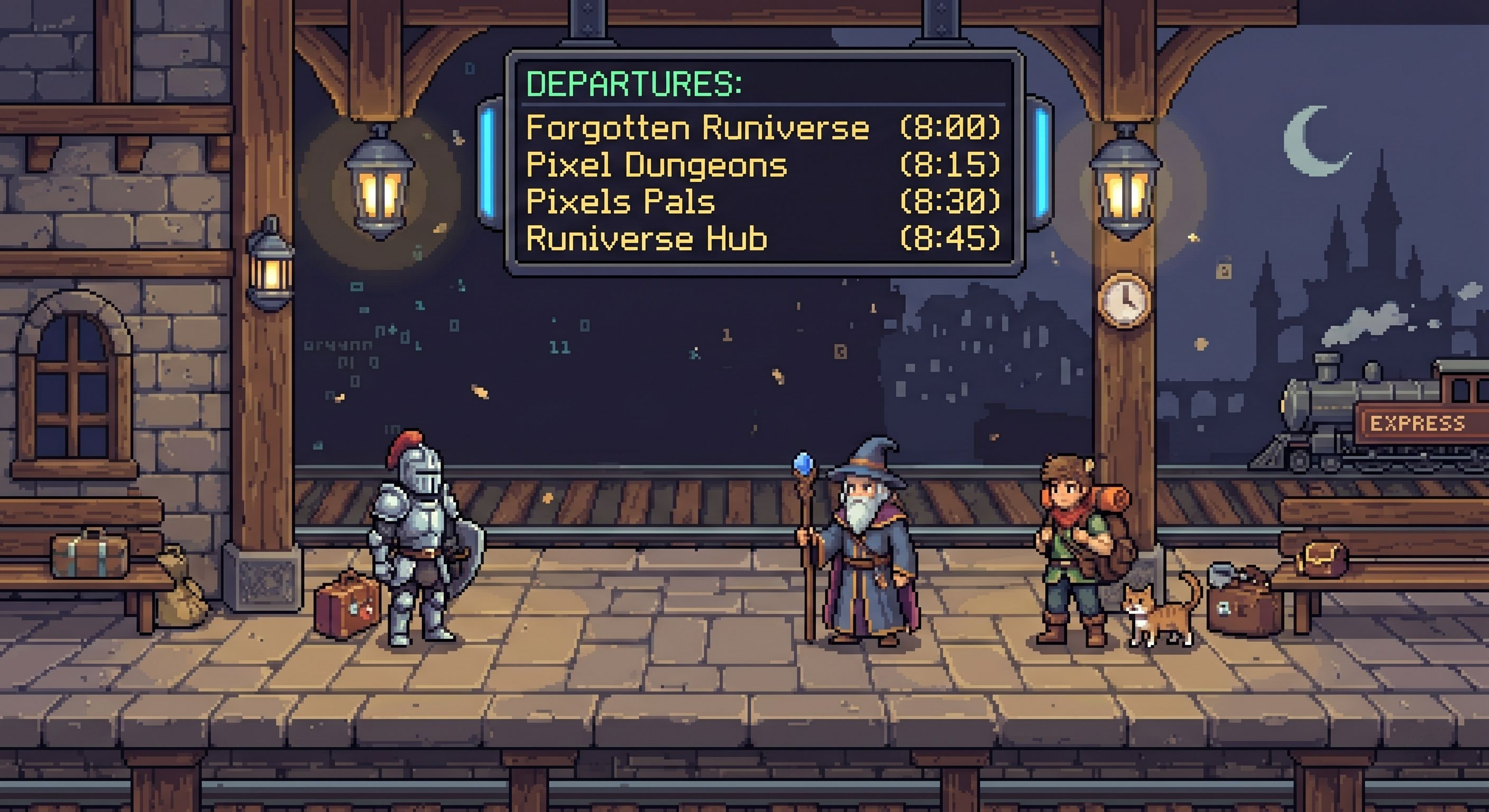
Pixels is becoming an extremely precise digital abacus.
It’s kicking out those who dream of getting rich through 'farming' or turning them into cheap ecological fuel. Meanwhile, those willing to stake, vote, and traverse different games become 'premium nodes' in this advertising alliance.
Is this transition brutal? Absolutely.
It’s transformed the once somewhat romantic virtual world into a KPI assessment site where every aspect requires calculation. You need to calculate your stamina, your output ratio, and your staking weight. If you don’t plan to spend money or invest a lot of time, you’ll basically have no survival space in this system.
But this is reality.
Ponzi models will always collapse; only intermediaries always profit. Pixels sees this clearly; it no longer tries to maintain the unrealistic gold farming myth, but instead pivots to become the traffic intermediary that controls distribution.
In this world full of gold farming vampires, the project team has finally learned to use the most mundane logic to counter human nature.
In the end, let me speak from the heart.
If you're still staring at Pixels' token price, hoping it'll return to its former glory, you might not have understood the game. Its current goal isn’t a spike; it's survival and expansion. It’s slowly, tediously, but steadily transforming into part of the Web3 infrastructure.
The exhilarating gold farming days are dead, replaced by a cold, hard data era. In this era, there are no heroes, just numbers on a balance sheet. Whether you want to be a part of that number depends on whether you can do the math.
As for the so-called 'farm nostalgia'?
Forget it; that’s just bait to catch fish. The bait may be bright, but the person holding the fishing rod never cares what the fish thinks; they only care about how much weight they’ve caught today and how much real money they can get in return. This is Web3; this is the real world we have to face, stripped of all filters.