
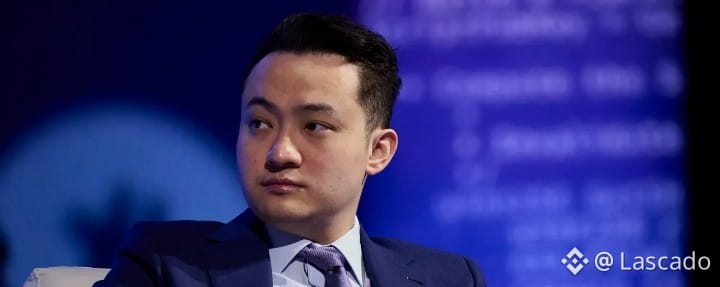
Wow, Justin Sun decided to take Donald Trump's family's crypto train to federal court.
The founder of Tron filed a lawsuit on Tuesday in California against World Liberty Financial. He stated that the company froze his tokens, stripped him of his voting rights, and threatened to completely destroy his assets—all without proper warning, reason, or opportunity to appeal.
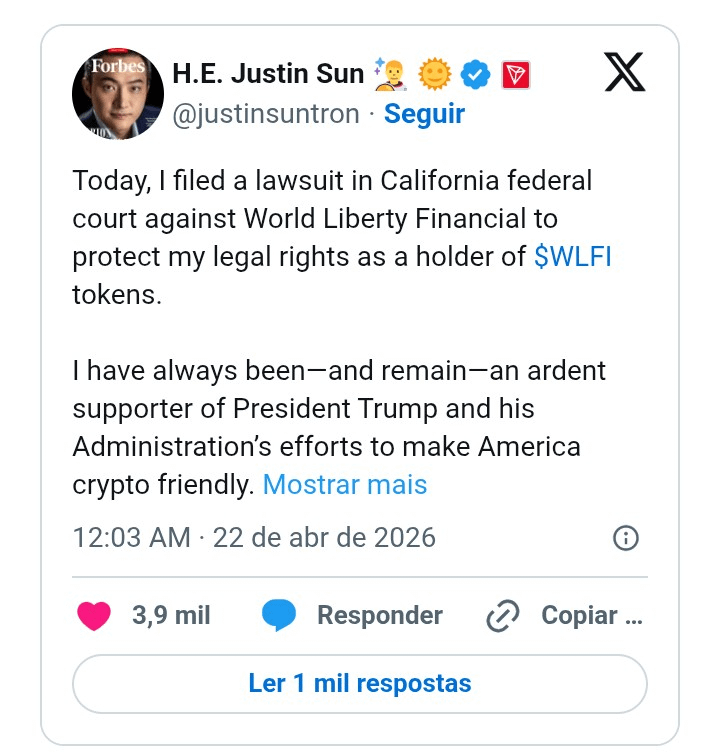
Well, Justin Sun said there was no other way, you know — he said he had to resort to the courts. He also commented that he thinks Donald Trump probably doesn't even know about all this, because, in his view, he wouldn't approve of this kind of thing.
This whole story put one of the most controversial crypto investors in the world on a collision course with one of the most politically well-connected projects. Sun, in fact, became the largest holder of World Liberty Financial tokens after investing around $75 million in WLFI at the end of 2024.
But then, last September, the company went and blocked his portfolio after it appears he tampered with some of the assets—something that may be prohibited by the investment rules. However, Sun denies that he was trying to sell anything.
He put it bluntly: he just wants to be treated like any other investor starting out — no more, no less.
Now, this fight has been dragging on for months, you see. It became public at the beginning of this month, when Sun accused the company of hiding a kind of "backdoor" in the token system, which would allow freezing anyone's assets without warning or chance of defense.
He even called the company's staff "malicious," saying they were using the crypto community as if it were an ATM. The company countered, saying that all of this is unfounded.
To make matters worse, there was also a new proposed set of rules that freezes the tokens for two years and imposes a timeline for releasing them gradually. Sun complained that, since his tokens are frozen, he can't even vote on these decisions.
Experts say the whole issue revolves around the difference between what was promised about the token and what the code actually allows it to do. Some legal professionals are saying that hiding these complicated functions in the code is pointless—it needs to be clear, in simple language, to the investor before they get involved.
Other lawyers commented that this type of blocking only makes sense if it is based on very transparent rules and applied equally to everyone — not just targeting a specific person.
Ultimately, the court must examine whether investors were treated fairly or if the rules were changed mid-game. And the risk for the company is not small: it could face private lawsuits, investigations by state authorities in the US, and even problems with regulators in other countries.
Meanwhile, the WLFI token is worth significantly less today — around $0.08, a far cry from its peak of $0.33 back in September.