

I didn’t start looking deeper into this because I was excited. It was frustration, honestly. Watching players spend hours inside onchain games and still feel like temporary users rather than participants started to feel repetitive. Assets existed, tokens moved, but the loop between effort and retained value felt thin.
The underlying issue is simpler than it looks: most Web3 games built economies that only work inside themselves. Time goes in, rewards circulate, but very little escapes that loop in a meaningful way. So even if ownership is technically there, its usefulness feels limited.
It reminds me of a small town marketplace where everyone trades the same goods with each other, but nothing ever leaves the town. Activity exists, but growth stalls because there’s no external pull.
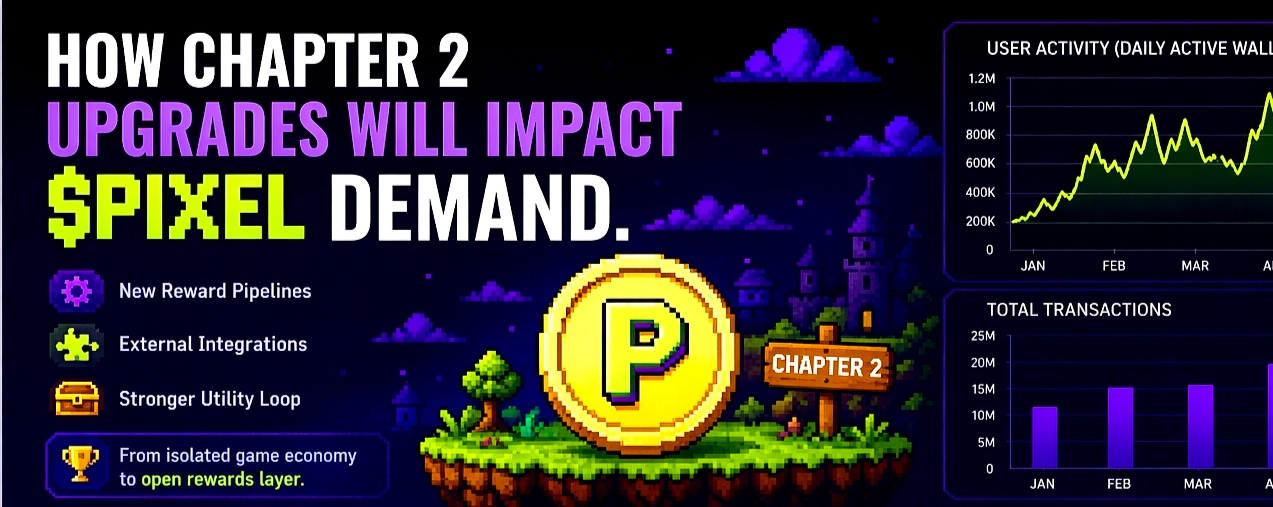
Chapter 2 is trying to push beyond that closed loop. In plain terms, the system starts linking gameplay actions to a broader rewards layer rather than just isolated in-game outcomes. Tasks, crafting, and progression aren’t only about local advancement anymore they can plug into external campaigns and partner incentives.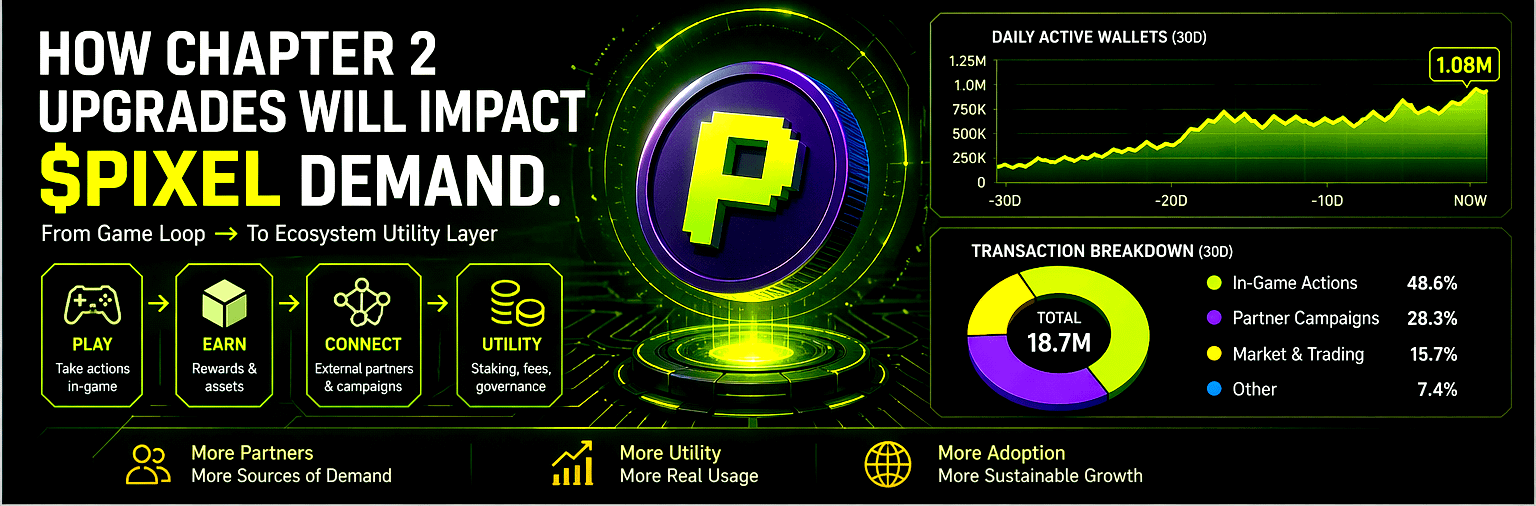
Two implementation details matter here. First, the introduction of task-based reward pipelines tied to external partners means in-game actions can trigger value flows from outside the core ecosystem. Second, the inventory and asset system is being adjusted to support more flexible utility, so items aren’t just static collectibles but can interact with different reward contexts.
The token sits in the middle of this, but not in an exaggerated way. It’s used for fees within these interactions, for staking in certain reward mechanisms, and for governance over how these systems evolve. It’s less about speculation and more about being a coordination layer between players, developers, and external campaigns.
From a market perspective, the game has already seen millions of wallet interactions and periods of high daily activity, but retention and value depth have been inconsistent. That context matters more than any single metric.
In the short term, this kind of upgrade often behaves like a narrative catalyst. Traders focus on attention cycles, user spikes, and unlock schedules. Demand can appear quickly, but it’s also fragile and reactive.
Longer term, the question is different. If this actually becomes a functional rewards layer across ecosystems, then demand doesn’t just come from players it comes from partners needing distribution and engagement. That’s a slower, less visible build, but structurally more meaningful.
There are real risks. If external integrations remain shallow, the system could fall back into the same closed-loop problem it’s trying to solve. Competing ecosystems are also moving toward similar “engagement-as-a-service” models, which reduces differentiation over time.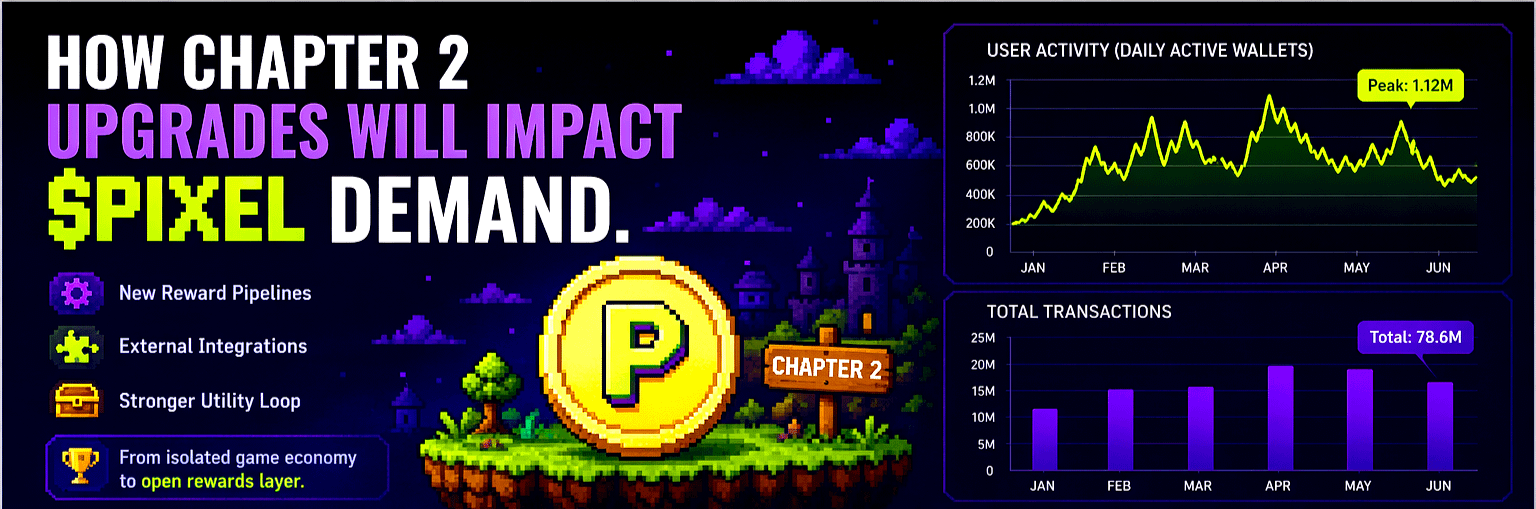
A clear failure mode would be if user activity increases but external reward sources don’t scale alongside it. In that case, more participants would simply dilute the same limited pool of value, weakening the entire experience.
There’s also uncertainty around how sustainable these reward flows are. It’s not obvious yet whether partners will consistently fund these loops or treat them as short-term marketing experiments.
So the impact on demand isn’t something that flips overnight. It’s tied to whether this shift from a game economy to a broader coordination layer actually holds under pressure.
For now, it feels less like a finished system and more like an early attempt to connect isolated pieces. Whether that connection strengthens or fades probably won’t be clear quickly. It’s the kind of change that only really shows itself over time.
