
I’ll be honest: the first time I heard the phrase "guild taxes" in a farming game on a blockchain, I had to stop and roll my eyes. It felt like we were just adding layers of bureaucracy for the sake of it. But after spending some time watching how these organizations actually run, I realized that these tax systems are trying to solve a very real problem. Whether they’re actually doing it well is a whole other debate.
🏛️ The Structure of Digital Governance
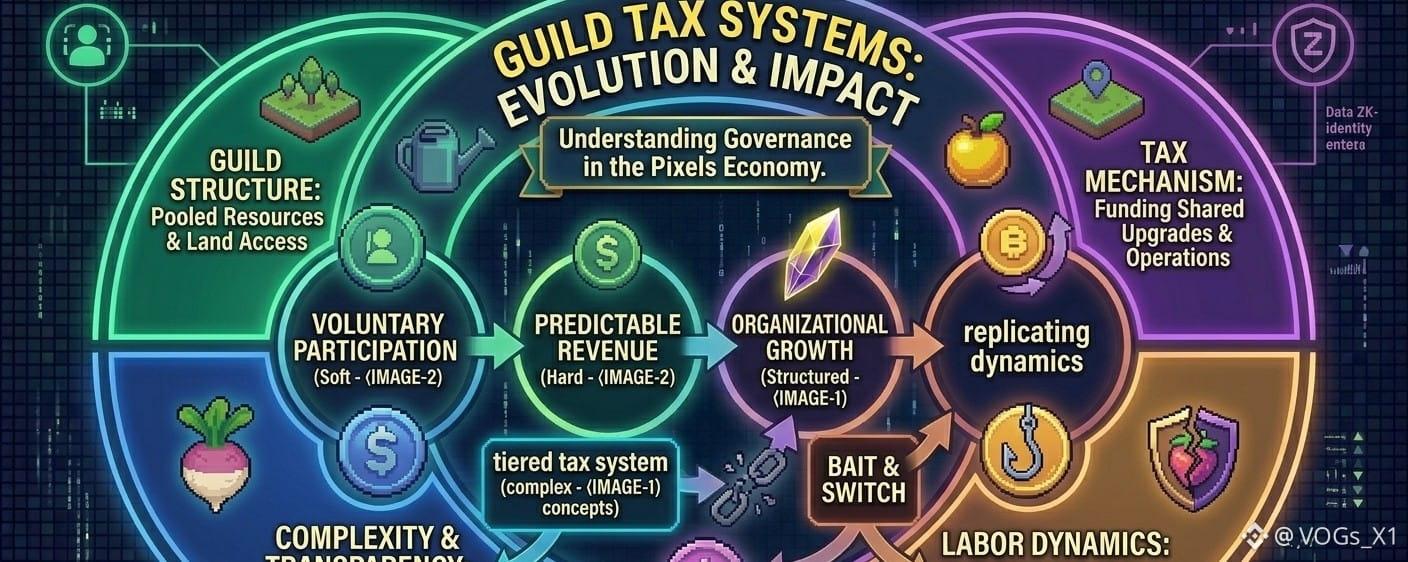
In Pixels, guilds are more than just social clubs; they are economic engines. They pool resources, coordinate farming, and share access to premium land. To keep that engine running, guild leaders take a small percentage cut of what members earn through guild activities. In theory, this funds shared upgrades and keeps the group self-sustaining.
It’s actually a pretty sound design choice. Without a reliable income stream, a guild lives or dies on voluntary donations. That works fine when everyone is excited, but it falls apart the second the hype dies down. A tax system makes the income predictable, turning a "volunteer group" into a functioning organization.
📈 Replicating Real-World Friction
What’s fascinating (and a little alarming) is how quickly these systems start mimicking real-world labor dynamics.
*The Exit Cost:** Sure, you can leave a guild if the tax rate is too high, but you lose access to the land and resources you’ve spent weeks helping to build. That’s a "switching cost" that keeps people locked in, even when they aren't happy.
*The Bait and Switch:** I’ve seen guilds start with 0% taxes to attract members, only to hike them up once the group is established. Whether that's "growth strategy" or a "bait and switch" depends on which side of the transaction you're on.
I’ve watched disputes over these rates in Discord channels, and it doesn't feel like people arguing over a game anymore. It feels like a labor union meeting. You have members arguing about fair compensation and leaders defending the cost of infrastructure. It’s a conversation about employment, disguised as a pixelated farming sim.
🛡️ Navigating the Complexity
The more advanced guilds are now using tiered systems—charging different rates based on whether you brought your own land or what role you play. It's more equitable, but it’s also incredibly opaque for new players.
If you’re looking at joining a guild, you need to treat it like a contract. You should be asking:
1. What is the current rate?
2. How can that rate be changed?
3. What happens to your "equity" if the guild dissolves?
At the end of the day, the guild tax system in Pixels is surprisingly sophisticated. It’s proof that as soon as you add real value to a game, you get all the complexities—and headaches—of real-world economics. It’s just taxation, and it’s every bit as messy as it sounds.