

After reading the paper $PIXEL 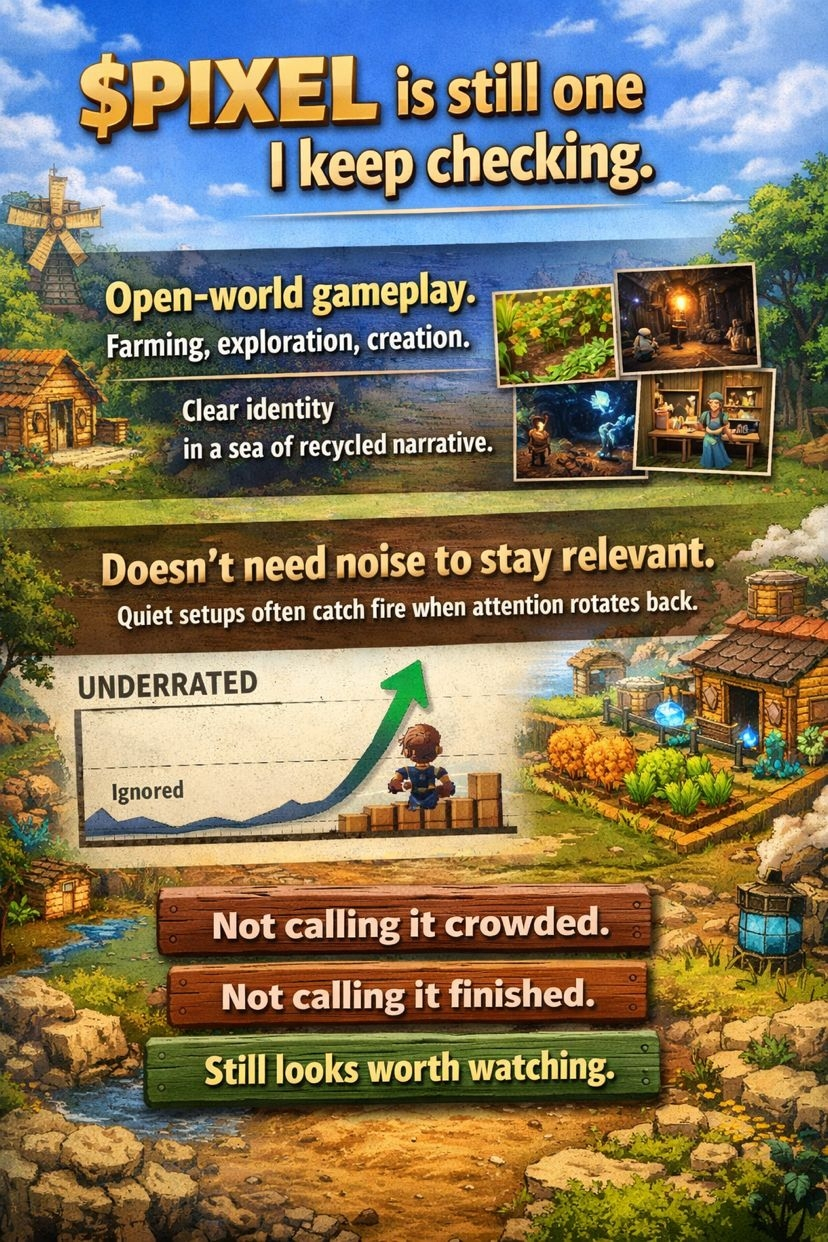
What threw me off wasn't the amount of funding they received, but the cold shorthand on page 35: RORS.
Return on spending for rewards, investment ratio.
In the past, when we talked about Web3 games, we were still wrapped in a cozy veil of 'play-to-earn'. But Pixels rips that skin off and tells you straight: every token issued to players is basically ad spend. And since it's an ad, it needs to be settled.
Honestly, Pixel is trying to turn itself into a "big cyber processing factory" built on the blockchain.
$vPIXEL in the whitepaper is interesting. It's known as a factory coin that can only be consumed and can't be cashed out. Officially, this is called "selling pressure reduction," but in sociological terms, it's just an electronic version of the "factory coupon" issued by coal mine owners to workers in the 19th century.
You work hard gathering wool and farming in the field, and finally, the system rewards you with an electronic food card. This ticket can buy water and food from the grocery store opened by the mine owner (which is a cooperative game in the ecosystem), and even hire people to work, but you can't exchange it for real money and take it out of the factory gate.
The harshest part is the "smart reward" system.
It monitors each player's trajectory through big data, examining the mouse defined as "high value," and then precisely feeds the tokens. As for those low-level players who just want to make money to support their families and whose data doesn't cover the cost of coin issuance by the project team, they are viewed as "worthless vampires" by the algorithm.
Under the iron law issued in RORS > 1.0, the system doesn't need inefficient carbon-based entities; it needs hired digital farmers who can produce high-quality active data for advertisers without ever intending to withdraw their money.
In the end, players think they are achieving their dreams on a deserted island.
In reality, they are just running on a hamster wheel called "gaming" on a traffic assembly line with panoramic surveillance, for real money in the hands of the project's advertising buyer.
If the game starts by writing "exploitation rate" as the north star indicator in the whitepaper, are you a player in front of the screen or a consuming mining machine?