
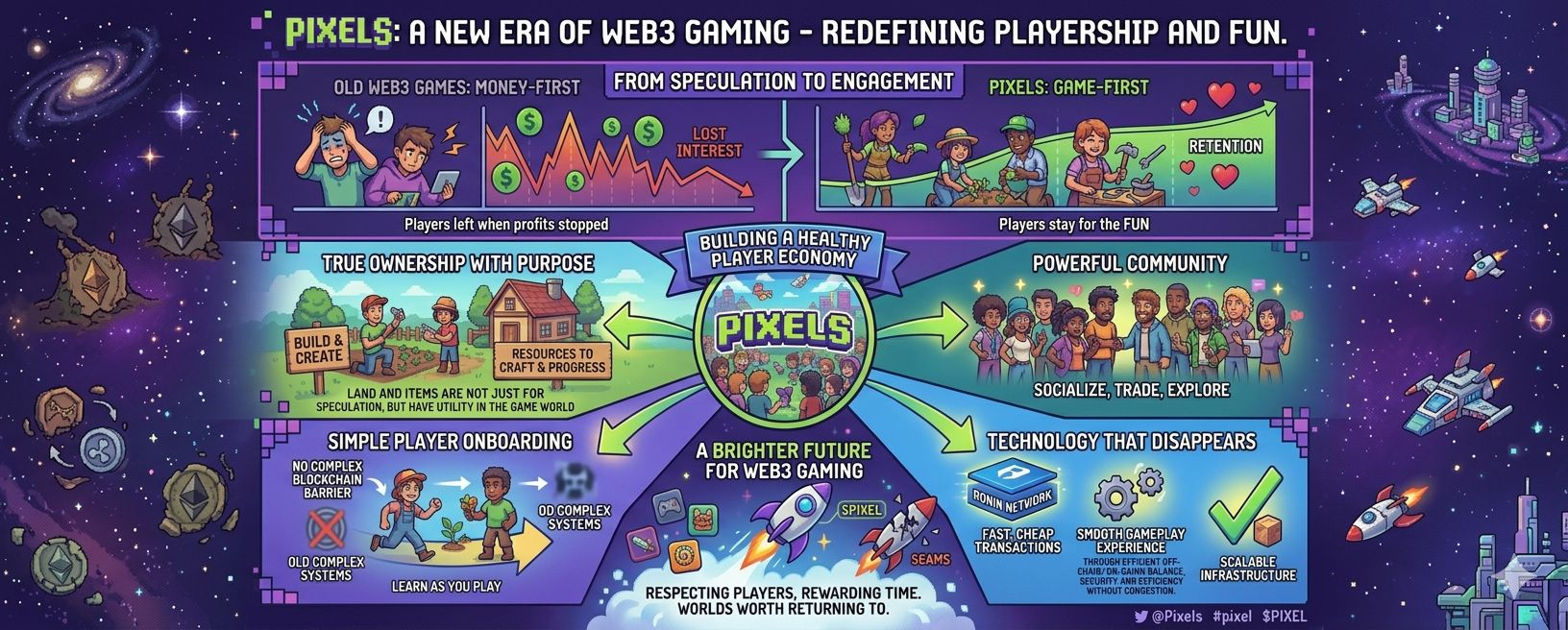
The Web3 gaming industry has been stuck in the old argument for years: do players really own the things they buy in a game or is it just an experience? On paper the idea of owning things in a game sounded amazing. Players could really own the things they bought trade them with others and be a part of an economy instead of being stuck in the old way of playing games. It was an idea that got a lot of attention quickly.. In reality a lot of the first games that used blockchain technology did not deliver what players wanted. They focused much on making money and not enough on making the game fun. At first people were excited about the possibility of making money. Once the excitement wore off they lost interest.
Pixels is different. It does not try to change the way we play games with promises. Instead it focuses on something important: making the game fun. That sounds easy. It is exactly what many Web3 projects missed. Pixels understands that if the game is not fun then nobody will want to play it. If players are only playing to make money they will leave soon as the money stops coming in.. If they are playing because they enjoy the game then they will keep coming back.
What makes Pixels stand out is how easily it gets players into the game. Players can farm, explore and craft things which're all things that many gamers already know how to do. There is no learning curve or confusing system to figure out. Players can just start playing gather resources build things and have fun away. That is powerful because it makes it easy for people to start playing. Of having to learn about blockchain technology first players can just start playing and learn as they go. The technology is in the background so players do not even notice it.
A big reason this works is because of the infrastructure. Pixels is built on the Ronin Network, which's a special blockchain system just for games. That matters because the old blockchain systems can be slow, expensive and hard to use. Ronin makes it faster, cheaper and easier to use. In practice this means players can play the game without realizing they are using blockchain technology. The game runs smoothly which is how it should be.
Owning things in Pixels actually means something. In many of the Web3 games the things players owned were just things to trade and make money. Pixels is different. The land players own is not something to collect; it is a place to build and create things. The resources players gather are not things to trade; they are needed to craft things and make progress in the game. This makes the game healthier because players want to play the game not just make money. Players are motivated to play the game because it's fun.
The way the game is designed is also strong. By making the gameplay flexible and separate from the blockchain technology Pixels can keep updating the game without messing up the things players own. This is important for the game to keep growing. Many online games are successful because they keep getting updated and improved. Pixels can do the thing while still letting players own things. That is a combination.
The game is also secure and efficient. Because not every little thing has to be processed on the blockchain the system does not get congested. This makes it more practical and reliable for players. The Ronin Network also helps with this.
The best sign that Pixels is successful is its community. Players are not just playing to make money; they are playing because it is fun. They farm, explore, trade and socialize with each other. The economy is still important. It is not the only reason people play. That changes everything. It turns players from people just trying to make money into long-term players.
Pixels represents something than just one game. It shows that Web3 gaming is growing up. The future of the industry will not be about games that just talk about blockchain technology; it will be about games that use technology to make the game better. Pixels proves that owning things in a game and having fun do not have to be things. When done correctly they can make each other better.
In the end Pixels is special because it understands what really matters. Great games are great because they respect players reward their time and create worlds that're worth coming back, to. By putting gameplay and technology second Pixels shows us what Web3 gaming was supposed to be all along.
