
There was a time I used Binance AI Pro almost every day, not that anyone forced me but it just became a habit. Everything felt pretty "smooth": waking up earlier, checking the charts more regularly, running an AI Pro session before each trade. After a while, it felt like I was working with a system, having preparation, and maintaining control. Overall, I felt way more "serious" about my trading, and I believe I'm heading in the right direction.
But after a while... I started to notice something was off.
It's not that I was outright wrong, but more like... not making progress. The results weren't bad, but they didn't lead anywhere. And the most annoying part was that I started relying on opening AI Pro. If I didn't open it, I felt something was missing, like I wasn't secure, even though the market wasn't showing anything new.
It was only when I sat down to take a closer look that I realized the issue wasn't with the tools. My analysis was still solid, the logic was tight. AI Pro wasn't the reason I was trading poorly.
If something's wrong, it's not with Binance AI Pro; it's how I'm using it. I wasn't opening it for clear reasons, but rather every time I felt uncertain in my mind. These two sound similar, but they're actually worlds apart. I once asked myself straight up: "Am I looking for more data or just seeking reassurance?"
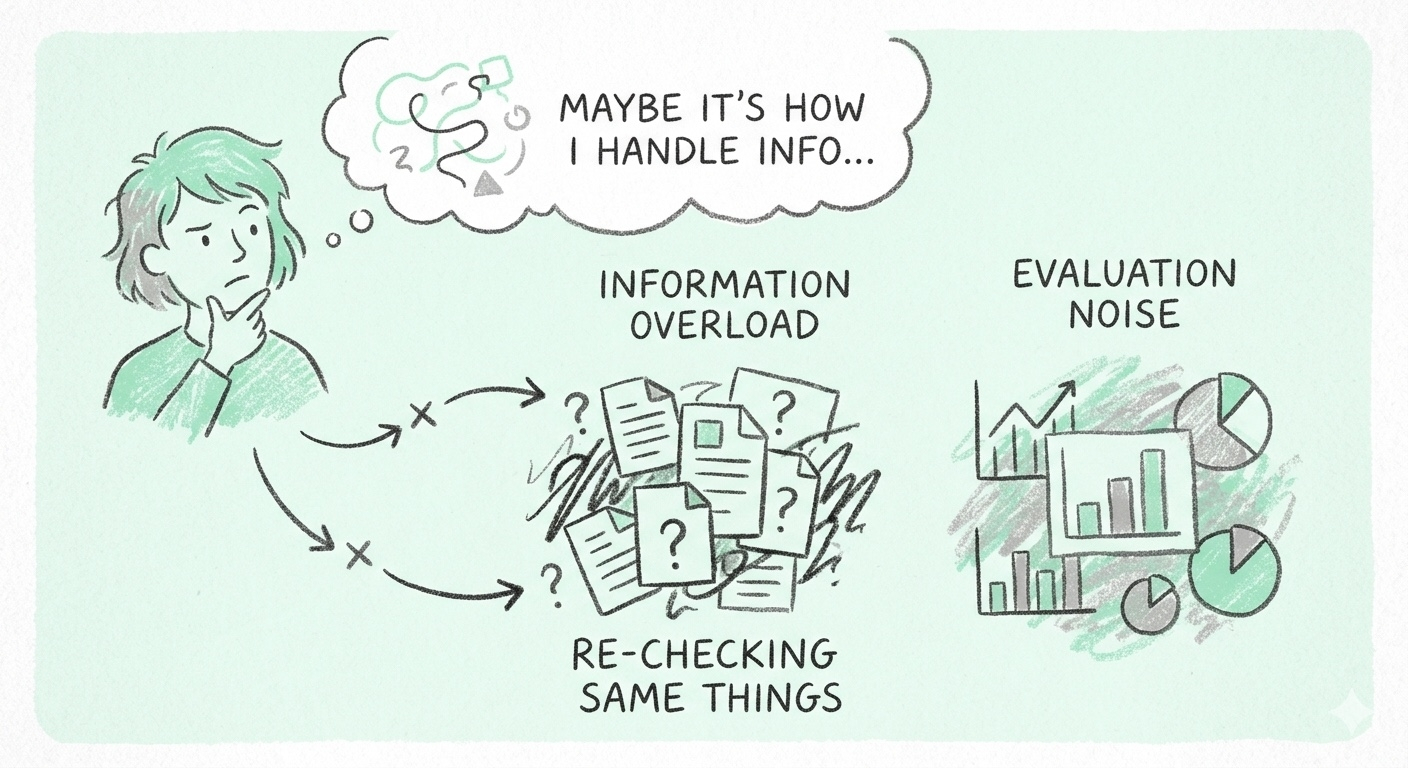
That's when I started thinking about something I hadn't paid much attention to before: maybe the issue wasn't just that I was using AI Pro too much, but how I was processing information when I kept re-checking the same thing.
Later, I read back and realized it resembled information overload in decision-making. When the amount of information or updates exceeds what's necessary, instead of improving decisions, it starts to muddy the evaluation process. It's not that the data is wrong, but there are just too many versions of the same picture.
So, I started opening more, reading more, watching more. Each time, there was a slightly different framing. Not wrong, but not exactly like before. And these "not exactly" moments piled up, making me feel like the market was more complex than usual. In reality, it was the same. I wasn't gaining new data; I was just looking at the same thing through different interpretations.
Looking back at BTC, everything becomes way clearer. In early April 2026, Bitcoin was fluctuating around $67,000 - $78,000, with some spikes up near $78,300 before dropping back to the low 70k range. If you zoom out from the start of the year, it shot up to nearly $96,000 before correcting back to the 60k - 70k zone, and now it's bouncing back like it is.
But the key point is that for most of that time, the market wasn't actually changing structure. It was just fluctuating within a range influenced by major macro factors like the Fed, CPI, or liquidity.
The problem was that I wasn't trading based on that structure.
I trade based on each time I open AI Pro.
Every time I checked back, I saw a slightly different perspective. It wasn't that the market changed, but my interpretation of it did. And that continuous shift made me act as if BTC was more volatile than it actually was.
At this point, I understood something pretty straightforward: I wasn't lacking information; I had too many ways to interpret it. My worst trades weren't because the analysis was completely wrong, but because I was shifting my perspective while the market hadn't budged. I reacted based on what I had just read, not based on the market.
The issue isn't a lack of discipline. It's the wrong kind of discipline.
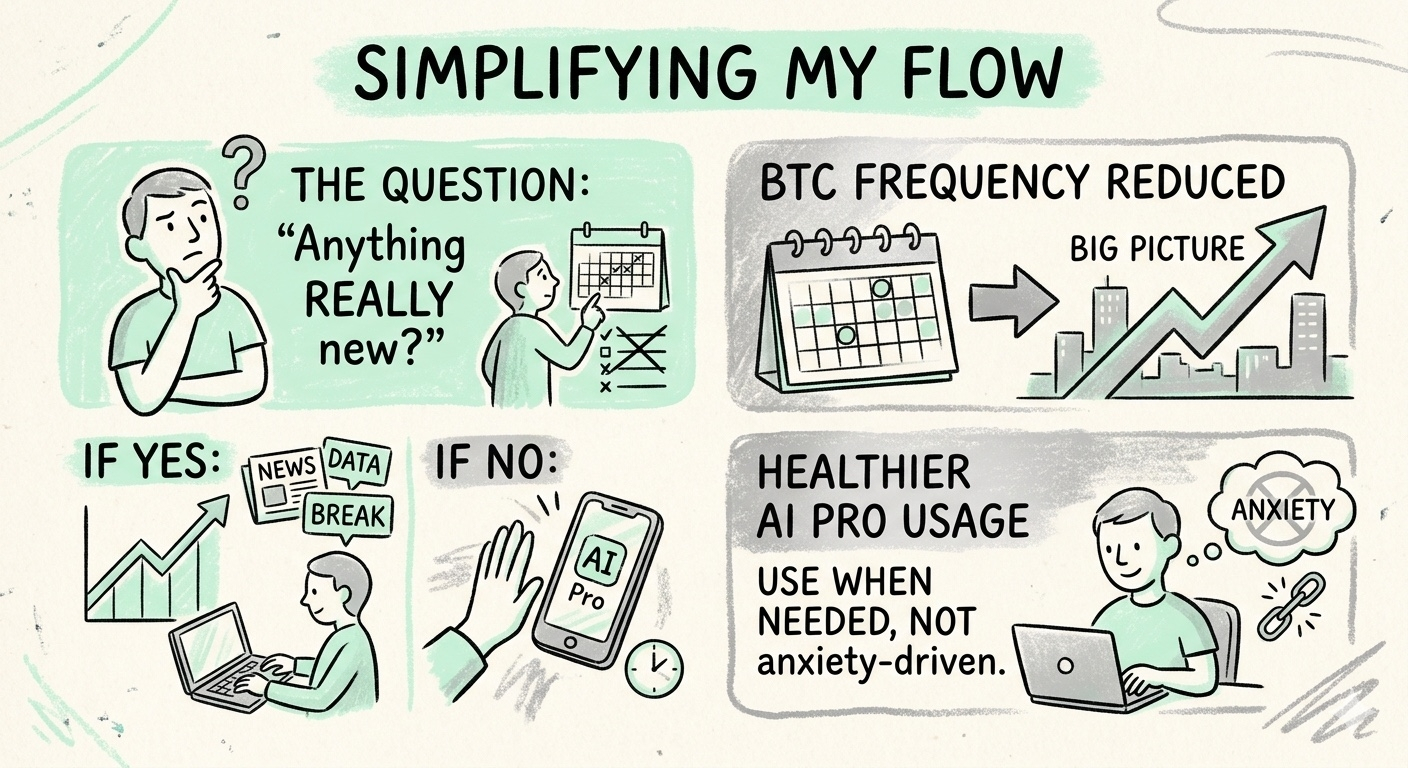
I started simplifying things. Before each time I opened AI Pro, I asked myself: "Is there anything really new?" If there was news, data, or a significant break, then I'd open it. If not, then I'd pass. It sounds simple, but putting it into practice isn't easy because it goes against my habit of wanting to check for certainty. With BTC, I reduced the frequency to just a few times a week. Not much, but enough to grasp the big picture without getting rattled by every little fluctuation.
Now, I still use AI Pro, but I no longer have the dependency I used to. I use it when needed, not when I'm feeling anxious.
Using more doesn't mean being better prepared.
Sometimes, the hardest thing isn't to put in more hours. It's knowing when... to just chill.
"The illusion of consistency" exists because from the outside, everything seems on point: I'm analyzing more, keeping a closer watch, and updating constantly. But in reality, that's just a fake consistency - regular in behavior, but not in decision quality.
Research on Intolerance of Uncertainty by Dugas and colleagues (early 2000s) showed that when people constantly seek more information to feel certain, it doesn't reduce their anxiety; rather, it amplifies their worry. The "reassurance-seeking" and repeated checks lead them to over-interpret the same issue, creating a feeling that the situation is always changing, even though the reality isn't vastly different.
Trading always carries risk. AI-generated suggestions are not financial advice. Past performance does not reflect future results. Please check the availability of products in your area.