


My little niece, Duoduo, is eleven this year and in fifth grade. Her biggest hobby during her free time is parkour in (Egg Party). Her understanding of money is still at the stage of “Mom gives me ten bucks for snacks,” and her grasp of the term “crypto” is just “Auntie, that thing on your phone that goes up and down.”
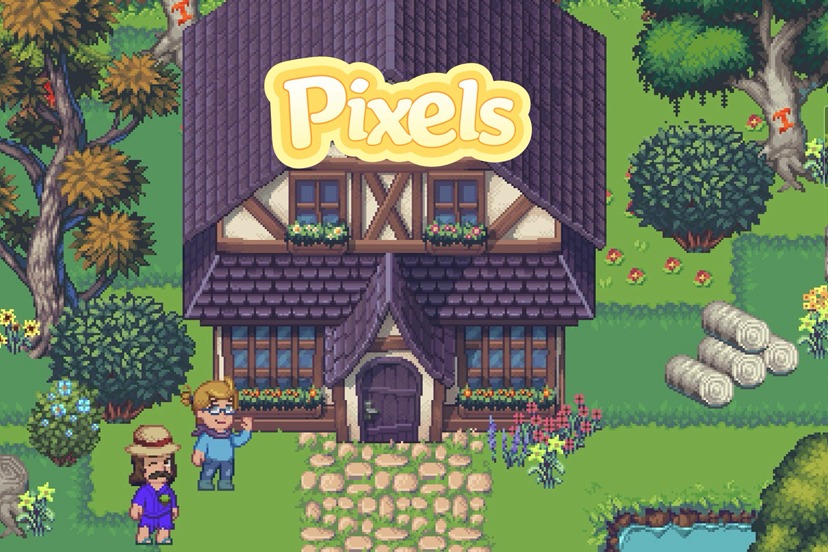
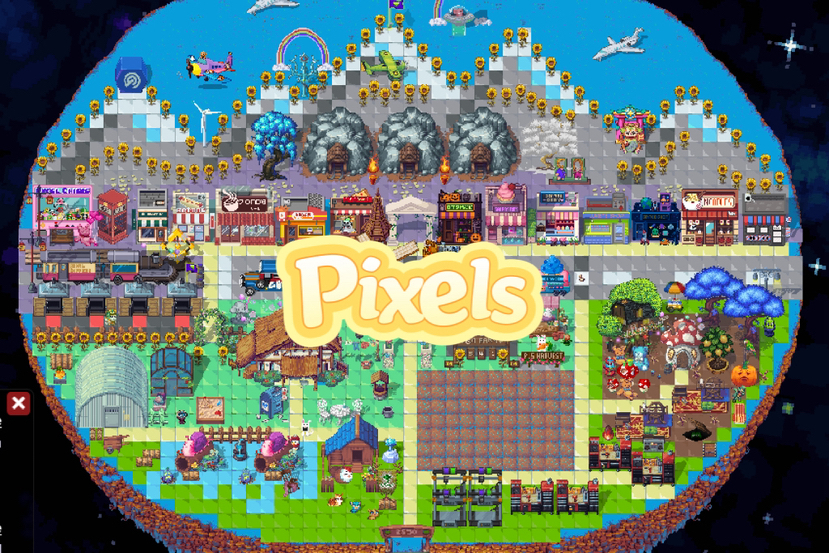
Last weekend, she came over to my place and saw my computer displaying the @Pixels interface. She leaned in for a closer look and said, “This art style is so old-school, like the games my dad played when he was a kid.”
I said, yeah, that’s called pixel art. She looked at it for a bit longer and pointed to an icon in the bottom right corner, asking, “What’s that?”
That's an entry point for an event called 'Rift of the Rabbits' in Pixels—an Easter-themed event launching in April 2026, where players need to help a rabbit named Hopper rescue trapped eggs from a cursed rabbit dimension. After I explained the gameplay to Duoduo, her eyes lit up and she said, 'This sounds like our (Egg Party) event during the festival!'
She’s not wrong. Since the end of 2025, Pixels has been consciously doing 'holiday-themed operations'—in December they had the Moku Quest event, and in April 2026, they had the Easter Rabbit event. The core logic of these events is exactly the same as traditional mobile games: creating short-term goals with holiday vibes, using limited-time rewards to boost retention.
But the question Duoduo asked next made my heart skip a beat. She said, 'Auntie, what does this game have to do with that thing on your phone that goes up and down?'
An eleven-year-old girl caught me off guard with one question.
Because most Web3 games can't really answer this question. The relationship between tokens and games is forcibly welded together in their design—play the game, the game gives you tokens, you sell the tokens, and the game economy collapses. Throughout this process, 'playing the game' is just the wrapper for 'mining'.
@Pixels 's way of handling this issue is the most pragmatic I've seen. In a February 2026 AMA, the team clearly proposed a hybrid model: traditional players can completely avoid Web3 components through the Stacked system, just like playing an ordinary mobile game; players interested in P2E can participate in the on-chain economy through staking and advanced features. The two paths run parallel and do not interfere with each other.
This logic technically relies on an AI-driven user profile system. Stacked uses machine learning models to collect player behavior chain data in real-time, tagging each player and calculating two core metrics: retention rate (whether players will come back tomorrow) and LTV (lifetime value of the player, or how much money this account can actually make). Based on these calculations, the system selectively distributes rewards—who is really playing, who will stick around, and AI precisely gets USDC into their hands.
To put it simply, the approach of #pixel is to physically separate 'game' and 'economy'. If you want to just play the game, you can, without needing to understand anything. If you want to earn while playing, that's fine too, but you'll have to go the staking and long-hold route. There's a buffer wall between these two paths to prevent speculative emotions from leaking into the gaming experience.
Of course, Duoduo doesn't understand all this. She just thinks that the rabbit rescue event is pretty fun. But her question—'What does this game have to do with that thing on your phone that goes up and down?'—happens to hit the biggest sore spot in Web3 gaming.
Most project teams can't answer this question because they don't know the answer themselves. Their games are the appendages of the tokens; when the token goes up, everyone is happy, but when the token drops, nobody plays the game. However, Pixels has a clear line of thought: games are games, tokens are tokens, connected through Stacked, but they don't kidnap each other.
Founder Luke mentioned something in an interview at the end of 2025 that I think is a footnote to @Pixels Pixels' entire logic. He said: Crypto can be the backend, but ordinary users don't need to interact with the crypto part daily; they just need to earn, spend, and own assets seamlessly. Translated, it means: Blockchain is the engine, not the steering wheel.
When Duoduo was leaving, she said to me, 'Auntie, if that rabbit event gets updated, let me know.' I promised her I would. At that moment, I suddenly felt that Pixels is truly on the right path. Because an eleven-year-old girl's expectations for a Web3 game aren't about when the $PIXEL tokens are going to pump, but rather when the next event will launch. I think that in itself might be a signal.