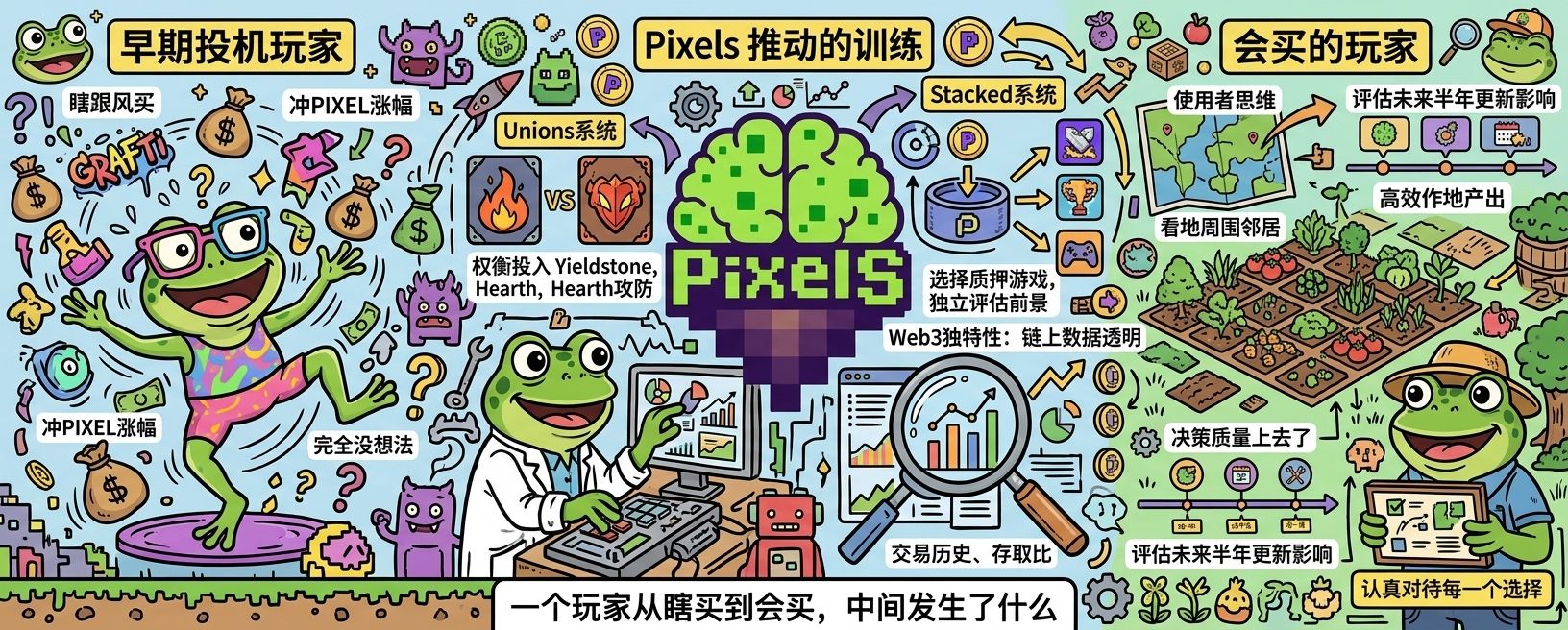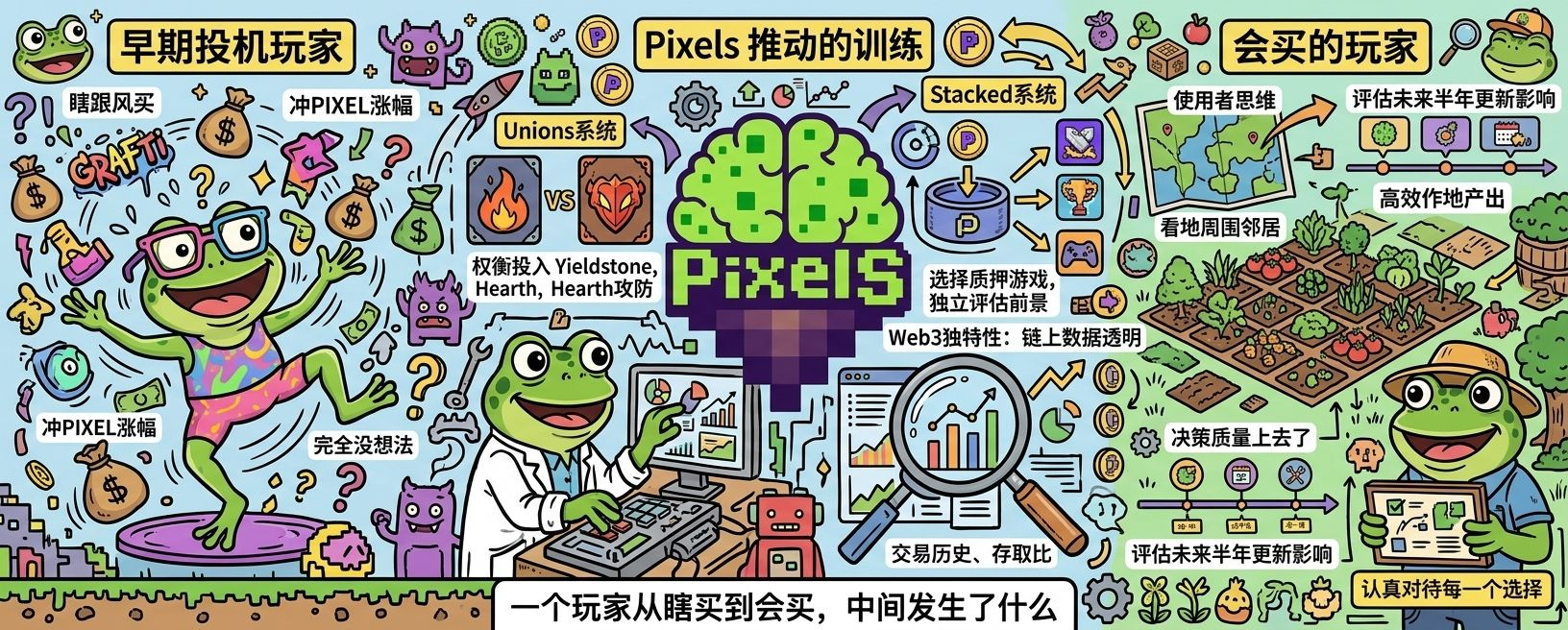
I know this dude who jumped into the game during the mid-2023 hype of blockchain gaming. Back then, he was buying whatever was hot—Axie, Pixels, Big Time, you name it. He told me his strategy was just to follow what everyone in the group was saying was good, totally no personal analysis. In 2024, he ended up taking some heavy losses. Later, he started to really dive into researching the games themselves. Now, before he buys a piece of land, he checks out who his neighbors are, what the yield efficiency is like, and if there are any updates coming in the next six months that could affect the land's value. He says that's the real knowledge he picked up after two years in the game.
My buddy's evolution curve is essentially reflective of the overall player evolution curve in @Pixels over the past two years.
Early Pixels players were mostly in it for the PIXEL token's price surge. Back then, land prices were inflated, and many bought land without considering its utility, only looking at the potential resale value—classic speculation mentality. But after the token price drop from 2024 to 2025, the profit-from-speculation strategy became unviable. The players who stuck around started focusing back on the game itself, figuring out the most efficient skill system, which crops had the best output-to-PIXEL consumption ratios, and how land orientation and surrounding facilities impacted daily operational efficiency. This shift from a speculation mindset to a utility mindset is particularly evident among the veteran players.
Pixels' product design is also moving in this direction. Chapter 3's Unions system isn't just about adding a guild; it links players' resource investments to seasonal competition. Players need to figure out which guild will give the highest Yieldstone returns and whether to defend their own guild's Hearth or attack the opponent's Hearth. This choice forces players to weigh pros and cons; it doesn’t just hand them the right answer, but encourages them to think for themselves. After the Stacked system rolled out, players staking PIXEL need to choose which game to invest in, and behind that choice is an independent evaluation of each game's development potential. No one tells you which game is worth backing; you have to analyze the data, updates, and community activity. If you make the wrong choice, that's on you; if you get it right, you reap the benefits.
The result of this design is that the overall decision-making quality of veteran players in #pixel is improving. My buddy now checks on-chain data before making purchases, looking at the transaction history of a piece of land over the past three months and the deposit-withdrawal ratio of a token staking pool. He says this information is simply not available in traditional games, but on-chain, everything is transparent. Those who are willing to spend time researching are a step ahead of those who don't. This is a unique aspect of Web3 gaming; it forces players to learn how to interpret data, make choices, and face the consequences. Initially, it can be tough, but once they find their groove, players' abilities improve.
Data supports this evolution. In December 2024, in-game spending hit 10 million tokens in a single month, with that spending not evenly distributed but concentrated among players who know how to play effectively. In the staking system, deposits consistently exceed withdrawals, indicating that thoughtful holders are choosing to hold long-term rather than chase short-term profits. The presence of these holders is a crucial source of project stability.
Of course, we have to be honest; this evolution curve comes at a cost. New players entering now face a game environment already optimized by veteran players, with a much higher learning curve compared to the early days. The prime land is already taken, and the best skill point strategies are outlined in various community guides, leaving less room for the joy of discovery. This maturity is beneficial for veteran players but can be a pressure cooker for newcomers. Whether Pixels can smooth out the learning curve for new players is an ongoing challenge that needs addressing.
My buddy was telling me that his gaming experience now feels completely different from two years ago. It's not about how much he can make; it's about enjoying the feeling that every choice he makes has a reason. He mentioned that this feeling wasn't there when he played traditional games because the choices in those games didn't really matter at the end. But in Pixels, every decision leaves a mark, and every investment brings returns or lessons, which makes him take each step more seriously. He said that's the biggest takeaway from Pixels for him—not the money earned, but learning to take every choice seriously.
The existence of these players speaks louder than any promotional data about Pixels' worth. Whether the project can continue to thrive is another question, but at least it has cultivated a group of knowledgeable players. Their skills are their own, applicable anywhere, and that output is way more stable than token prices.