
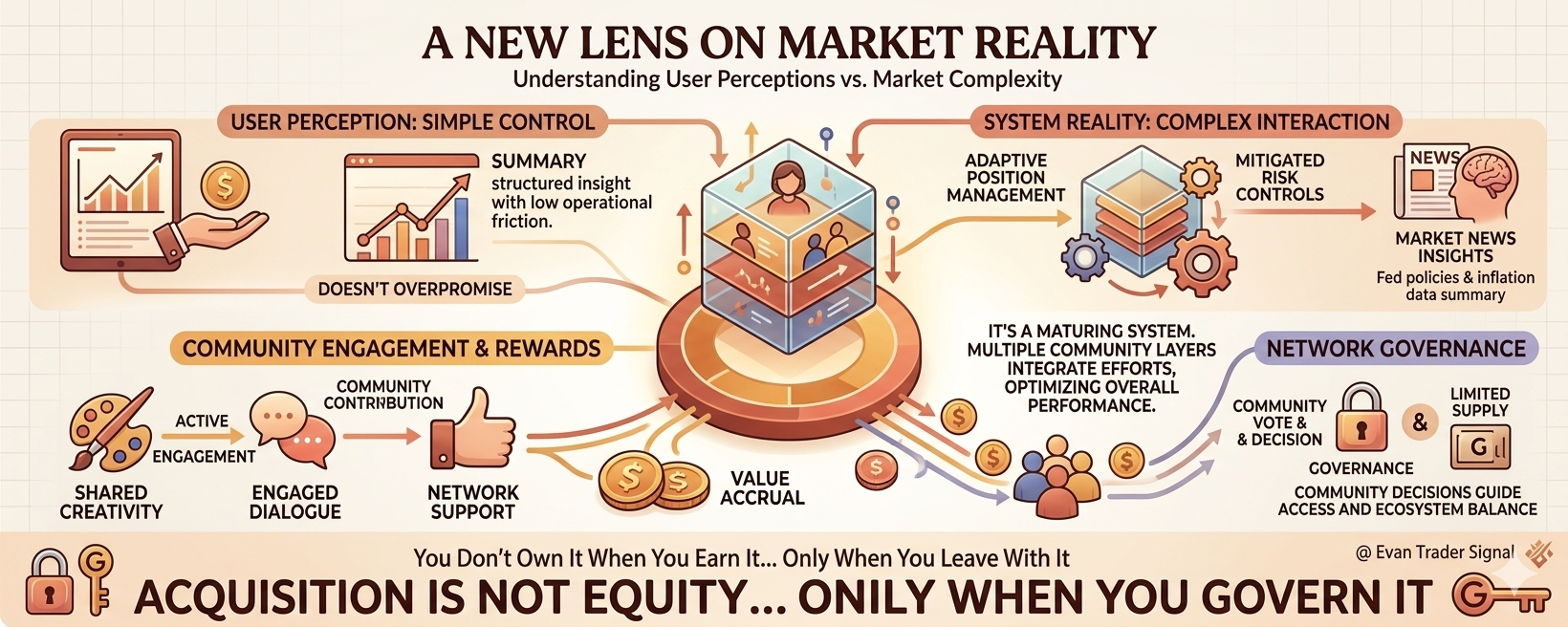
At first, Binance AI Pro looked straightforward.
Clean interface, clear features, and the usual promise of smarter trading support. From the outside, it felt like something easy to understand — maybe even easy to rely on.
But after using it seriously for over a week, in actual trading situations, that first impression started to shift.
Because reading about a tool and actually using it are two very different things.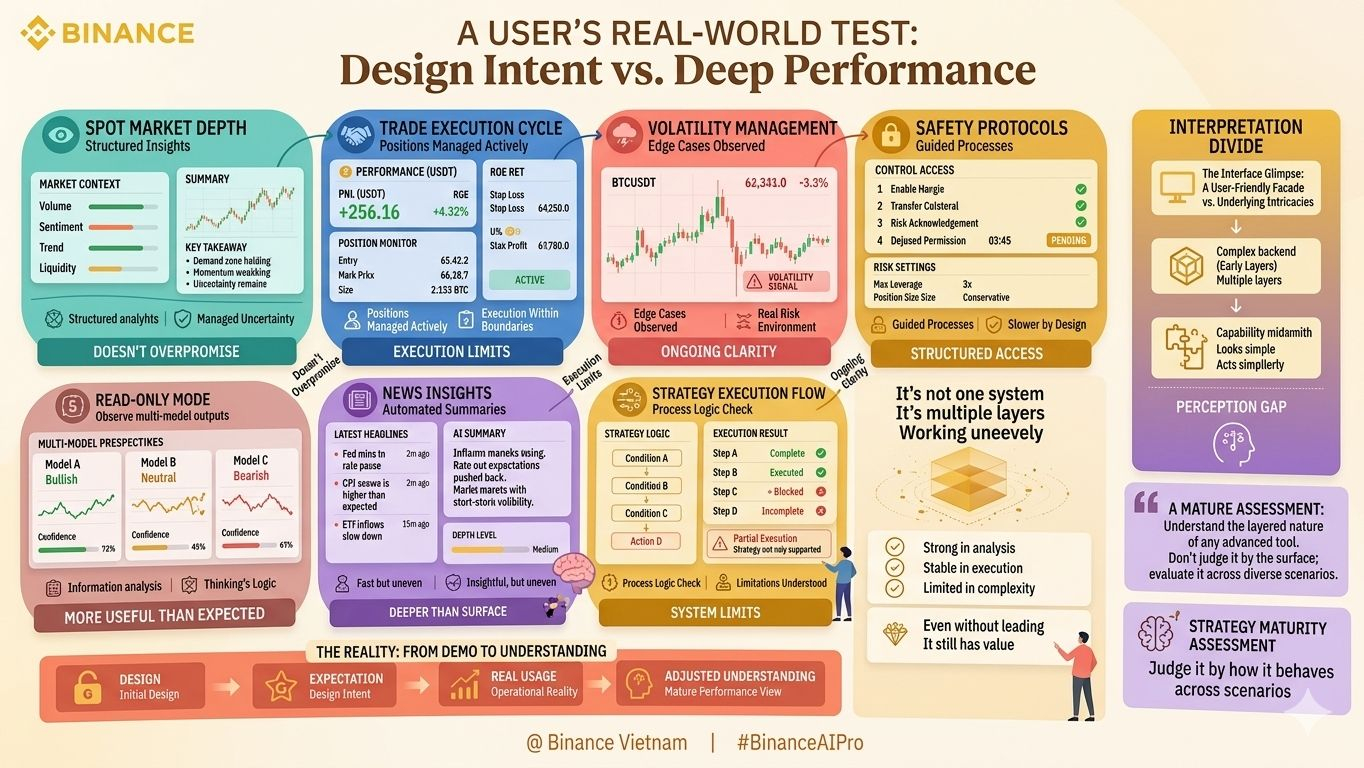
---
It Thinks Well — But Doesn’t Pretend to Be Certain
The first thing that stood out was how it handles analysis.
When I asked about potential entries on a mid-cap asset, it didn’t just throw out signals or direct instructions. Instead, it built a case — combining context, volume, and sentiment.
What made it interesting was the tone.
It didn’t act overly confident. There was always a layer of uncertainty in its responses, which, in a strange way, made it feel more reliable. It wasn’t trying to “sell” a decision — just present one.
---
Execution Works… Within Limits
On the futures side, it does what it’s designed to do.
It monitors positions, manages risk, and reduces the need for constant manual input. For routine conditions, that works well.
But there’s still a question mark around volatility.
I haven’t fully stress-tested it during sharp market spikes — and that’s usually where systems reveal their weaknesses.
---
The “Slowness” That Actually Makes Sense
One thing that initially felt frustrating was the slightly delayed process when activating trading permissions.
It didn’t feel instant.
But after using it more, that design choice started to make sense. It introduces friction — the kind that prevents impulsive decisions.
Even position sizing reflects that mindset.
The AI tends to be conservative, especially compared to how traders behave during FOMO moments. It’s clearly built with risk control in mind, not aggression.
---
Unexpected Value: Just Reading the Market
The most surprising part came when I stopped using it for execution entirely.
For a couple of days, I turned off trading permissions and used it purely as an analysis tool.
And honestly, that’s where it became more valuable than I expected.
Different models offered different perspectives — sometimes even conflicting ones. But instead of being confusing, it actually helped clarify my thinking.
It felt less like getting answers…
And more like having multiple viewpoints to work through.
---
Where It Still Falls Short
The limitations become clearer when you push it further.
Basic queries? Clear and direct.
Market summaries? Fast enough.
But deeper insights? Inconsistent.
And when I tried building more complex strategies, the gaps showed up quickly.
It understands the logic. It can explain the idea.
But execution doesn’t always follow.
Some strategies are simply too complex or not supported within its current capabilities.
---
What It’s Actually Good At
After testing it across different scenarios, one thing became clear:
It’s strong in analysis and synthesis
It’s reliable in controlled execution environments
But it’s limited when complexity increases
And maybe the biggest realization:
Even if you never use it to trade…
Using it just to read the market already has value.
---
Final Thoughts
My expectations at the start were slightly off.
The interface feels simple, but the system underneath is still evolving. At the same time, it’s more solid than I initially assumed — just not in the way it’s often presented.
Both of those realities exist together.
So if you’re thinking about using it, it’s important to see both sides.
It’s not a complete solution.
But it’s not just a gimmick either.