
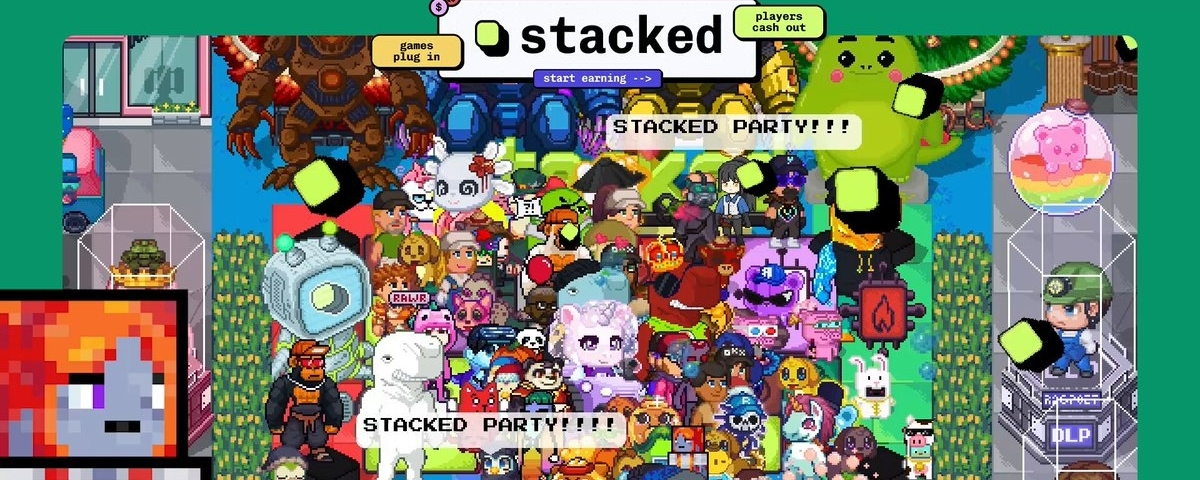

After thinking about my own early experience with the Stacked app as a player, I started wondering about the other side — how easy (or difficult) it actually is for external game studios to integrate the system.
The more I looked into it, the more one detail stood out: the integration process appears deliberately straightforward. According to the team, studios can begin with a simple data SDK that requires just one line of code to start logging important player events. There’s also a client-side SDK option that allows them to deliver offers directly inside their game without requiring players to download or interact with the full Stacked consumer app. The whole thing can even be white-labeled, meaning the rewards feel native to the studio’s own title.
From my perspective, this design choice is significant. Many Web3 projects in the past forced studios to rebuild complex reward infrastructure from scratch — something that often led to the same problems Pixels faced and solved internally over years. With Stacked, a studio can plug in, define clear goals (such as improving day 3–7 retention, boosting first purchases, or reactivating lapsed players), and let the AI layer do much of the heavy lifting.
I imagine a smaller studio integrating this. They send basic event data — things like session length, progression milestones, or churn signals. The AI game economist, trained on real Pixels data, then analyzes patterns and suggests targeted offers at the right moment. No need for a large analytics team or manual experimentation cycles. The system can even help identify where reward budgets might be leaking to bots or low-engagement players.
What I like is that it doesn’t force a complete overhaul of the game’s identity. The integration can run quietly in the background while the creative team focuses on what they do best — building the core gameplay loop. For players, the experience stays inside the original game, keeping that cozy or immersive feel intact.
Of course, it’s still early. Not every studio will have the same event structure, and some game designs (fast-paced action vs relaxed simulation) may require different tuning. Questions remain about how smoothly the AI insights translate across very different genres and whether smaller teams will find the plain-language querying tools as intuitive as promised.
Still, after observing how Stacked has matured inside Pixels — handling streaks, quests, and deeper economic layers like Tier 5 — this SDK approach feels like a logical extension. It takes years of real production data and makes it available as infrastructure rather than keeping it locked away.
This could quietly change how studios think about rewarded play. Instead of treating rewards as a risky marketing expense, they get access to a battle-tested “AI game economist” that helps make smarter, more sustainable decisions. Over time, as more titles join, the shared data could make the entire network smarter — benefiting everyone from players to developers.
I’ll be watching closely to see which studios take the first steps and how the integration stories unfold. If it stays as low-friction as it sounds, Stacked might become one of those rare tools that actually lowers the barrier for better game economies without forcing everyone to copy the same playbook.
For now, the direction feels promising — practical, measured, and built on real experience rather than hype.