
On April 23, Bitcoin made another strong move, stabilizing around $78,000, with the previous trading day even breaking through $79,000, hitting a new local high since February this year. In comparison, Ethereum's movement has been more moderate, oscillating around $2,400, while many mid and small cap altcoins have seen significant rallies, with a noticeable resurgence in market profitability.
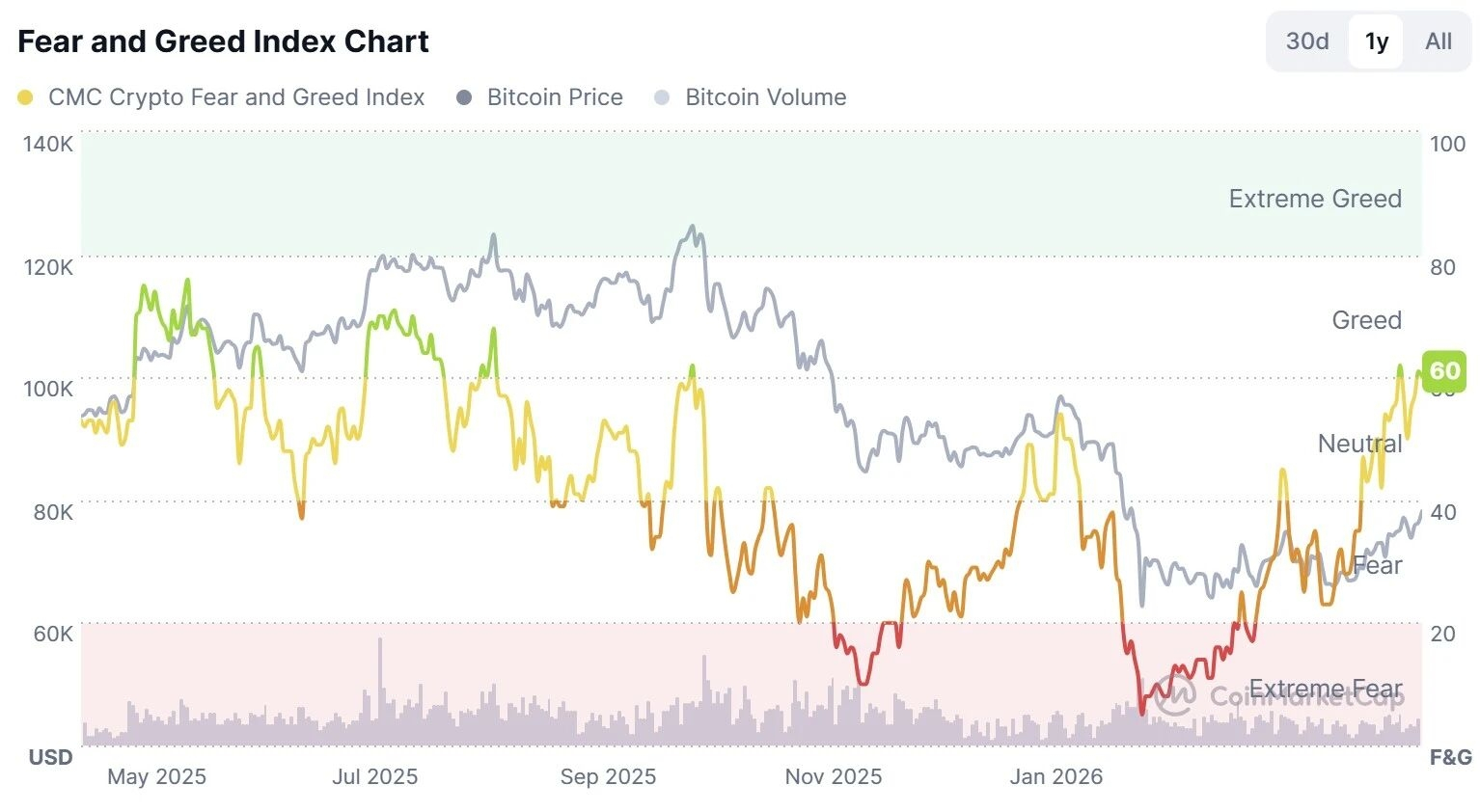
Looking at the charts, the bullish momentum has forced a mass exit of shorts. According to Coinglass data, the total liquidation across all contracts in the past 24 hours reached $462 million, with $353 million in short liquidations, accounting for over 70%, typical of a short squeeze scenario. Meanwhile, the Fear and Greed Index has risen to 60, with sentiment shifting from cautious observation back to a neutral to slightly optimistic range.
 This crypto market rebound is not an isolated event but resonates in sync with global risk assets.
In the U.S. stock market, strong bullish momentum has emerged once again, with all three major indices closing up and hitting record highs: the S&P 500 closed at 7137.90, up 1.05% for the day; the Nasdaq composite reported 24657.57, soaring 1.64%; and the Dow Jones gained 340.65 points, up 0.69%. Tech stocks have been the core engine behind this rally, with the S&P 500 tech sector gaining nearly 2%, and chip stocks achieving sixteen consecutive days of gains, significantly raising global risk appetite.
On the geopolitical front, signals of easing continue to be released. Trump announced on Wednesday that at the request of Pakistani mediators, the U.S.-Iran ceasefire agreement will be extended for 3 to 5 days, with negotiations possibly restarting as soon as Friday, dramatically reducing market concerns about escalating tensions in the Middle East. However, Iran quickly denied the possibility of talks on Friday, with the president welcoming dialogue while criticizing the U.S. for conflicting statements, and the Iranian negotiation representative emphasized that without lifting the blockade, a comprehensive ceasefire is out of the question, leaving some uncertainties in the geopolitical situation.
It's worth noting that oil prices have shown a noticeable divergence from risk assets. On Wednesday, international crude prices surged, achieving three consecutive gains this week, with WTI crude rising back to levels before the negotiation breakdown, and Brent crude nearing $102. In a generally optimistic market sentiment, rising oil prices also lay the groundwork for future inflation expectations.
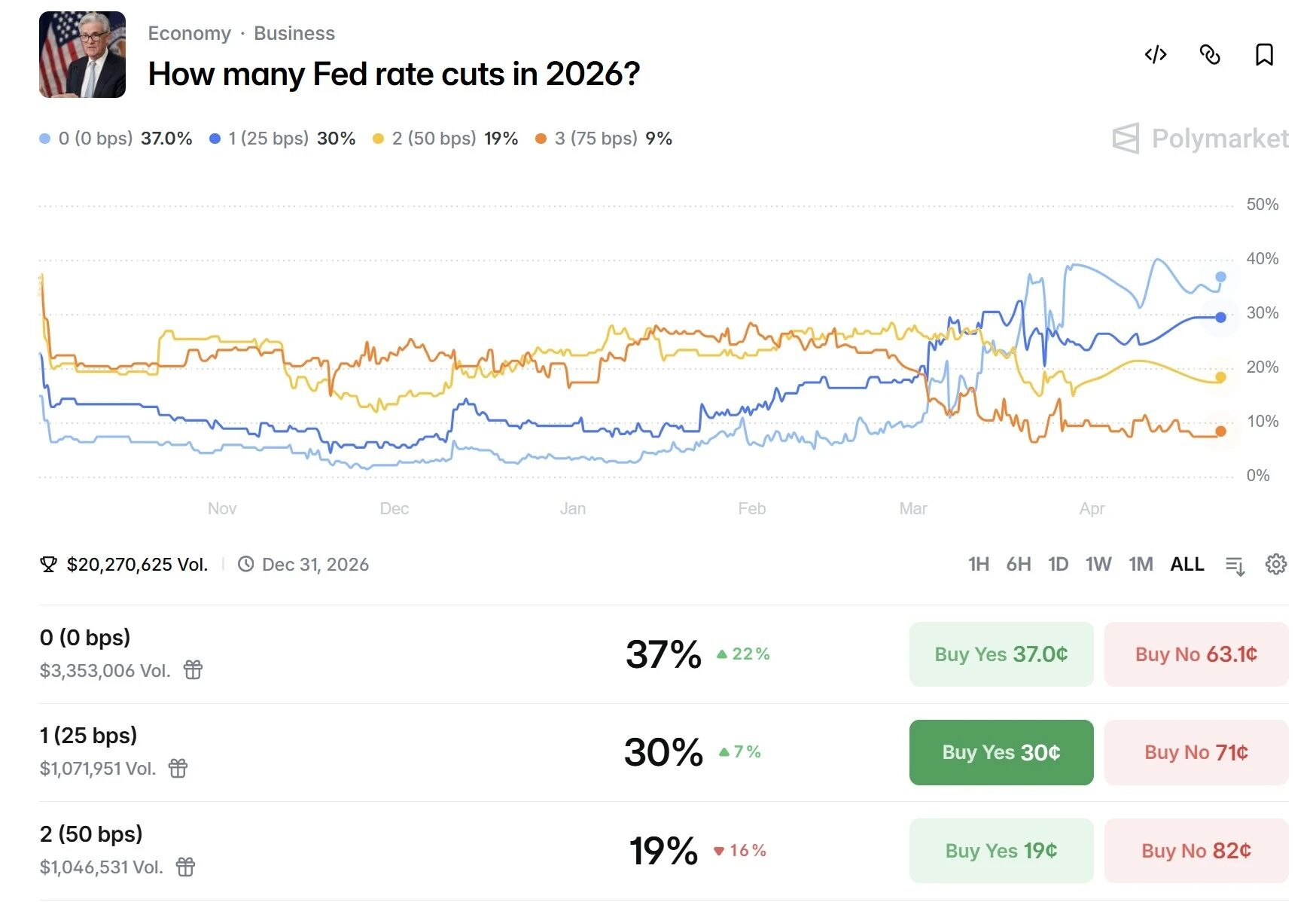
The more crucial macro change lies in the weakening dollar and the return of rate cut expectations. Polymarket data shows that the market's bets on the Fed cutting rates once this year have risen to 30%.
 As risk-off sentiment fades, the USD index stabilizes around 98.61, but has retreated about 2.3% from the late March high, likely marking the worst monthly performance since August last year.
Wall Street institutions have begun to adjust strategies: JPMorgan has restarted its short dollar strategy, shifting to a bullish stance on the Australian dollar and other risk currencies; BNY Mellon has noted that emerging market currencies are rebounding across the board, reflecting that global funds are accelerating their withdrawal from dollar assets in favor of higher-risk return targets, which is undoubtedly a significant positive for crypto assets represented by Bitcoin.
Back in the crypto market, the warming of capital flows is more direct and robust.
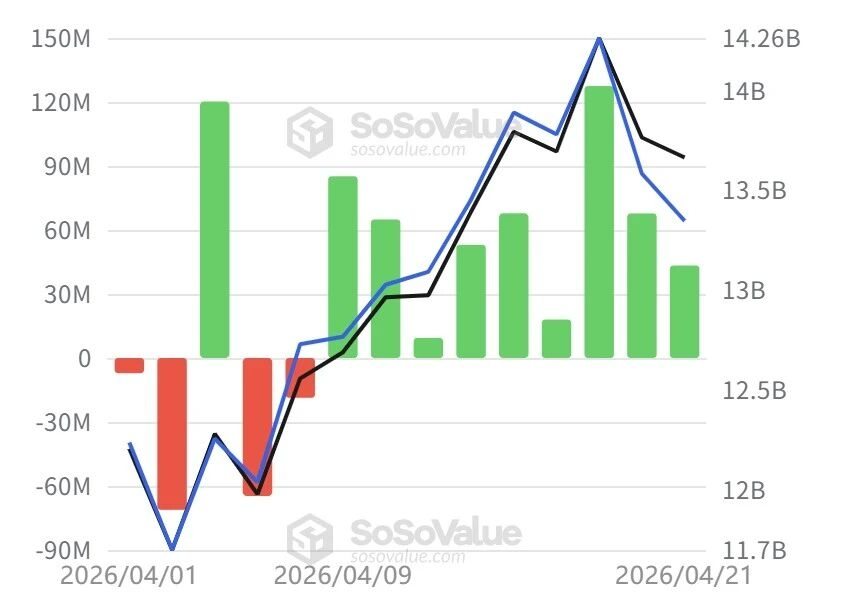
Bitcoin spot ETFs have seen a continuous net inflow for 6 days, with daily funds being positive from April 14 to 21.
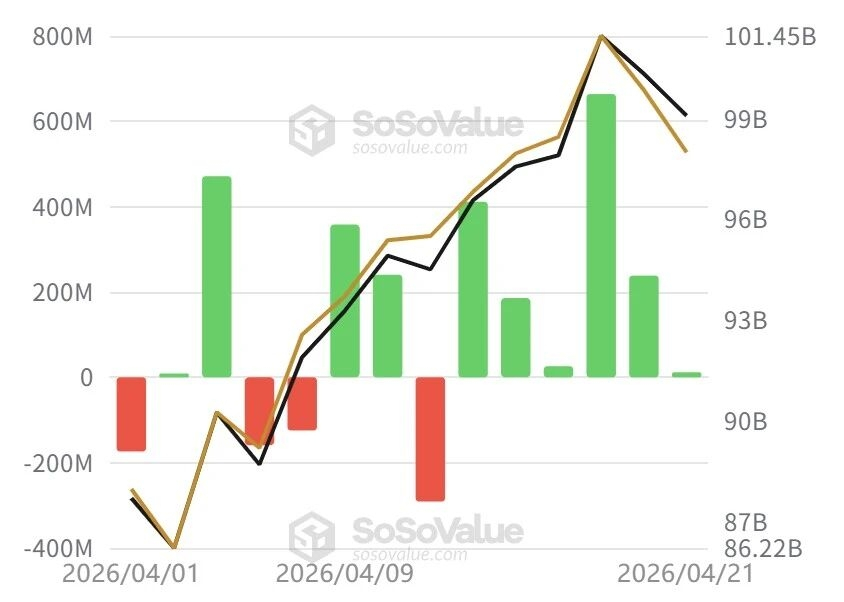 On April 17, the single-day net inflow reached as high as $663.91 million, marking a recent peak; on April 14 and 20, net inflows were $411.5 million and $238.37 million respectively, indicating a sustained increase in capital entering the market. Conversely, net outflows occurred only on 4 days this month, and the single-day outflow scale did not exceed $400 million, with an overall clear trend of net inflows.
Ethereum's spot ETF has shown even stronger performance, achieving a rare 9-day consecutive net inflow since April 9, with a single-day net inflow of $127 million on April 17, marking a new high for the month, and only 4 days of slight net outflows, indicating a significant increase in institutional allocation willingness.
 Liquidity from outside the market continues to be replenished. According to DefiLlama data, the current total market cap of stablecoins has risen to $32.06 billion, with a net inflow of $635 million over the past 7 days, indicating that 'ammo' waiting to enter the market is continuously accumulating, providing liquidity support for future market movements.
On-chain and market structures are also signaling positively. Glassnode data shows that after Bitcoin reclaimed the $78,000 level, spot demand and ETF fund inflows have returned in tandem, combined with the accumulation of short positions and consistently negative funding rates, indicating strong short-squeeze potential. Additionally, the continued rise in Coinbase premiums reflects a return of local spot buying in the U.S.
Additionally, strategies are continuously accumulating, providing stable buying support in the market. Corporate financial buying, ETF allocation funds, and local U.S. spot demand are forming a synergy, significantly strengthening support below the price, and increasing market participation compared to the previous adjustment phase.
However, the market isn't without its concerns. The $80,000 level is a significant psychological barrier and technical resistance, with pressure from both trapped and profit-taking positions making it difficult for prices to surge straight up. Additionally, the current market has profits at high levels and low volatility, which suggests that short-term price action will likely involve consolidation and digestion of profit-taking, with risks in chasing highs still present.
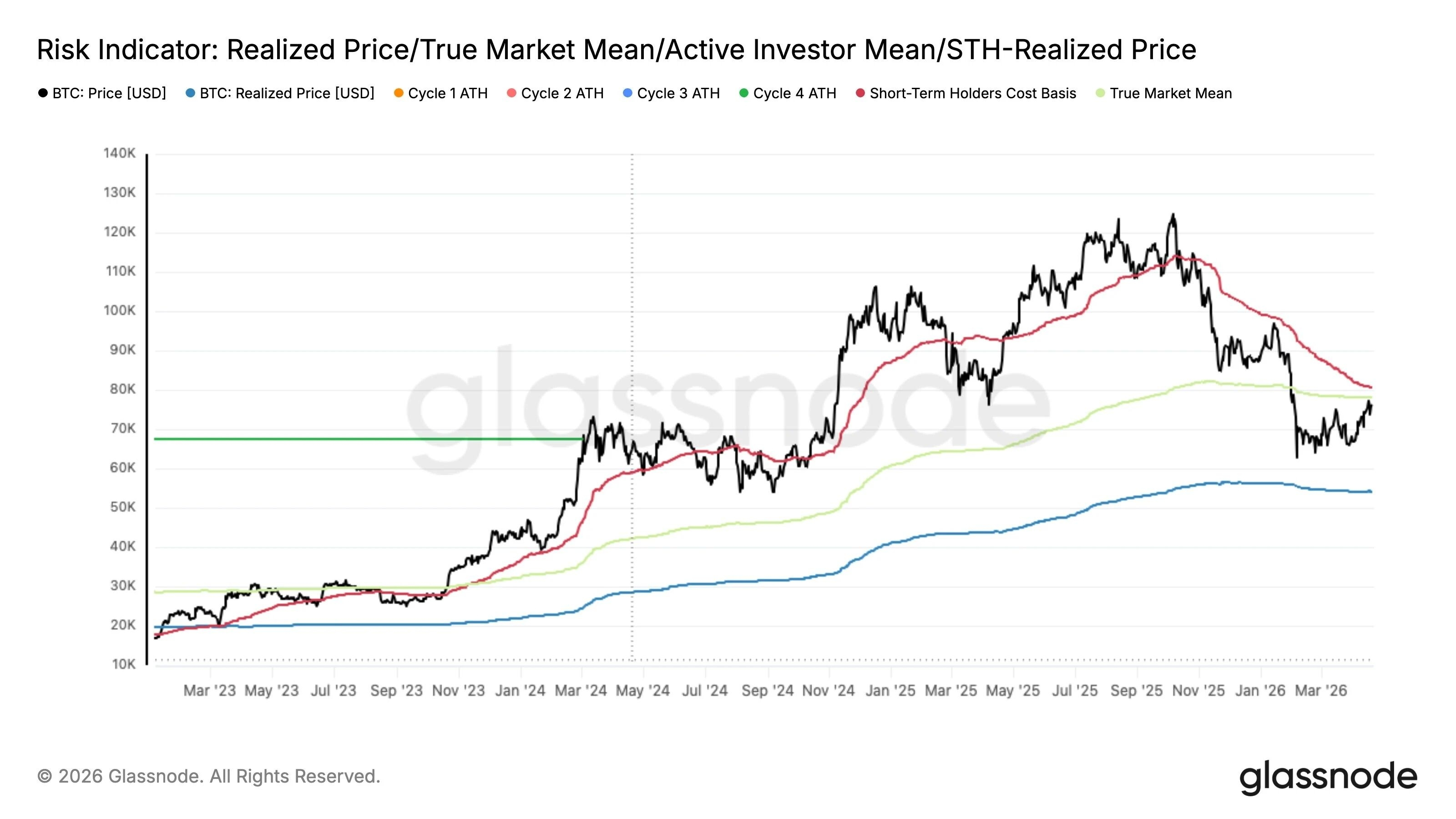 In summary, this round of market movement is the result of external macroeconomic tailwinds combined with internal capital resonance. U.S. stocks reaching new highs, a weakening dollar, and rising rate cut expectations, coupled with continued net inflows into crypto ETFs and stablecoin capital returning, indicate that the market is gradually transitioning from the previous adjustment phase to a repair phase.
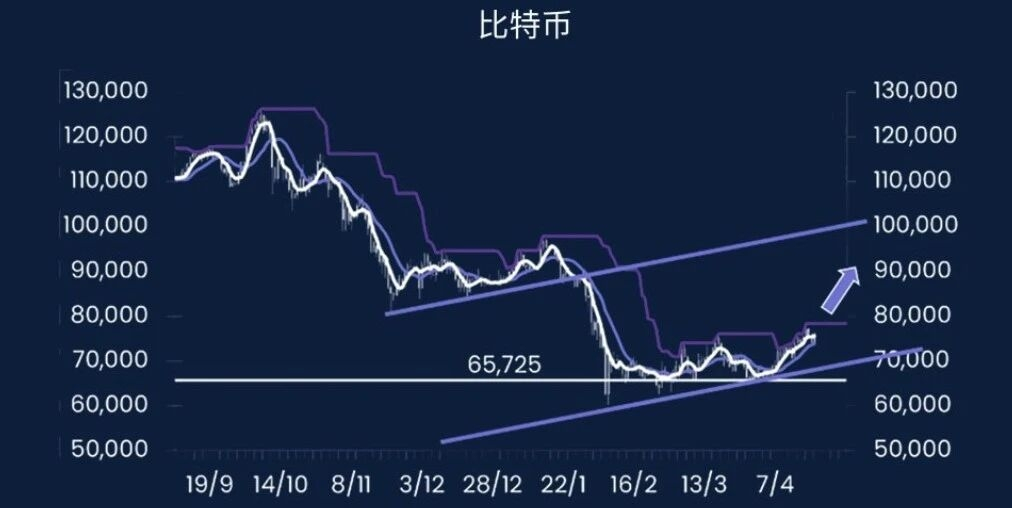 Whether we can truly unlock upward potential hinges on two core points: first, can ETF funds maintain a continuous inflow trend, and second, can Bitcoin break and hold above the $80,000 mark? As long as the capital logic remains intact, a choppy upward trend will be the prevailing theme going forward.