
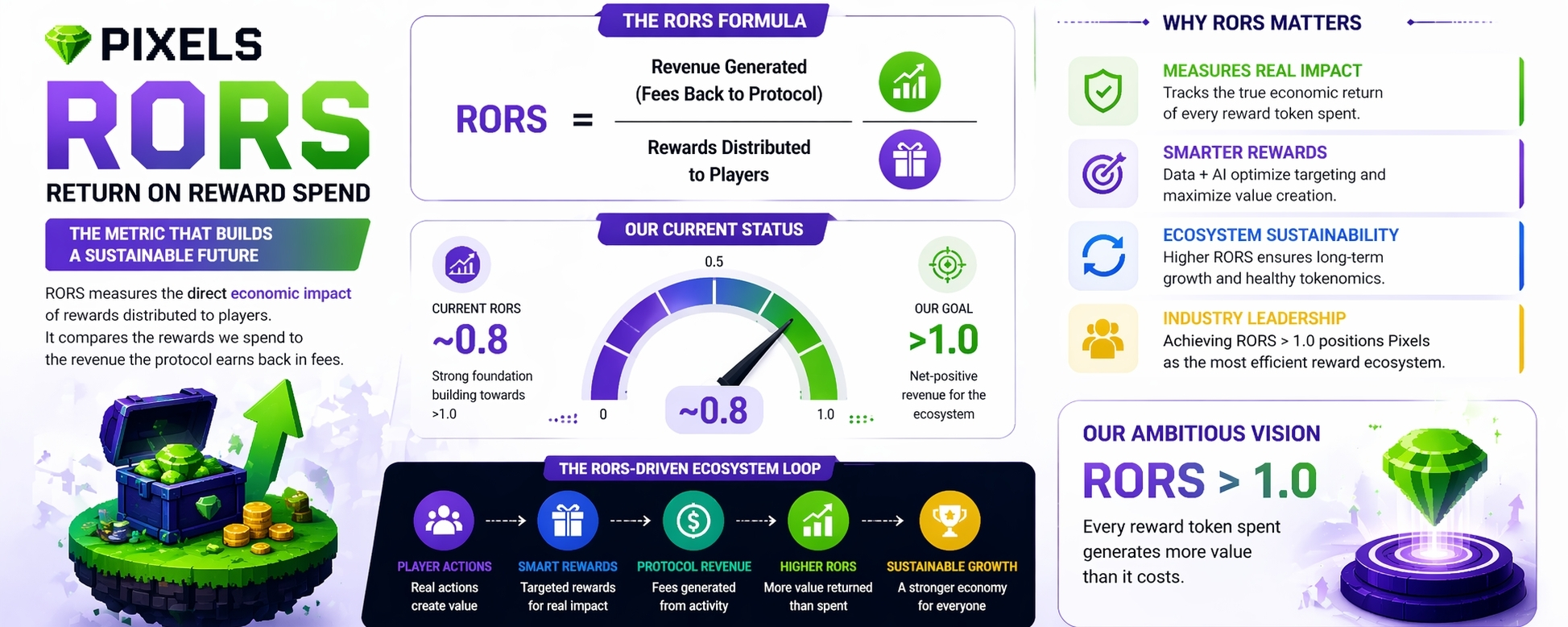
A new chapter in Web3 gaming is unfolding, one where reward systems are no longer treated as simple incentives but as measurable economic engines.#pixel stands at the center of this shift, introducing a model that prioritizes efficiency, sustainability, and long-term value creation. At the heart of this approach lies a powerful concept: Return on Reward Spend, or RORS.
Rather than distributing rewards without accountability, this system focuses on outcomes. Every token given to players is viewed as an investment that should generate measurable returns within the ecosystem. This marks a clear departure from earlier play-to-earn models, where rewards often flowed freely but failed to create lasting value. Inflation increased, economies weakened, and user engagement became difficult to sustain.
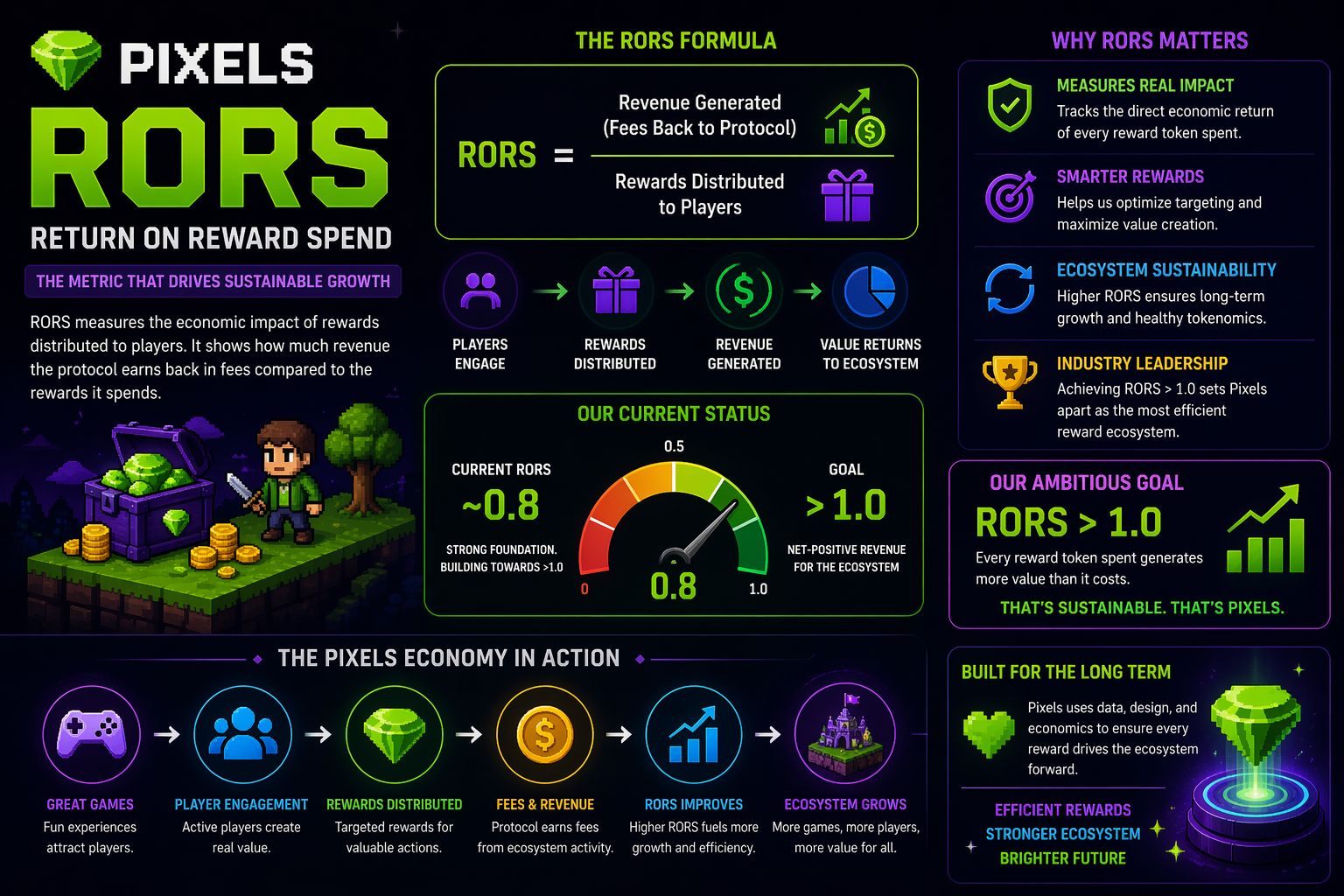
$PIXEL approaches this problem with a more calculated framework. By analyzing player behavior, engagement patterns, and economic activity, rewards are directed toward actions that actually strengthen the ecosystem. This means players are not just earning randomly; they are contributing to a system where their participation fuels growth. The result is a more balanced loop where value circulates instead of leaking.
Currently, the system operates around a RORS level below full efficiency, but the vision is clear: surpassing the 1.0 threshold. Reaching this point changes everything. It signals that the ecosystem is generating more value than it distributes, creating a self-sustaining cycle where growth reinforces itself. In such a model, rewards are no longer a cost but a driver of expansion.
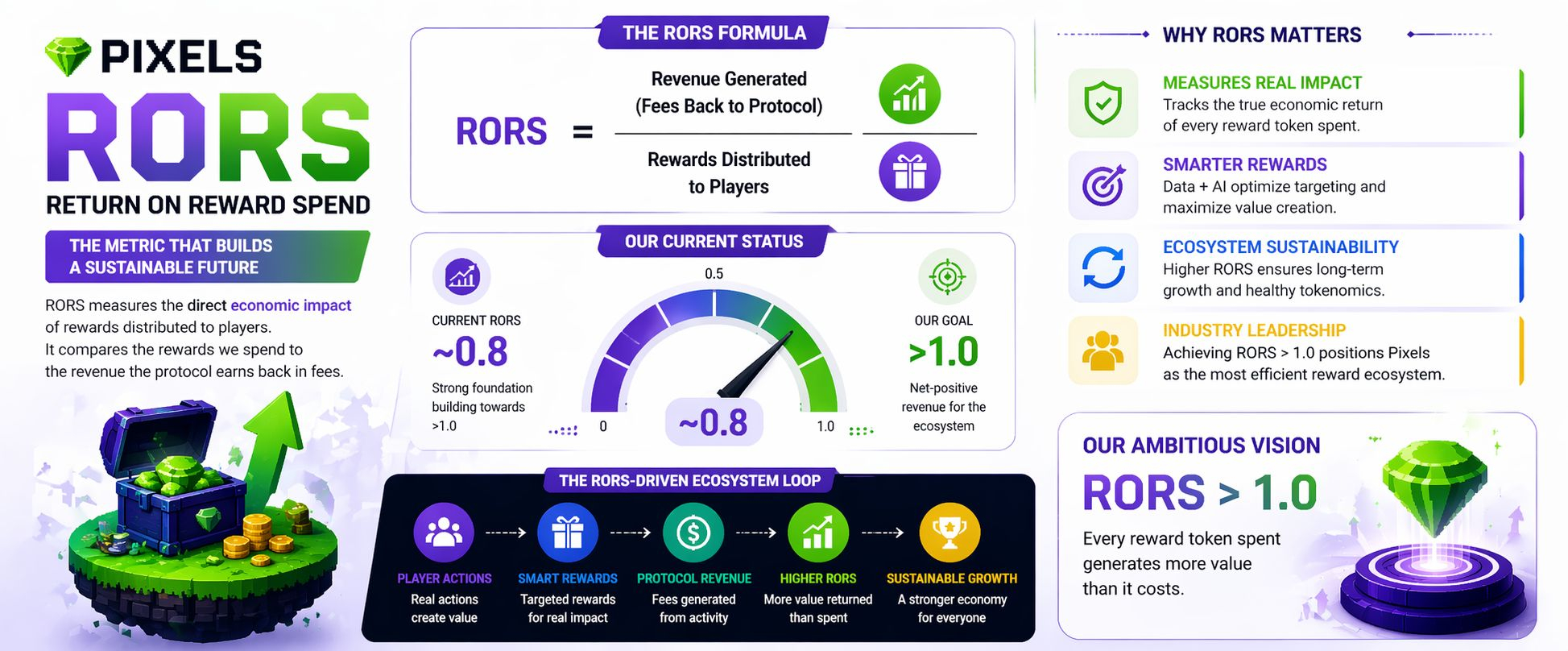
Another key strength of this design is its alignment between stakeholders. Players, developers, and the platform itself all benefit from the same objective: increasing real value. This alignment reduces friction and eliminates many of the inefficiencies seen in traditional systems. Instead of chasing short-term gains, the focus shifts toward building a durable and scalable economy.
Data plays a crucial role in this transformation. With advanced analytics and intelligent targeting, Pixels ensures that rewards reach the right users at the right time. This precision not only improves engagement but also reduces waste, making the entire system more efficient. Over time, this creates a feedback loop where better data leads to better rewards, and better rewards lead to stronger participation.
What makes this model particularly compelling is its potential beyond a single game. By treating rewards as part of a broader economic layer, Pixels is laying the groundwork for a multi-game ecosystem where value can flow seamlessly. This expands the utility of rewards and increases the overall demand within the system.
Ultimately, this approach represents a shift in mindset. Success is no longer measured by how much is distributed, but by how effectively those distributions generate value. By focusing on metrics like RORS, @Pixels is redefining what sustainable growth looks like in Web3 gaming.