…the headline numbers never moved. That’s the part most people fixate on, like supply caps magically solve bad behavior.
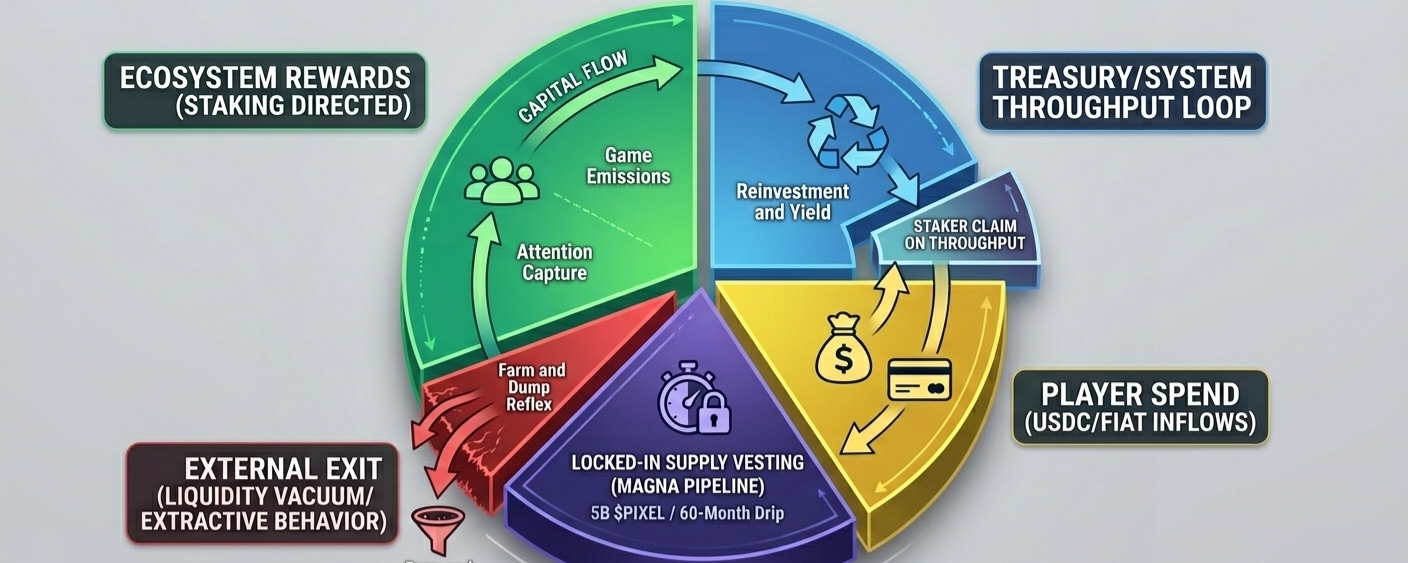
5 billion $PIXEL . Locked-in. Dripping out over 60 months since TGE. Vesting piped through Magna so nobody can play games with unlocks. Clean. Predictable. Almost sterile.
But predictability doesn’t fix extraction. It just makes the bleed easier to model.
Fixed supply, sure. Fixed outcomes? Not even close.
Emission schedule is linear. Behavior isn’t. Tokens hit wallets and immediately look for an exit, same old reflex, same old liquidity vacuum because most Web3 game loops quietly train users to farm and dump, not recycle, not reinvest, just clip yield and leave.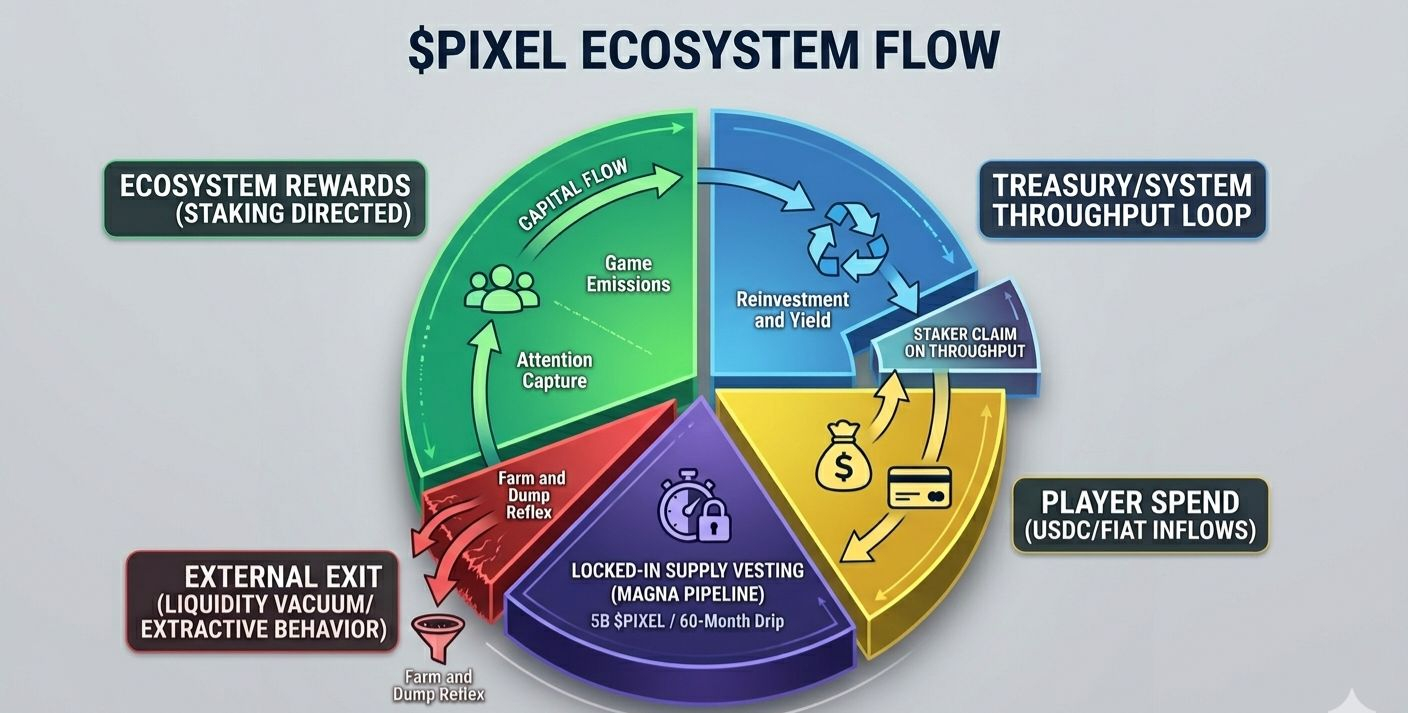
That’s the disease. Not inflation. Velocity without friction.
Pixels didn’t change the cap. They started messing with the flow.
Ecosystem Rewards were always the big pile. The difference now is who gets to aim the hose.
Early setup was controlled. Almost paternal. A few internal experiences, Pixels core, Pixel Dungeons, Forgotten Runiverse getting steady emissions like a drip feed in a lab environment. Stable, yes. Also rigid. No price discovery. No competition. Just curated distribution dressed up as ecosystem growth.
Phase shift.
Now you get a global emission cap, 28M $PIXEL/month and suddenly allocation isn’t predefined anymore, it’s weighted. Staking decides direction. Not governance theater. Actual capital routing.
Messy. Good.
Because now emissions chase attention. Wherever users park their tokens, rewards follow. Reflexive loop. Sometimes intelligent. Often not.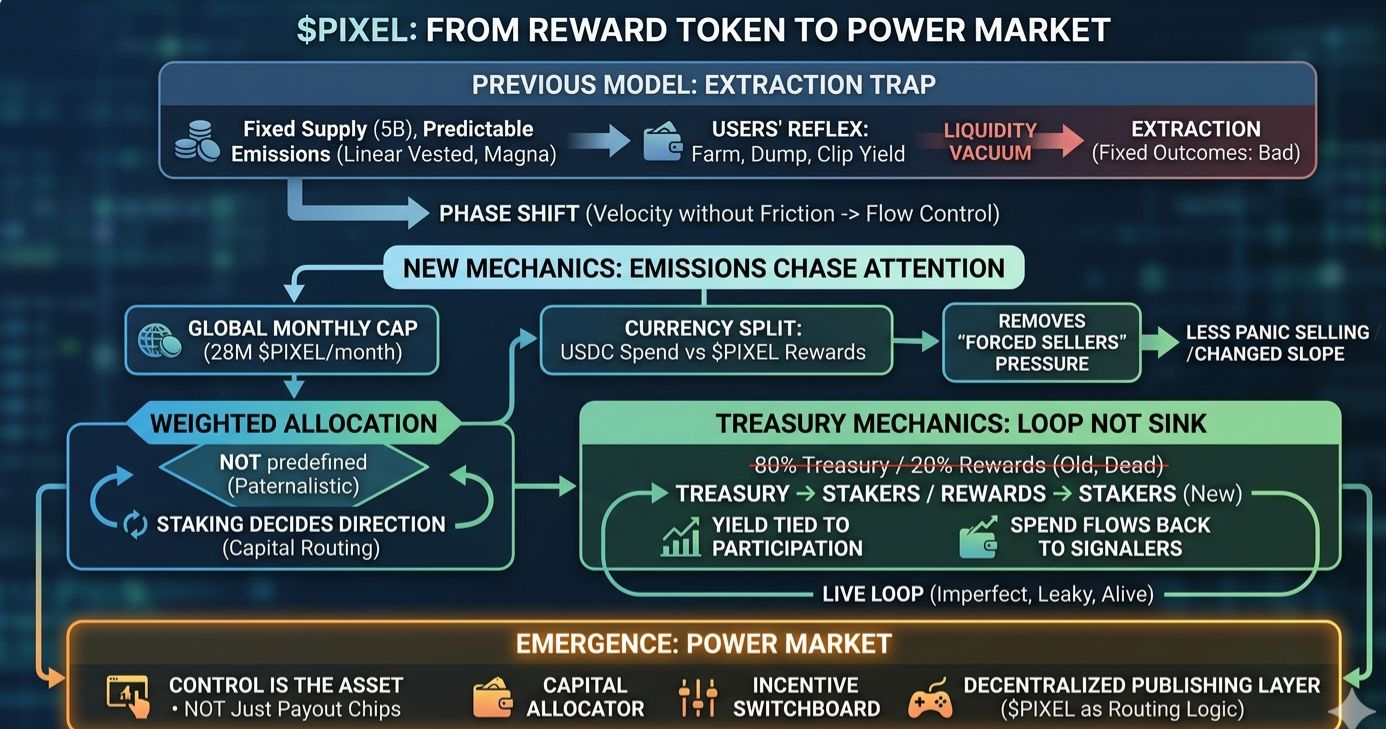
Then they open the gates further RORS ≥ 1 and you’re in. No longer a club. It’s a marketplace. Games fighting for emissions like startups fighting for liquidity, except the metric isn’t pitch decks, it’s retention and spend efficiency under pressure.
Some will game it. Most will fail. A few will stick.
The subtle move isn’t the pools. It’s the currency split.
Let users spend in USDC, fiat rails creeping in, while rewards stay in pixel. That separation matters more than people think.
Because forced sellers are usually just trapped participants, people who need liquidity but only have reward tokens. Remove that pressure valve mismatch and suddenly you’re not dumping just to survive the loop.
Less panic selling. Not zero. Just… less.
Enough to change slope.
Treasury mechanics. This is where it quietly gets political.
Old model:
80% → treasury
20% → rewards
Looks responsible. Feels dead.
Capital goes in, disappears into a governance black hole, maybe comes back later, maybe not. Time lag kills feedback. Users don’t feel the loop, so they stop caring about it.
Now they’re rerouting part of that 80% back to stakers. Not all. Just enough.
Yield tied to participation. Spend flows back to those signaling direction. Suddenly staking isn’t passive signaling anymore, it’s a claim on system throughput.
That’s a different game.
Not a sink anymore. A loop. Imperfect, leaky, but alive.
And underneath all of this control. That’s the real asset.
Not supply. Not emissions.
Control.
Who decides where rewards go.
Who captures value from player spend.
Which games live, which starve.
This starts looking less like a game economy and more like a decentralized publishing layer where Pixel is the routing logic, capital allocator, incentive switchboard, pressure valve all in one.
Tokens as infrastructure. Not just payout chips.
That shift is easy to miss if you’re staring at charts.
Still breaks in obvious places.
Staking can turn into herd behavior. Capital piles into whatever’s trending, starving everything else regardless of long-term viability.
Games optimize for emissions, not fun. Seen it before.
And if users keep extracting more than they cycle back in, no model saves you. Doesn’t matter how elegant the flow diagram looks.
…Nothing “major” changed on paper. That’s the trick.
Same supply. Same unlock curve.
But the moment you let users steer emissions even partially, you stop running a reward system and start running a power market.
And power markets don’t stay stable for long.