
Looking at the recovery trend in 2026, many are focused on $PIXEL .

The staking yields are making me drool. But let me throw a bucket of cold water on you: if you're still treating this like traditional 'saving and earning interest', you might still be stuck in the Stone Age regarding the underlying logic of Web3 game assets.
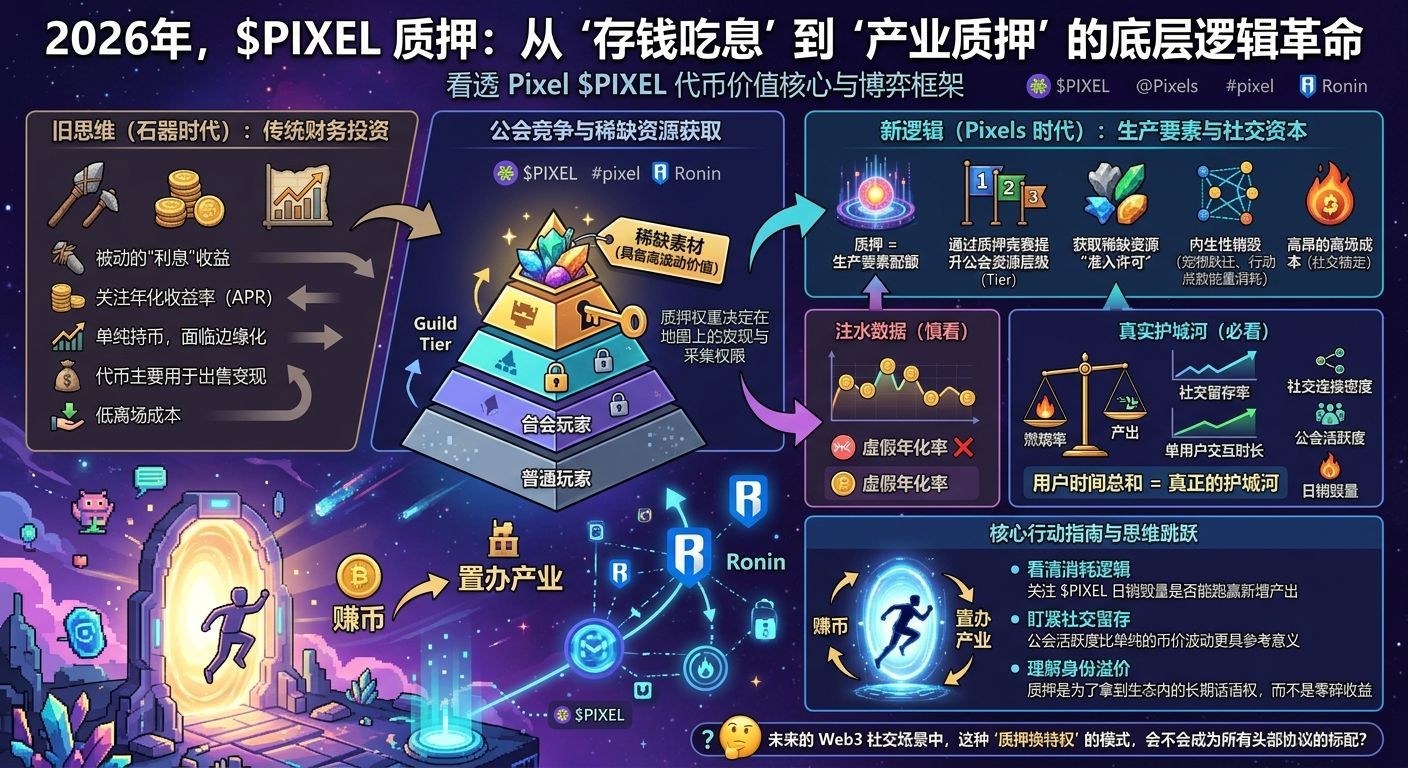
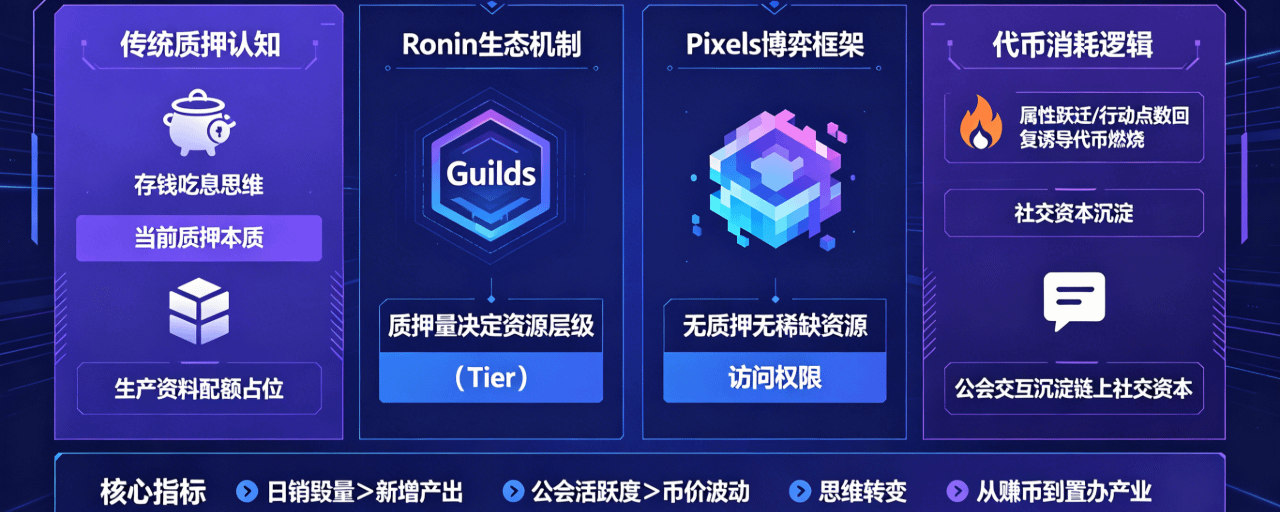
In the current Ronin ecosystem, staking $PIXEL is essentially not a financial investment, but rather a quota positioning for production resources.
Stop letting those so-called 'annualized yields' blind you. In the #pixel current gaming framework, simply holding tokens is actually leading to a systemically marginalization.
The competition among guilds has turned into a pure staking race. Your staking amount directly determines your resource tier within your faction. This is no longer a game of throwing a few tokens as interest; it directly affects whether you can gain 'access permission' in the scarce resource production phase.
Want to gather those high-volatility materials on the map? Without reaching a specific staking weight, you won't even have the privilege to see those assets. This design forcibly shifts tokens from 'speculative attributes' to 'production factor attributes'.
Why do many blockchain games fail within six months? Because tokens have no place to be spent besides selling for cash. But @Pixels Pixels has cleverly implemented an intrinsic burn logic.
Whether it's for attribute transitions of digital pets or quickly restoring action points (Energy) in guild conflicts, the system is encouraging you to burn tokens for real. This design shines by transforming the original 'functional demand' into a 'competitive demand' on a social level.
This approach of tying token value to community reputation essentially creates a thick barrier against witch-hunt attacks. It increases the cheating costs for professional studios and automated programs, allowing genuine players to stand out in on-chain data.
Instead of focusing on heavily inflated data, we should pay attention to individual user interaction duration and social connection density.
Pixels now resembles a Social-Fi laboratory disguised as a game. The daily banter and tactical coordination among players in the guild actually solidify a form of social capital that is hard to lose. When your friend circle, resource chain, and sense of honor are locked into the Ronin chain, your exit cost skyrockets to an absurd level.
Stop fixating on the paper gains and losses. In the crypto industry, the real moat is never the code, but the total time invested by users.
See through the consumption logic, keep an eye on whether the $PIXEL daily burn rate can outpace the new issuance.
Keep a close watch on social retention; guild activity is more meaningful than mere price fluctuations.
Understand identity premium; staking is for long-term influence within the ecosystem, not for those small, throwaway gains.
In this era where reality and illusion are hard to distinguish, and liquidity is repeatedly harvested by various AI agents, only projects that can keep users glued to their seats have the right to talk long-term. If you can't see through the leap in thinking from 'earning tokens' to 'acquiring assets', you might end up paying a hefty tuition at this crossroads.
In the future Web3 social scene, will this 'staking for privileges' model become the standard for all top protocols? 🤔