
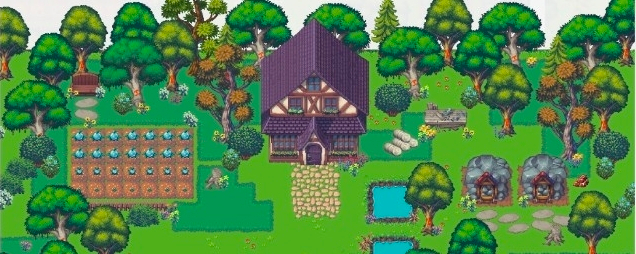

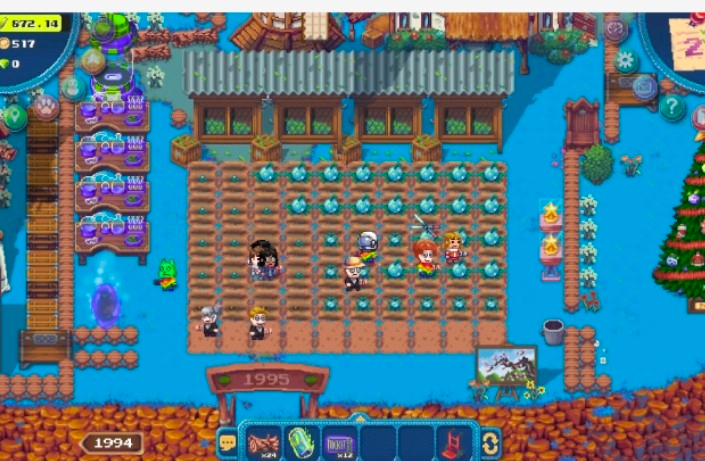
Pixels is often introduced as a simple social farming game but that description only captures the surface. Built on the Ronin Network it blends
familiar game play loops with block chain based owner ship and progression systems. At first glance it feels like many other casual games where players log in complete repetitive tasks and slowly build resources. However the real
shift happens when players stop treating it as a routine and begin approaching it with intention.
Many players initially fall into a predictable pattern. They log in daily harvest crops complete quests interact with the market place and log out. This loop feels productive because there is visible progress. Numbers go up inventories grow and rewards accumulate. But over time something becomes clear not all effort leads to meaning ful advancement. Two players can spend the same
amount of time in the game and end up with very different results. The difference often lies not in how much they grind but in how they think.
Pixels introduces subtle layers of strategy that are easy to overlook. Resource management land utilization and economic decision making all play a
role in long term success. Players who simply follow what others are doing may find themselves stuck in low efficiency cycles. In contrast those who experiment analyze trends and adapt their approach tend to unlock better outcomes. This shift from passive play to intentional decision making is where the game begins to feel deeper and more rewarding.
One interesting aspect of Pixels is how it mirrors real world economic behavior. The in game market place is influenced by supply and demand and player actions collectively shape the economy. This creates an environment
where observation becomes just as important as participation. For example planting a certain crop might be profitable one week but less valuable the next due to over supply. Players who pay attention to these patterns can adjust
their strategies accordingly while others may continue repeating outdated methods without realizing why their returns are declining.
Another layer comes from the social nature of the game. Pixels is not just about individual progress it encourages interaction and collaboration.
Communities often share tips strategies and insights but relying entirely on others can limit personal growth. The most effective players tend to use shared knowledge as a starting point rather than a final guide. They test ideas refine approaches and develop their own systems. This independent thinking becomes a key advantage over time.
The integration of block chain technology also adds a unique dimension. Ownership of in game assets gives players a sense of permanence that
traditional games often lack. How ever this feature can be mis understood. Some players focus too heavily on short term gains treating the game purely as a way to earn tokens. While this approach can work temporarily it often overlooks the importance of sustainable progression. Pixels rewards those who balance economic thinking with gameplay engagement rather than chasing immediate returns at the expense of long term strategy.
A notable development in the Pixels ecosystem has been the introduction of more structured progression systems such as tiers and specialized roles. These updates aim to create clearer pathways for players but they also introduce new
challenges. New users may find the system complex at first especially if they enter the game expecting a straight forward experience. This highlights a limitation of the platform while it is accessible on the surface deeper mechanics require time and effort to understand. Players who are unwilling to move beyond basic routines may struggle to keep up as the game evolves.
At the same time this complexity is also one of Pixels strengths. It allows the game to grow with its community offering more depth for those who seek it. The transition from auto pilot game play to intentional play is not forced but it is encouraged through design. Rewards are structured in a way that favors thought ful decisions over repetitive actions. This creates a subtle but meaning ful shift in how players approach the game.
Another insight worth noting is how Pixels blends gaming with behavioral psychology. The routine loop is designed to be satisfying which keeps players engaged. How ever breaking out of that loop requires awareness. Players need to
recognize when they are simply going through the motions and when they are actively improving their strategy. This awareness is not some thing the game explicitly teaches it develops over time through experience and reflection.
There is also an interesting tension between accessibility and depth. Pixels aims to attract a wide audience including those who are new to Web3. This means the early experience must remain simple and approachable. At the same time the game needs enough complexity to retain long term players. Balancing these two
goals is not easy and it some times leads to updates that feel confusing or over whelming. How ever these growing pains are common in evolving platforms especially in the Web3 space.
Ultimately Pixels is more than just a casual farming game. It is a system that rewards curiosity adaptability and intentional thinking. Players who treat it as a check list of daily tasks may enjoy steady but limited progress. Those who take the time to understand its mechanics observe its economy and refine their strategies often find a more rewarding experience. The difference is not
always obvious at first but it becomes clear over time.
The idea of moving from auto pilot to intentional play extends beyond Pixels it self. It reflects a broader principle that applies to many areas including other games and even real life decision making. Effort alone is not enough direction matters just as much. Pixels quietly reinforces this idea through its design encouraging players to think rather than simply act.
In the end the game’s true value lies in how it engages the player’s mind set. It starts as a routine but it has the potential to become some thing more. The moment a player begins to question their approach experiment with new
strategies and make deliberate choices is the moment Pixels transforms from a simple game into a more meaning ful experience.