
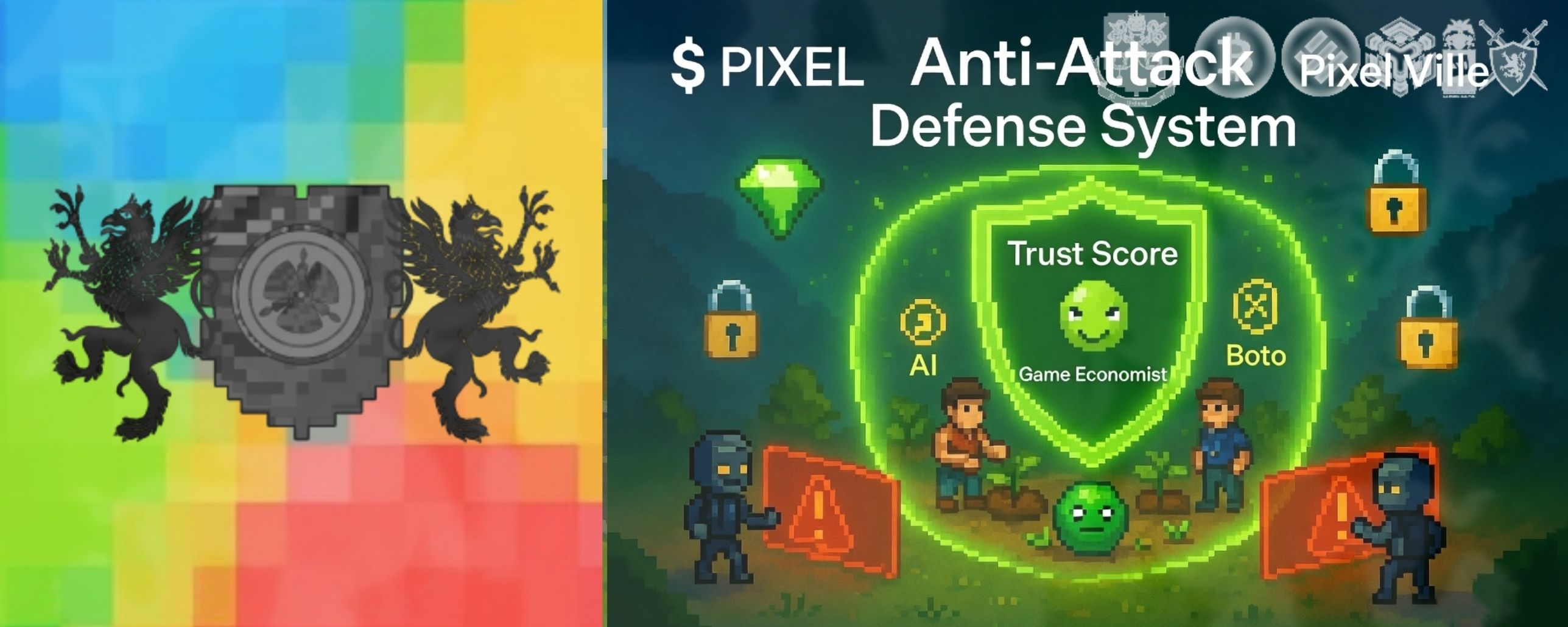
Pixels GameFi’s anti-attack/bots defenses represent a blockchain-native evolution of anti-cheat, with stronger economic and transparency benefits for token markets and sustainable gaming, though they aren’t perfect and come with trade-offs versus traditional software anti-cheat.
Traditional Software Games Anti-Cheat
Traditional anti-cheat (e.g., in games like Call of Duty, Valorant, or League of Legends) relies on:
Client/server-side detection: Kernel-level tools (Vanguard), behavioral analysis, heuristics for aimbots/speed hacks, statistical anomaly detection.
Bans and resets: Account bans, hardware ID bans, periodic wipes.
Limitations: Centralized (single point of failure or abuse), bypassable by sophisticated cheats, hard to prove intent in all cases, and reactive. Cheating erodes player trust but rarely directly tanks a token economy since there’s no native token.
Pixels (GameFi on Ronin) Anti-Attack Defenses
@Pixels emphasizes anti-bot/anti-exploit systems tailored to play-to-earn economics:
Strict rules + enforcement: Bans for botting, auto-clickers, bug exploitation, multi-account abuse (with limits on simultaneous logins). They track on-chain + in-game activity.
Reputation system: Ties rewards, marketplace access, and withdrawals to a score based on genuine play, NFT ownership (land/pets), quests, social connections, and guild activity. This filters bots and rewards real contribution.
Chapter 2 updates (2024): Major rework with AI/data-driven rewards targeting real players, reduced inflation (phased out inflationary BERRY token in favor of $PIXEL utility), tiered resources/tools, durability mechanics, and fingerprinting/behavioral analysis to curb bot farms. This caused a temporary DAU drop (many bots purged) but aimed at sustainability.
Ronin blockchain layer: On-chain transparency for all transactions/actions (immutable audit trail), MEV protections/improvements post-hacks, low fees for smooth play, and smart contracts for automated rule enforcement. Bug bounties and validator expansions add security.
Hybrid elements: Combines traditional detection with blockchain traceability and economic incentives (e.g., reputation-linked perks).
Key comparison:
Strengths of Pixels approach: Tamper-proof on-chain evidence makes cheating harder to hide long-term. Decentralized consensus and smart contracts enable automatic flagging/rejection of invalid actions. Reputation + incentives promote honest play proactively (not just punitive bans). Better at scale for economic games where bots can farm and dump tokens.
Weaknesses: Still vulnerable to sophisticated bots (community debates ongoing), reputation systems can feel grindy, and initial bot purges hurt short-term metrics. Blockchain adds smart contract risks (though Ronin has hardened post-2022 hack). Traditional anti-cheat can be faster for real-time detection in competitive PvP.
Contributions to the Token Market (PIXEL and Broader)
Reduces sell pressure and inflation: By curbing bot farming, fewer tokens flood the market from exploits. Chapter 2’s shift to sustainable mechanics (controlled rewards, sinks, PIXEL token utility for premium features like pets/guilds/realms) helped stabilize value and supported price recoveries (e.g., post-Chapter 2 gains noted in market discussions).
Builds trust and liquidity: Transparent on-chain activity reassures investors that earnings reflect real engagement, attracting organic users and reducing rug-pull perceptions. This drives genuine volume on Ronin (Pixels has been a major driver of its resurgence).
Token utility reinforcement: Strong defenses make $PIXEL more valuable as a governance/utility token rather than pure farm-and-dump, correlating with ecosystem growth (e.g., Binance listings, partnerships).
Broader impact: Demonstrates GameFi can avoid the “bots dilute everything → token crash” cycle seen in earlier projects, influencing other tokens to adopt similar hybrid security.
Contributions to Gaming Overall
Fairer, more sustainable economies: Blockchain + reputation creates verifiable ownership and play, reducing cheating’s impact on real players and enabling true player-driven worlds (e.g., land building, social features).
Innovation benchmark: Pixels shows hybrid models (fun-first gameplay + blockchain security) can retain users longer than pure hype P2E. It boosted Ronin’s gaming focus and inspired trends like AI anti-cheat and decentralized governance.
Industry-wide: Proves on-chain traceability + incentives can complement (or surpass in some ways) traditional anti-cheat for mass adoption, especially in free-to-play or economy-heavy games. Helps Web3 gaming move beyond “play-to-earn” stigma toward “play-and-own” with integrity.
Bottom line: Pixels’ defenses contribute by making token economies more resilient and gaming fairer at scale, addressing GameFi’s core flaws (bot dilution, unsustainability) better than pure software anti-cheat in economic contexts. However, success depends on ongoing iteration—it’s not a complete replacement but a powerful evolution. This has helped $PIXEL and Ronin stand out in 2025-2026.