
i used to think the more time i put into @Pixels , the more the system would expand for me. play more, optimize more, understand more… and naturally, outcomes should scale with that.
but it doesn’t really work like that.
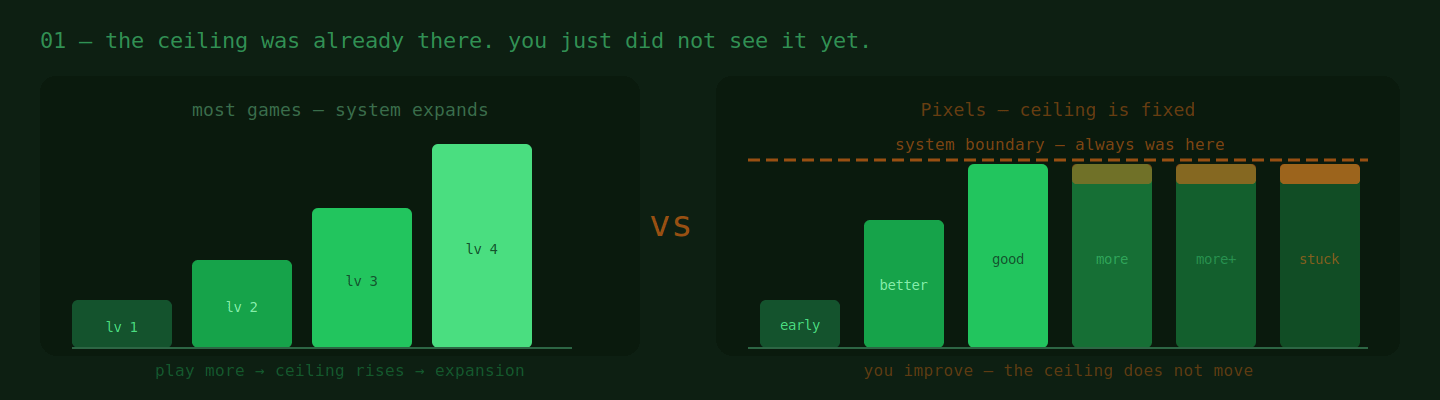
because no matter how much you improve your loop, how efficient you get, or how much time you spend… the system doesn’t stretch to match you. it doesn’t “reward” you with a bigger ceiling. if anything, that ceiling was already there from the start.
you just didn’t see it yet.
and that’s where the shift happens.
in most games, progression feels like expansion. you level up, unlock more, earn more, push further. the system grows with you, or at least gives you the feeling that it does.
in Pixels, the system feels… fixed.
not static in a visible way, but bounded. there’s a limit to how much value can be distributed, how fast activity can convert into something real, how much can be exposed without breaking balance. and everything you do sits inside that boundary.
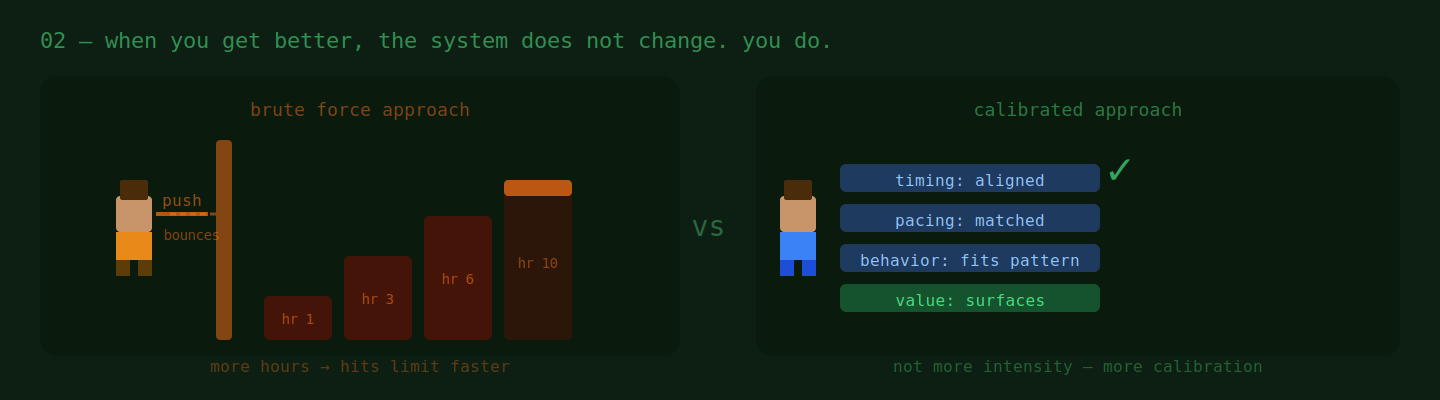
so when you “get better”, the system doesn’t change.
you do.
you start noticing which loops feel closer to value, which ones just circulate. you begin to understand timing, resets, pacing, when to log in, when to stop forcing output. your behavior shifts, not because the game tells you to… but because you slowly feel where the edges are.
and over time, that creates the illusion of progress.
like you’ve unlocked something.
but what you actually did… was learn how to fit.
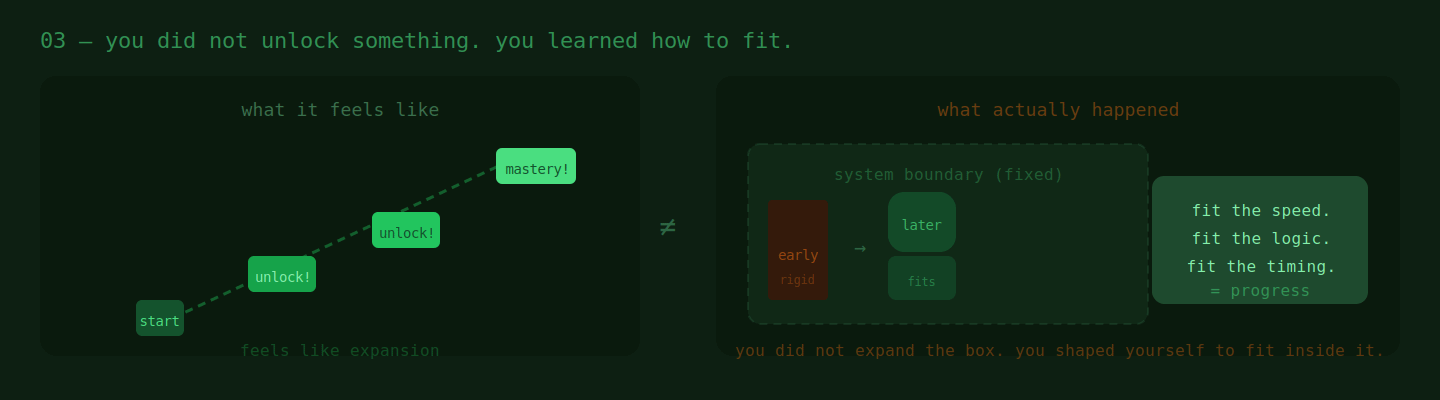
fit into the system’s speed, fit into its distribution logic, fit into the way it allows value to surface. not by pushing harder, but by aligning more precisely.
and that’s why brute force doesn’t really work here.
playing more hours doesn’t break the system. optimizing harder doesn’t suddenly increase your output. trying to rush just makes you hit invisible limits faster. because the constraint isn’t on your input.
it’s on what the system can afford to give back.
and that flips the usual mindset.
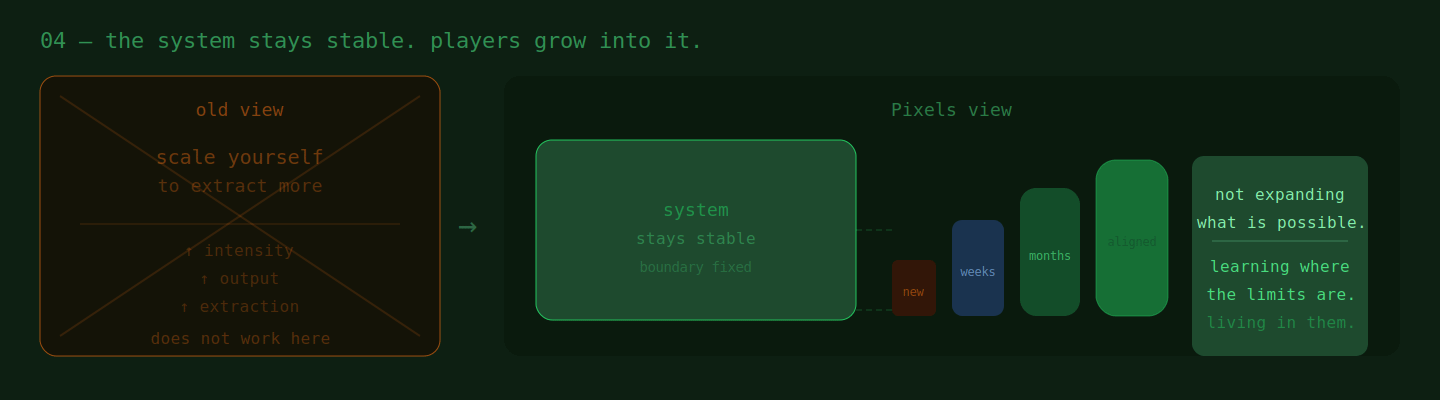
you’re not scaling yourself to extract more.
you’re scaling yourself to match the system.
to stay within its acceptable patterns, to move with its timing instead of against it, to avoid pushing in ways that don’t convert. progress becomes less about intensity, and more about calibration.
how close you are to the system’s “ideal player”.
and maybe that’s the deeper layer here.
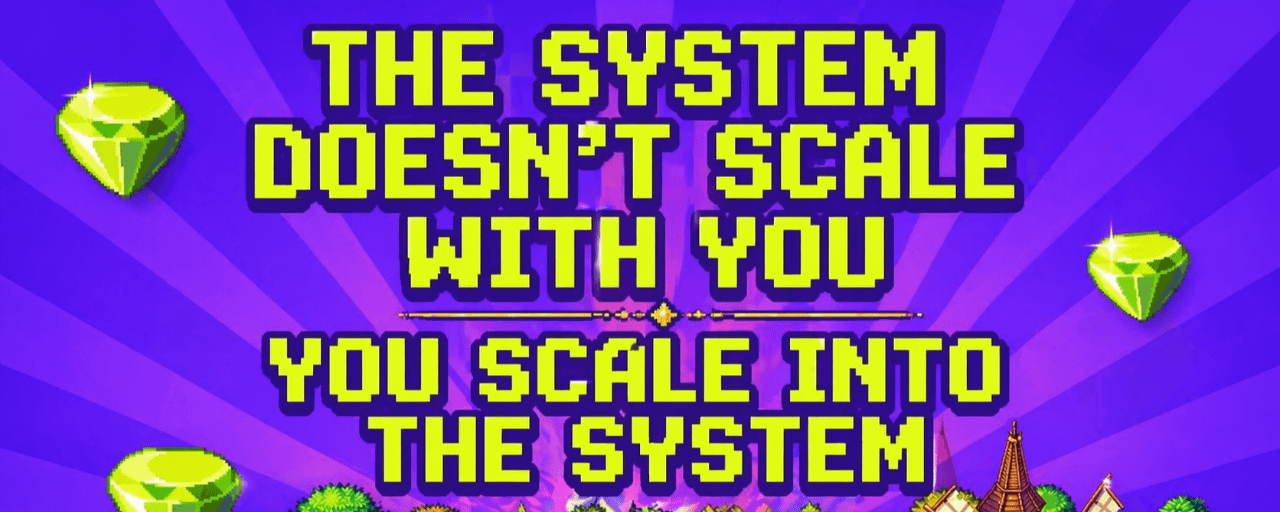
Pixels isn’t a system that grows with each individual player.
it’s a system that stays stable… and lets players grow into it.
because once players start adapting instead of forcing, the system doesn’t need to fight back. it doesn’t need hard limits, obvious restrictions, or aggressive controls.
the boundaries stay invisible.
and players stay inside them… by choice.
so yeah, you can get better at Pixels.
but not in the way most people expect.
you’re not expanding what’s possible.
you’re learning where the limits are… and how to live comfortably inside them.