
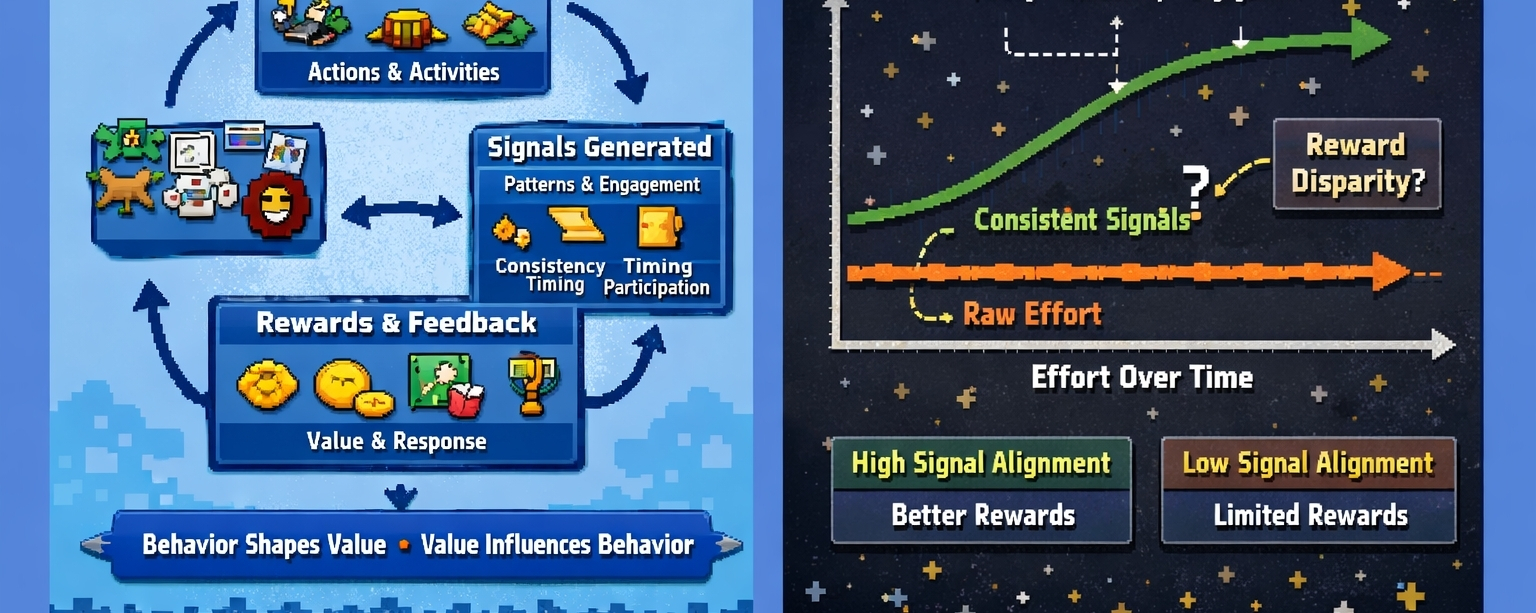


I was thinking about value inside these systems in a slightly different way lately. Not just tokens, not just rewards but what actually counts as value from the system’s perspective.
In most setups, it’s straightforward. You do something measurable, you get something back. Effort turns into output, output turns into rewards. Clean loop.
$PIXEL doesn’t feel that direct.
There’s this sense that what matters isn’t just the action itself, but what that action represents. Not farming as an activity, but what consistent farming signals. Not trading as a mechanic, but what that behavior says about engagement, timing, participation.
That’s the part I keep coming back to.
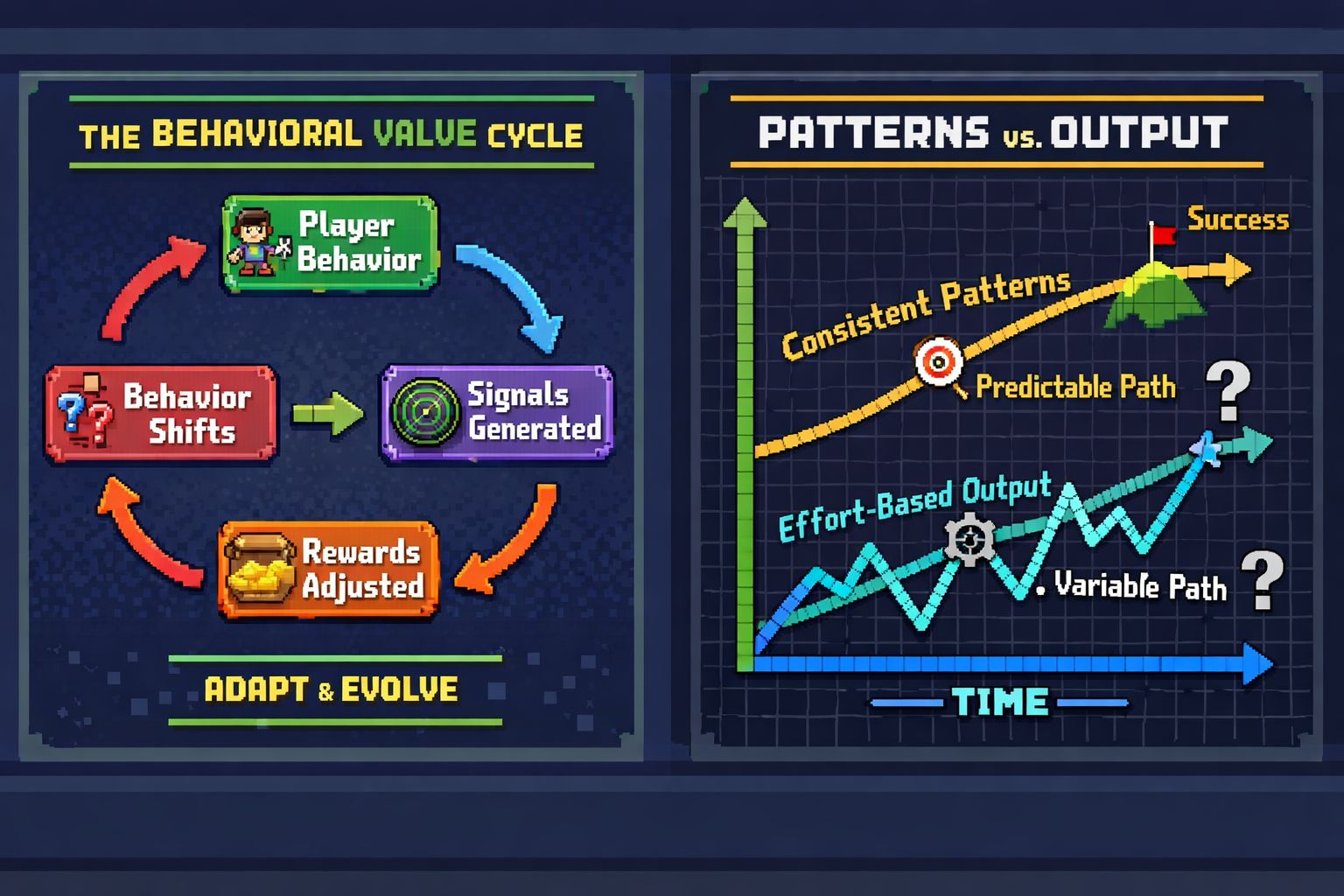
Because once value shifts from actions to signals, the whole structure underneath changes. You’re not just producing output anymore. You’re generating patterns that the system interprets.
And those patterns start to matter more than the action itself.
At first, it probably doesn’t feel like anything has changed. You’re still doing the same things. Logging in, progressing, interacting with the game world. But over time, outcomes start to diverge in ways that aren’t always easy to explain through effort alone.
That’s where it gets interesting to me.
Because if behavior becomes the real unit of value, then consistency, timing, and even predictability start carrying weight. Not explicitly, but through how the system responds. Some players align with that naturally. Others don’t, even if they’re putting in similar effort.
And that creates a subtle divide.
Not between active and inactive players, but between behaviors that translate well into the system’s model and those that don’t. It’s less visible, but potentially more important over time
I’m not sure if that makes the system more efficient or just more selective.
On one hand, it could lead to better alignment. Rewarding behavior that actually sustains the ecosystem instead of just extracting from it. On the other hand, it introduces a layer where value is no longer fully transparent. It’s interpreted.
And interpreted systems tend to evolve.
Because once players start recognizing which signals seem to matter more, behavior shifts. Not dramatically, just enough to lean toward what works. And as that shift happens, the signals themselves change. Which means the system has to adjust again.
It becomes a loop.
Behavior creates signals, signals shape rewards, rewards influence behavior again.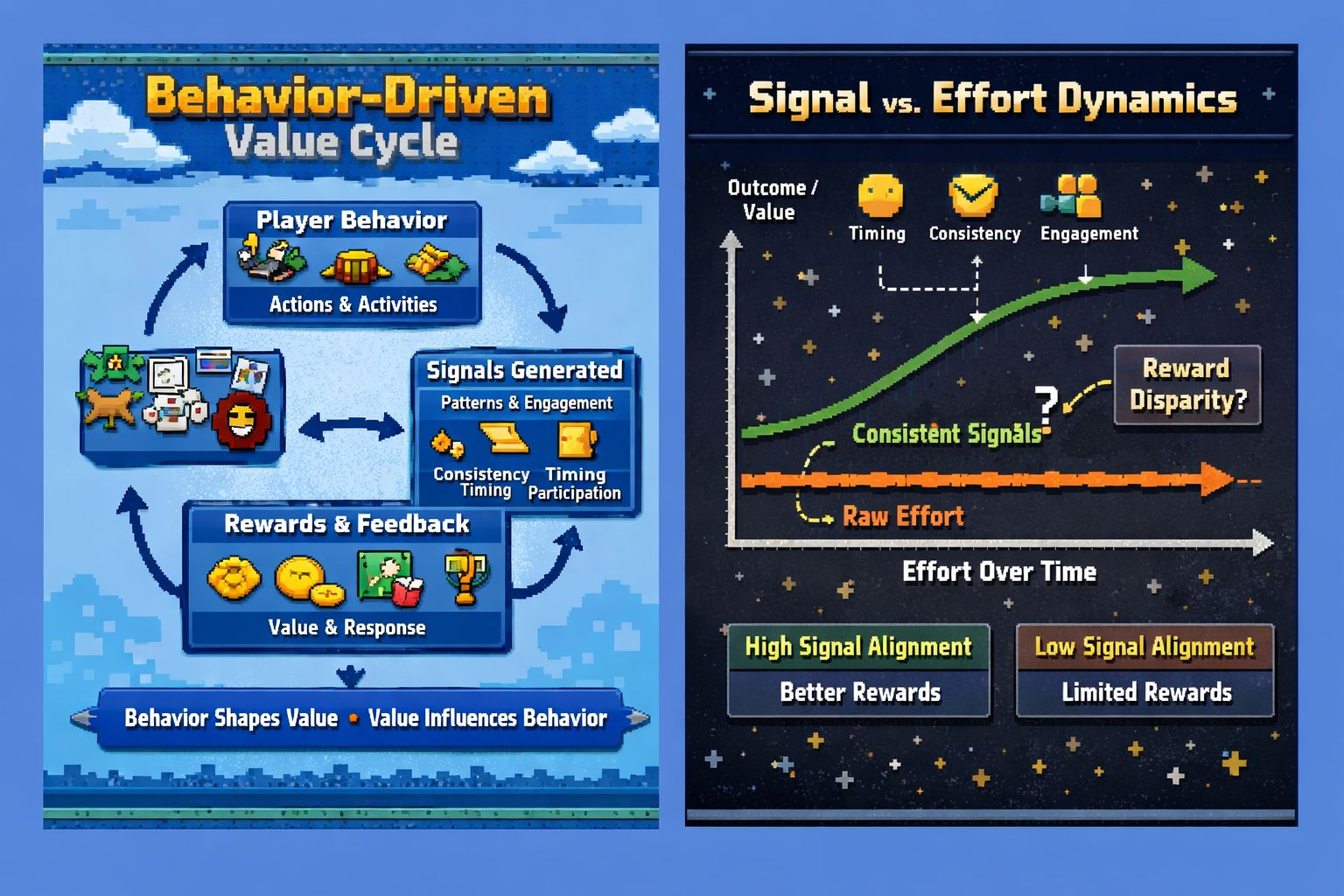
@Pixels seems to be operating somewhere inside that cycle. Not fixed, not fully predictable. Just continuously adjusting as new patterns form And maybe that’s the point.
Instead of defining value upfront, it’s letting value emerge from behavior over time. Not perfectly, not without friction, but in a way that’s more flexible than the usual static models.
I’m not sure where that leads long term.
But it does make value feel less like something you earn directly & more like something the system decides you represent.
That’s a different way of thinking about it
And I’m still trying to figure out if it changes the experience more than it appears to on the surface.
