
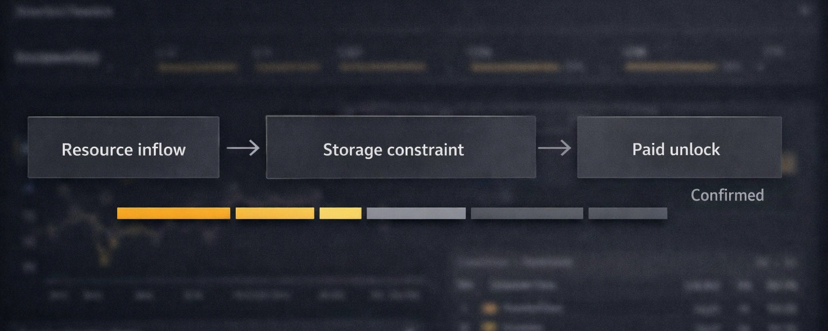
Traders complained about the inventory cap — I thought it was an exaggeration. Until I faced it myself.
My mom stocked the fridge to the brim before the holidays. The next day, she brought in more groceries — and couldn't fit them all. Some items ended up outside. The space ran out before the goods did.
The limit doesn't restrict—it sends the bill.
I gathered resources for weeks—and didn't notice I was nearing the limit. This limit doesn't show up as a warning. It only appears when the gathering stops. Not due to balance. Not due to energy. Due to space.
Accumulation is free up to a certain point. After that—you either pay or stop. This point is the same for everyone—regardless of balance. Token balance doesn't free up space in the inventory. These are two different resources with two different limits.
An active player hits the threshold first. A passive player might never get there.
In most games, activity increases income. Here, it increases expenses.
We enter the game and count the tokens. No space for them. Not the storage cost. Not the expansion price in a month. We count what’s visible—and ignore what’s hidden in the mechanics.
Each expansion isn't the last. You pay—and the next level of activity hits a new limit again. The first expansion is the cheapest. Each subsequent one costs more.
Resources that can't fit don't wait. They disappear. The interface doesn't notify separately. Loss happens unnoticed.
Without a limit, resources accumulate without restrictions. The turnover decreases.
One resource takes up the space of another. Crafting gets delayed. Waiting consumes energy. Energy isn't free.
Inventory expansion and token withdrawal compete for the same balance. I only noticed this when I started counting both separately. A player who regularly expands spends what they could have withdrawn. Two resources. One solution.
Most choose to expand—because without it, the game halts. Withdrawal waits. Expansion doesn't.
You see how much space is left. But you don’t see the price of the next expansion until the moment of purchase. The price appears only at the time of buying.
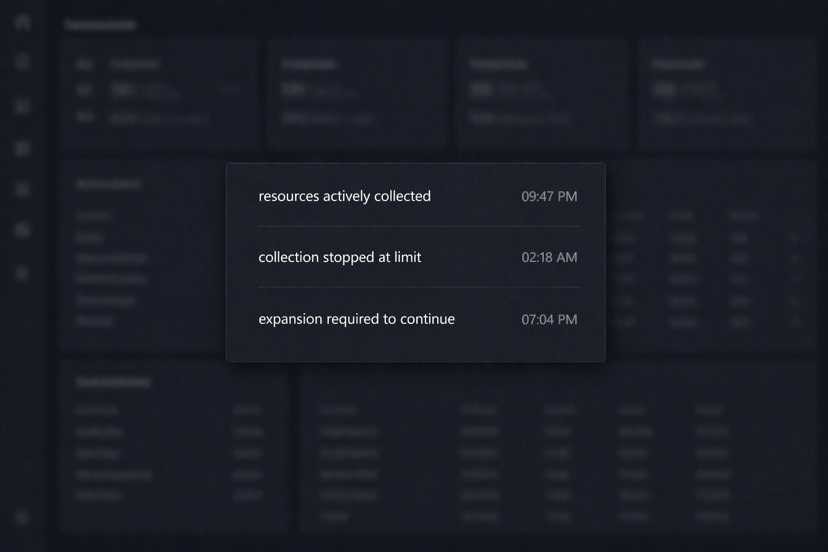
The inventory limit and the withdrawal limit in Pixels work simultaneously. Resources don't come in. Tokens don't go out. The moment of hitting the first limit doesn't coincide with the moment of hitting the second.
At launch, there were 771 million PIXEL tokens in circulation. Once the limit is reached, new resources aren't added—without a separate notification.
I calculated my expansions over two months. Each transaction seemed small. The total—did not.
The start is cheap. The end determines the entire value of progress. But the strategy decision is made at the start—when the limit isn't visible yet.
Have you checked how much you paid for storing what you've already earned?
