
Hey fam, today we're not just grinding for airdrops. Last week on April 15th, @Pixels quietly dropped a huge update—Tier 5. I've been analyzing it for days, and the more I dig, the more I feel this move is pretty slick. We gotta break it down together.
So what exactly did Tier 5 update? In a nutshell: the official crew set up a 'revenue pipeline.'
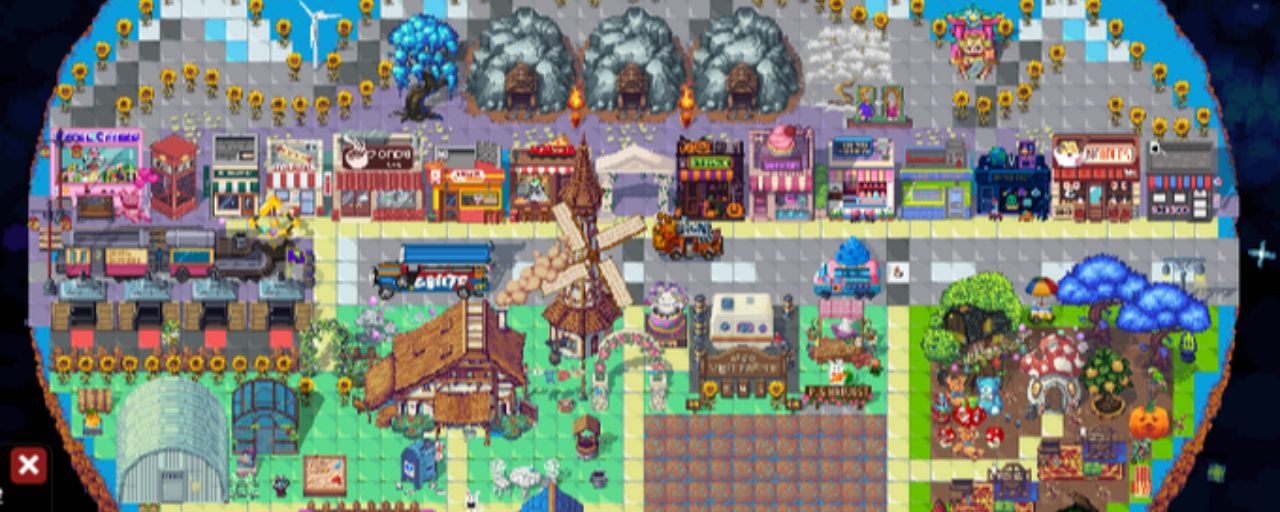
Specifically, Tier 5 added 105 new recipes, a new land slot system, and a revamped Deconstructor. All these features are exclusive to NFT land. The kicker is, Tier 5 isn't just a perk for regular land—you need NFT Land to build T5 industrial structures. And it doesn't stop there; you gotta head over to the Terra Villa HQ shop to grab Slot Deeds to activate production. One Deed unlocks 20% of T5 production capacity for 30 days, and when that expires, you need to use a Preservation Rune to renew it.
Translation: Players who own NFT land need to keep spending to maintain it so that the T5 factory can run. Rune can be traded between players, effectively creating a marketplace for 'land maintenance consumables'. What do they produce? All high-end processed goods and materials, no low-end junk—Master Metalworking, Woodworking, Stoneshaping, and even an Estate Winery Kit to build your own winery, along with advanced resources like Verdant Soil and Hammeroot Tree.
First reaction: Isn't this just the 'maxed enchantment materials' logic from traditional games? High-end players invest in building factories, producing rare materials to sell to those who need to enhance their gear. Money circulates between players, while the official team collects 'taxes' through land expansion fees, Deed fees, and Rune consumption. This is the economic closed loop that blockchain games should have—it's not about printing money and rewarding everyone to sell, but about allowing investors to profit and keeping the system alive through service fees.
On a deeper level: The design of the economic cycle is more sophisticated than you think.
Let me dig deeper. The Tier 5 update of Pixels isn't just some random 'new level'; it has three layers of goals in its design.
First layer, empowering NFT land. You all know that the biggest fear for blockchain game land is 'buying it and not knowing what to do'. Only NFT land can build Tier 5, directly providing landowners with a clear path to profit. Your land isn't just a decoration; it's a factory for producing high-end goods.
Second layer, stimulating trade between players. Preservation Rune can be traded between players, and materials produced by T5 serve as ingredients for other advanced recipes. The entire T5 is a collaborative supply chain, not a single-player closed-loop system.
Third layer, the official team continuously generates real income. Slot Deeds are sold in the official store, Rune renewals create ongoing consumption, and advanced recipes drive more trading. The official team doesn't survive by selling printed coins, but by making money through providing 'game services'. This approach is reminiscent of traditional games, yet retains Web3's asset ownership.
What role does PIXEL play in the entire system?
PIXEL is not a direct consumable for T5, but it is the lifeblood of the entire ecosystem. Building T5 industries requires land NFTs, and buying land costs PIXEL. Buying Slot Deeds, trading Preservation Rune, buying and selling T5 high-end materials—all these transactions ultimately revolve around the pricing and settlement of PIXEL. PIXEL is the base token for minting assets, joining guilds, and leveling up; you need it to participate in key actions within the game. The more prosperous T5 is, the higher the on-chain transaction frequency of PIXEL, and the stronger the demand.
Moreover, I've noticed that the design team at Pixels cleverly embedded a point in T5: the industrial operations from T1 to T4 are completely unaffected and continue to run normally. This means that new players and non-NFT landowners won't be eliminated by T5; they can still farm and produce to earn $PIXEL in lower tiers. T5 is an advanced gameplay option for high-level players, not a pressure for everyone to buy land. This 'layered design' allows players at different stages to have suitable content, avoiding the awkwardness of 'you can't play without spending money'.
Why is the economic model of Pixels worth a serious look?
Let me be honest with you, 90% of projects in the blockchain gaming space can't sustain their economic models for more than three months. The reason is simple—everyone is frantically issuing coins as rewards for players but has no mechanism designed to 'recycle money'. The coins just keep multiplying, selling pressure increases, and eventually, the token goes to zero and players leave.
Pixels has taken a completely different path. They use the RORS (Return on Reward Spending) engine to ensure that for every $PIXEL issued, there must be at least equivalent protocol revenue generated. Multi-game staking allows the community to decide the flow of resources. The T5 update is the practical implementation of the RORS logic in higher gameplay—creating a symbiotic relationship between paying and free players, allowing the official team to survive on services rather than money printing.
In short, Pixels isn't just making a 'money-making game', but building an 'economic entity that can survive'.
True words from me.
Of course, I can't tell you that as soon as Tier 5 drops $PIXEL , it's going to take off. The next wave of token unlocks is coming on April 19, and who knows what the short-term price fluctuations will be. T5 has only been online for a little over a week, and player acceptance, material pricing, and Rune market liquidity are still in the early exploration phase.
But what I really care about is the direction. After so many years in the blockchain gaming space, we finally have a team that no longer relies on empty promises and token giveaways to attract daily active users but is seriously designing economic rules that allow the ecosystem to operate autonomously. Tier 5 isn't just a flashy update; it's a signal: the Pixels team understands economics.
What do you all think about this 'landlord building factories' gameplay of Tier 5? Are there any big shots who have already picked up Slot Deeds to share their experiences? Let's chat in the comments!
