


Alright, so everyone's hyped about Pixels Chapter 2. New graphics, new crafting, new "economy" — yeah, yeah. But if you actually played Chapter 1 and you're thinking your grind just carries over smoothly? Buddy I've got some bad news.
This isn't an update. It's a rebuild. And most people are about to learn that the hard way.
Your Old Stuff? It's Basically Decorative
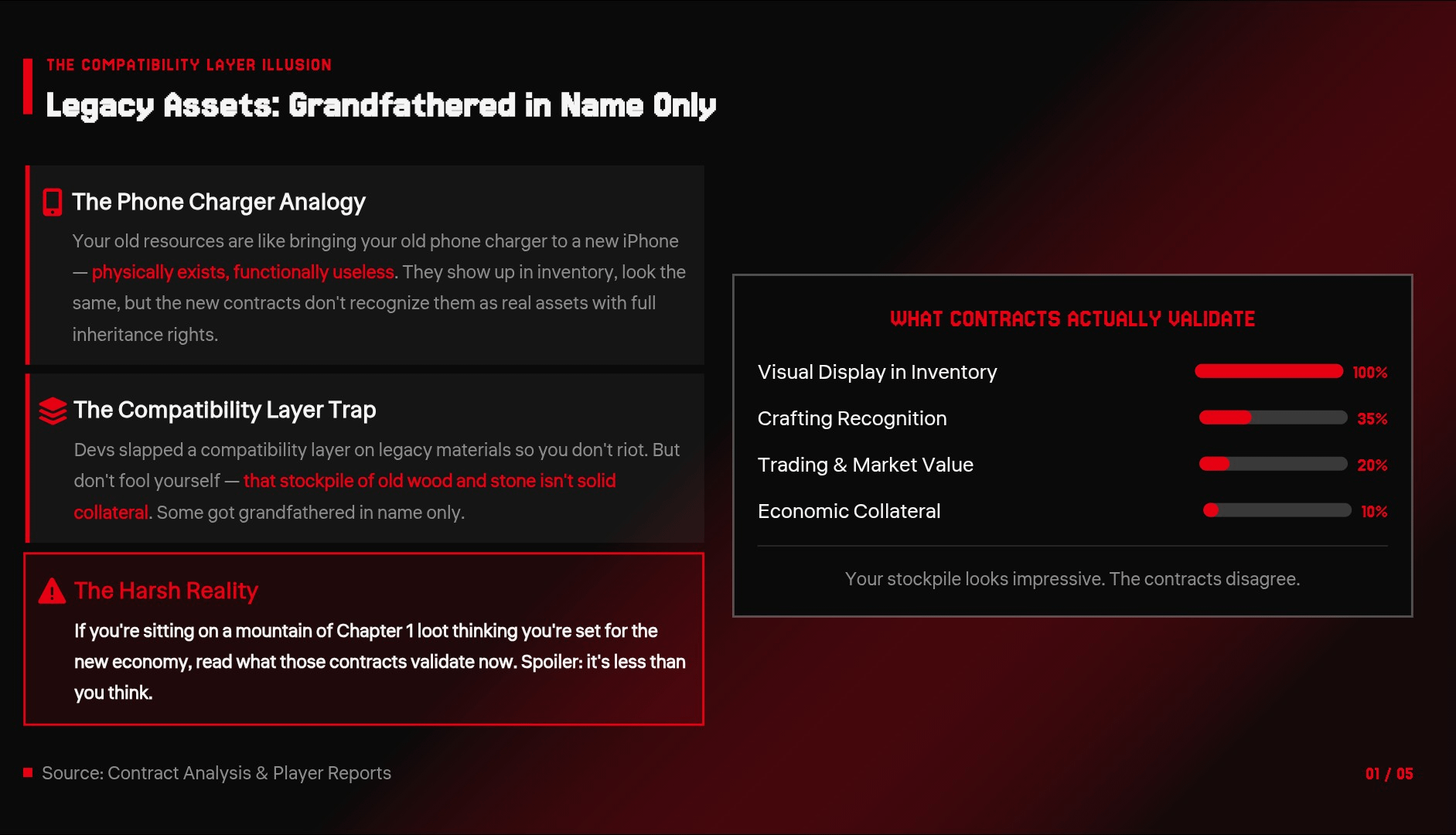
Here's the thing nobody's saying out loud: your Chapter 1 resources don't actually work the same way anymore. Sure, they show up in your inventory. They look the same. But under the hood? The new contracts don't recognize them as "real" assets with full inheritance rights. It's like bringing your old phone charger to a new iPhone — physically exists, functionally useless.
The devs slapped a compatibility layer on legacy materials so you don't riot, but don't fool yourself into thinking that stockpile of old wood and stone is solid collateral. Some of it got grandfathered in name only. If you're sitting on a mountain of Chapter 1 loot thinking you're set for the new economy, you might want to actually read what those contracts validate now. Spoiler: it's less than you think.
They Killed the Open World (Sort Of)
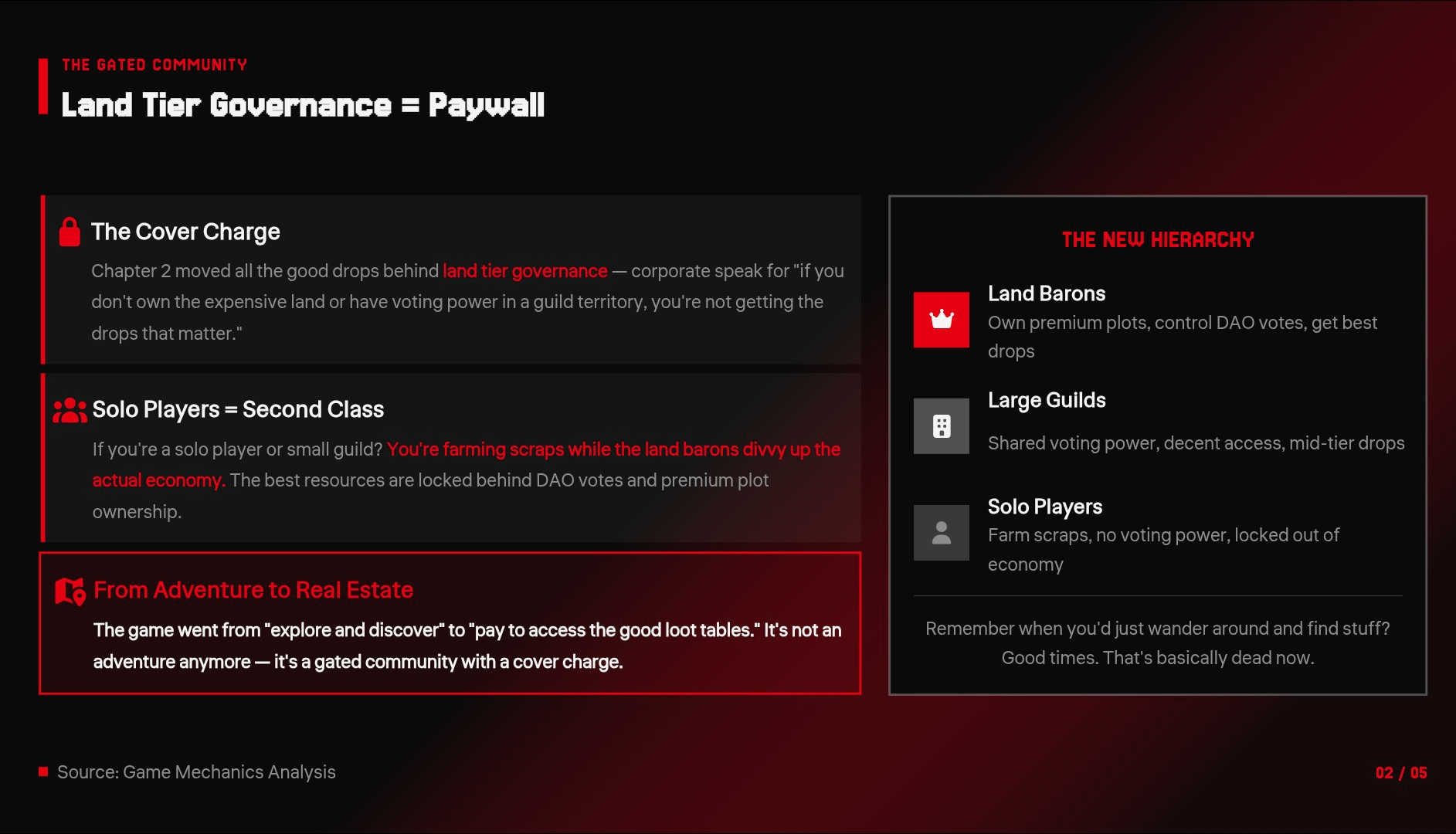
Remember when you'd just... wander around and find stuff? Good times. That's basically dead now.
Chapter 2 moved all the good drops behind land tier governance, which is just corporate speak for "if you don't own the expensive land or have voting power in a guild territory, you're not getting the drops that matter." The game went from "explore and discover" to "pay to access the good loot tables." It's not an adventure anymore — it's a gated community with a cover charge. The best resources are locked behind DAO votes and premium plot ownership. If you're a solo player or small guild? Yeah, you're farming scraps while the land barons divvy up the actual economy.$币安人生
PIXEL Is Thirsty and There's Nothing to Drink
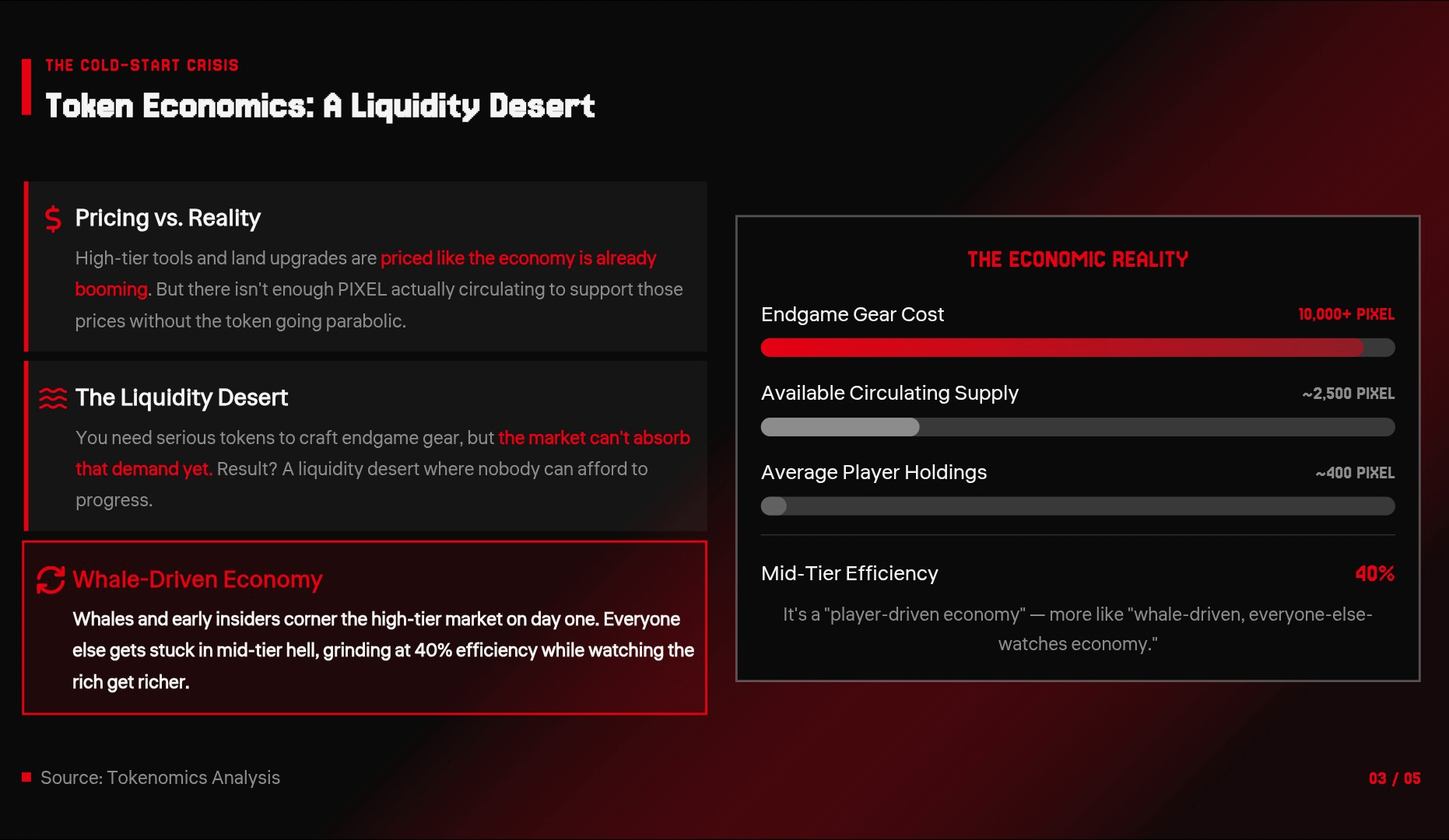
This one's my favorite. The high-tier tools and land upgrades are priced like the economy is already booming. But here's the reality: there isn't enough PIXEL actually circulating to support those prices without the token going absolutely parabolic — or more likely, creating a liquidity desert where nobody can afford to progress.
You need serious tokens to craft endgame gear, but the market can't absorb that demand yet. So what happens? The whales and early insiders who do have liquidity corner the high-tier market on day one. Everyone else gets stuck in mid-tier hell, grinding at 40% efficiency while watching the rich get richer. It's a cold-start crisis dressed up as "player-driven economy." More like "whale-driven, everyone-else-watches economy."
Ronin Mirroring Is Playing With Fire
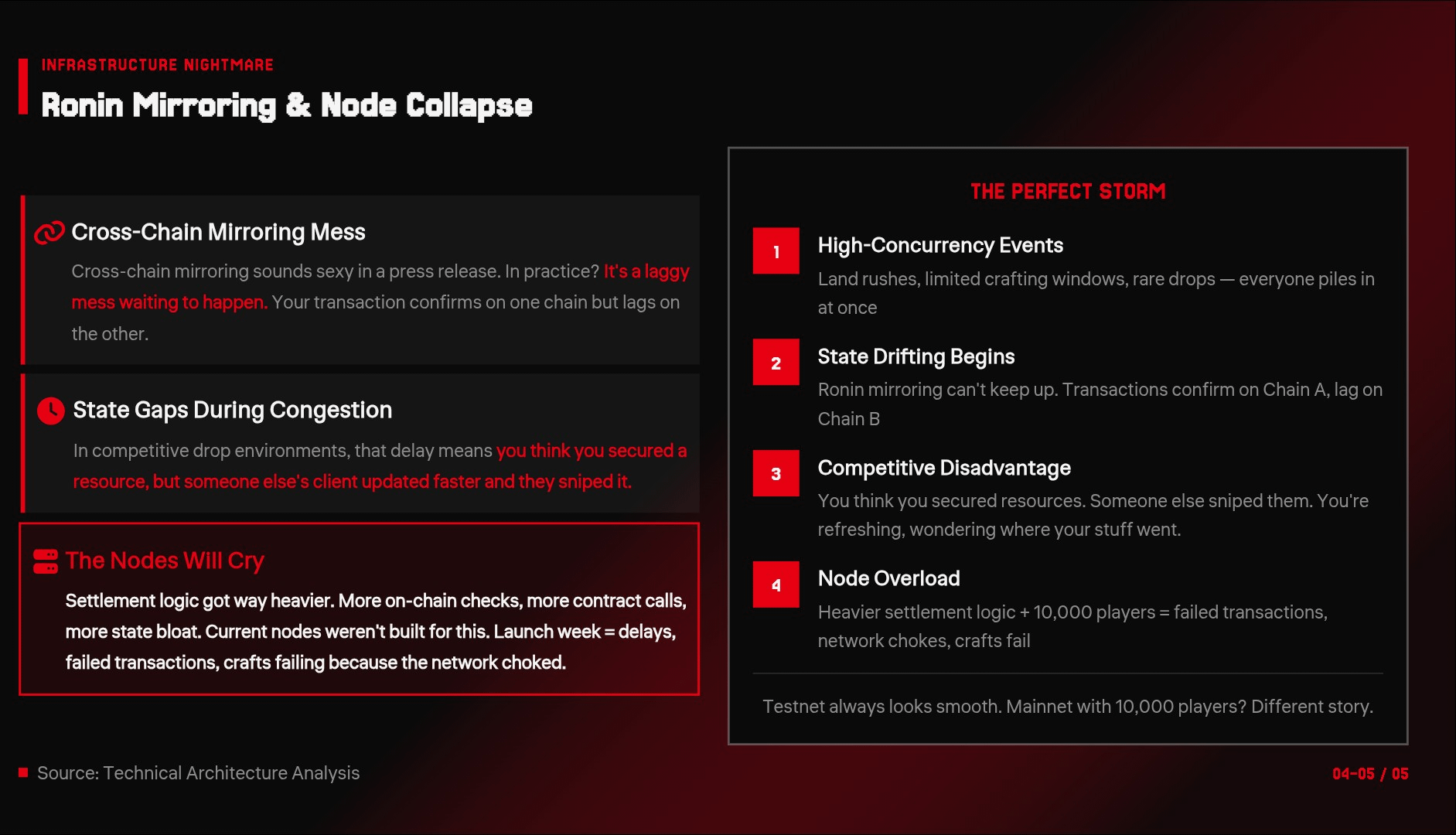
Cross-chain mirroring sounds sexy in a press release. In practice? It's a laggy mess waiting to happen.
When you've got high-concurrency events — land rushes, limited crafting windows, rare drops — the state mirroring across Ronin starts drifting. Your transaction might confirm on one chain but lag on the other. In a competitive drop environment, that delay means you think you secured a resource, but someone else's client updated faster and they sniped it. Meanwhile you're sitting there refreshing, wondering where your stuff went.
This isn't theoretical. State gaps during congestion are basically guaranteed, and they'll hit hardest during the first big community events when everyone's piled in at once. Good luck with that.
The Nodes Are Gonna Cry
Oh, and the settlement logic got way heavier. More on-chain checks per action, more contract calls, more state bloat. The current nodes weren't built for this. Launch week, when everyone's hammering the system simultaneously? Expect delays, failed transactions, and that lovely feeling of watching your craft fail because the network choked.$MOVR
Testnet always looks smooth. Mainnet with 10,000 players? Different story.
Here's What I'd Actually Do
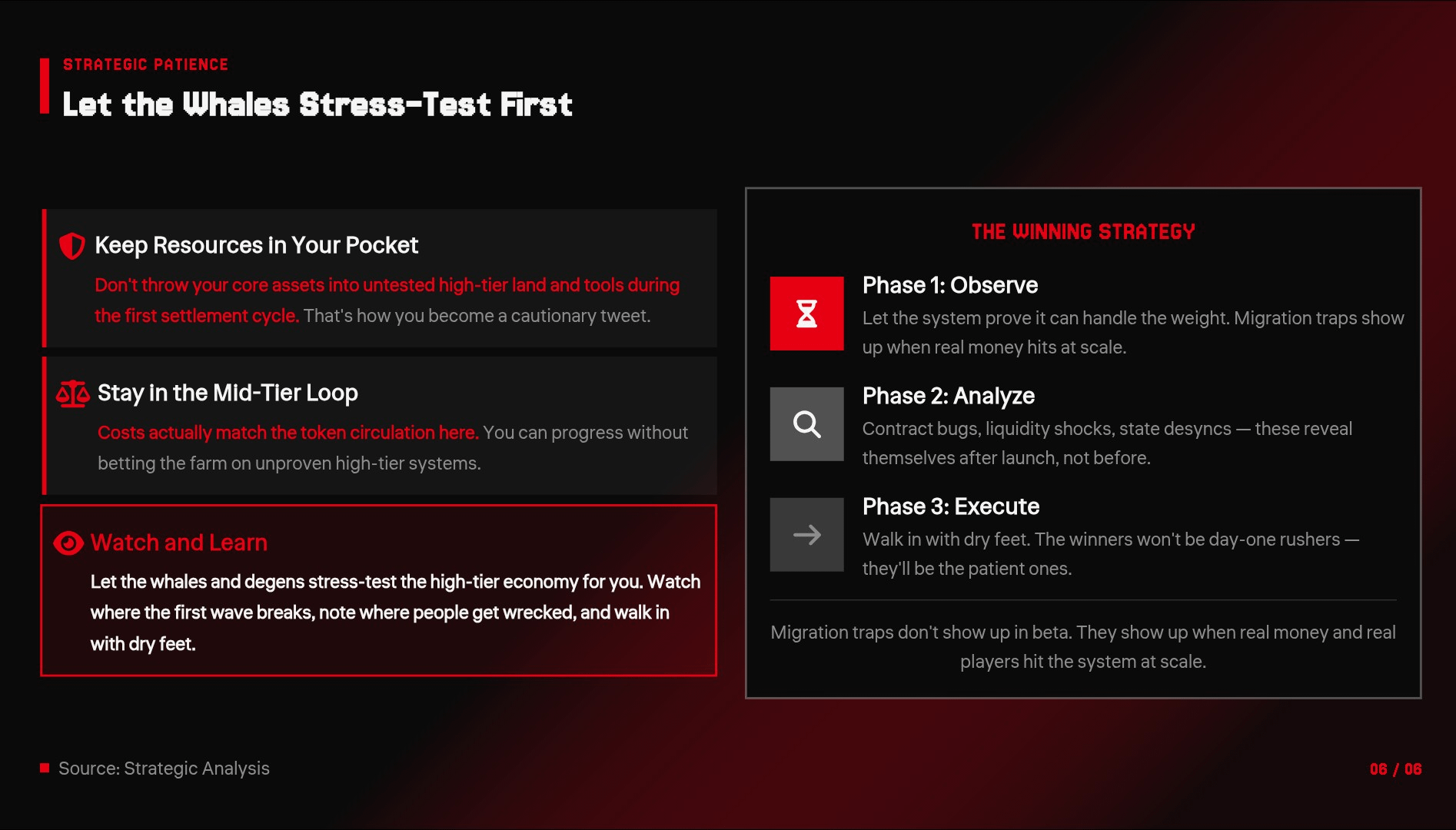
Look, I know the FOMO is real. New chapter, new systems, everyone's racing to be first. But throwing your core assets into untested high-tier land and tools during the first settlement cycle? That's how you become a cautionary tweet.
Migration traps don't show up in beta. They show up when real money and real players hit the system at scale. Contract bugs, liquidity shocks, state desyncs — these love to reveal themselves after launch, not before.
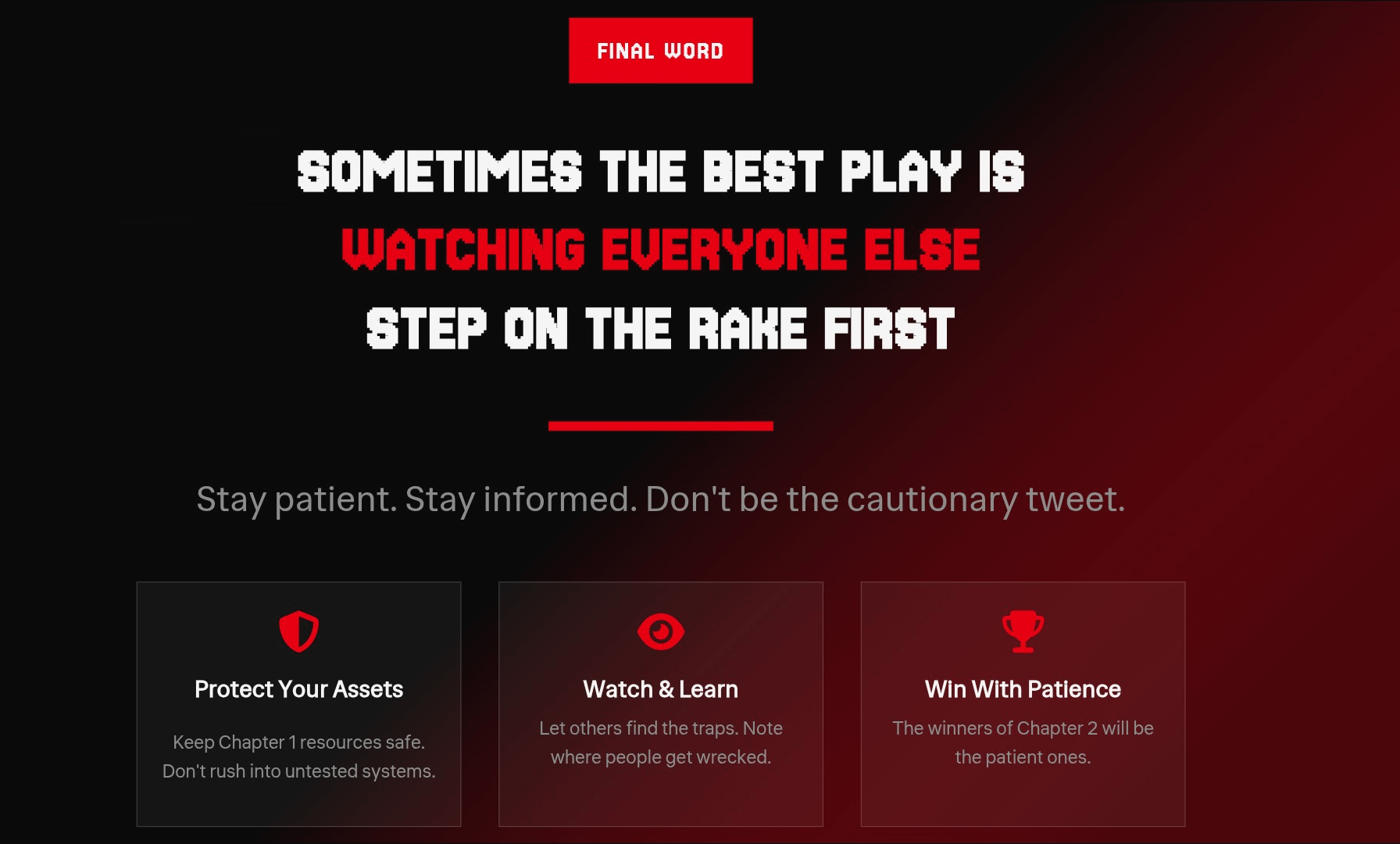
My honest advice? Keep your Chapter 1 resources in your pocket. Stay in the mid-tier loop where costs actually match the token circulation. Let the whales and the degens stress-test the high-tier economy for you. Watch where the first wave breaks, note where people get wrecked, and walk in with dry feet.
The winners of Chapter 2 won't be the day-one rushers. They'll be the patient ones who let the system prove it can handle the weight before they stacked their bags on it.
Sometimes the best play is watching everyone else step on the rake first.