
Lately, I've been hanging out in a few coffee shops in Shinjuku, glued to the charts and coding while watching the hustle and bustle outside, but my mind is completely filled with Pixels' on-chain data from the past half year—having been in the game since '17 as a seasoned trader and coder, I've seen my fair share of wild charts, but the data that Pixels has put out still left me staring at the screen in silence for a long time!
You see, from the start of last year to the end, the number of paid players for Pixels shot up by around 75%, and the DAU is as steady as a rock. By all accounts, this is textbook bullish fundamentals in the Web3 gaming space, right? But if you flip over to the secondary market and check out Pixel's candlestick chart, the token price plummeted over 76% during the same period, crashing from over a dollar to just a few cents now—heading straight for a 99% drop. The player count and token price have formed a perfect 'X' intersection, completely opposite in direction, creating a serious tug-of-war!
This is definitely not a coincidence of major players washing out or market manipulators controlling the game; it reveals the most fatal and fundamental structural contradiction in Web3 gaming today: the "real players" coming to play games and the "token investors" looking to cash in fundamentally want completely opposing things!
Players want endless revelry and generosity.
Let's start from the player's perspective—if you're grinding daily in the game, farming, chopping wood, and completing tasks, what do you look forward to the most? Of course, it's the project team issuing benefits and increasing token output! The more generous the in-game incentive mechanism, the more pixels free players can grab, and the happier the landlords who bought land NFTs collecting rent; the profits distributed by major gold farming guilds to their members will also be more substantial!
From the user's perspective, everyone naturally loves "generous" projects. As long as you're issuing tokens, we’re in; after all, more tokens mean my daily ROI is increasing, and my time investment receives tangible material feedback—this is human nature, no argument there!
What investors want is extreme deflation and stinginess.
But, brother, if you switch accounts and see yourself as a secondary market investor holding tens of thousands of $PIXEL waiting to get rich, how does the project’s random rewards affect your blood pressure?
Think carefully about the economic implications behind this—every time a token incentive is issued in the game, the inflation pressure on the entire economic model increases! We previously audited Pixels' economic model, and for a period, its ROR (Return on Rewards) was basically stable around 0.5. What does this mean? It means that for every 100 PIXELs the project team throws into the game pool, only 50 will be funneled back into the system's black hole by players through buying stamina, upgrading items, or purchasing various consumables. Where did the other 50 go? All got withdrawn by players and dumped into the liquidity pool of decentralized exchanges!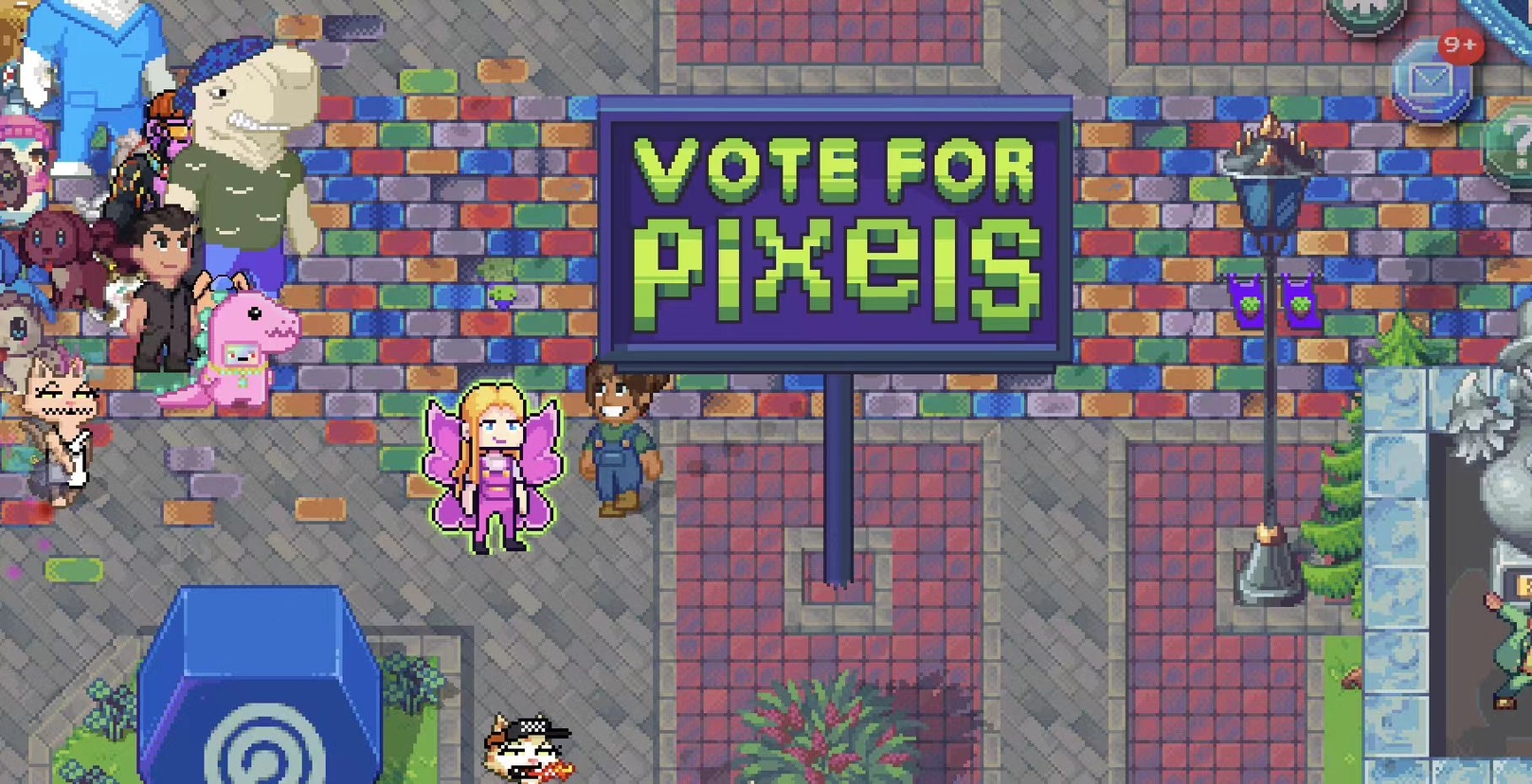
These 50 PIXELs that were mercilessly dumped are sweet "passive income" for gold farmers, but for token holders, it’s a bloody "net selling pressure"! To maintain the token price from crashing, investors wish the project team would become stingy, ideally cutting all gold production and continuously repurchasing and burning tokens to inflate the price to the sky—so you see, investors are inherently fond of "stingy" teams!
The inner turmoil of spiritual shareholders and die-hard players.
This twisted conflict reminds me of a US stock I bought years ago. At that time, I was both a heavy user of the company and a retail shareholder. Their product experience was fantastic, and prices were heavily subsidized, so I was thrilled as a user; but every earnings report, I wanted to scream because the subsidies led to a horrendous gross margin—the larger the user base, the worse the company lost, and the stock price dropped like nobody's business!
At that time, my mind had two little guys fighting: the user little guy shouted, "Keep it low, don’t raise prices!", while the shareholder little guy roared, "Raise prices ASAP to fix the financials!"—in the end, I couldn’t stand this mental exhaustion anymore and liquidated my stocks, happily continuing as a free user, because I came to realize one truth: these two demands can never be reconciled in one person!
Web3 games have magnified this pain by more than tenfold. Why? Because in the traditional Web2 business world, "consumers" and "shareholders" are usually two distinct groups. Company management can find a delicate balance between these two through boards, shareholder meetings, and various governance structures. But in our Web3 world, NFT holders, token flippers, and hardcore players who are online daily often share the same wallet address!
You are both the "worker" in the game yearning for high yields and the "major shareholder" going crazy watching your assets shrink on exchanges. This battlefield of conflict is no longer the corporate governance meeting room; it has directly shifted into the minds of every participant—this means that no existing DAO governance mechanism can perfectly solve this internal strife!
Pixels' trump card: to protect the user base, offend the capital side.
Since it's impossible to please both sides, the project team must make a single-choice question—should they maintain daily activity on the left or pump and protect the price on the right? From the recent actions over the past six months, Luke and the Pixels team have decisively put all their chips on the "player" side!
Especially after the Chapter 2 update, they clearly stated they wanted to tilt the in-game reward mechanism towards those real players with deep experiences. Coupled with the LiveOps engine codenamed Stacked and increasingly brutal anti-bot mechanisms, they are actually building a real virtual economy rather than a Ponzi scheme! Even after experiencing the super unlocks this April with tens of millions of tokens being dumped, they did not massively cut the earnings line for the underlying players to stabilize the token price!
Look at their recent Tier 5 industrial system. To maintain high-level digital production at full capacity, a "Slot Deed" may consume thousands of PIXEL each month—this indicates that the team's focus is entirely on how to make the game fun and increase in-game consumption scenarios. They are trying to digest inflation by extending the lifecycle rather than simply cutting production arbitrarily!
The results are evident: they preserved the user base, with paying users and real DAU steadily increasing, but they also seriously offended the capital side, causing the token price to hit rock bottom and grinding the early high bidders into the dirt repeatedly!
A survivor game with no standard answers.
Honestly, it's impossible to definitively say who's right or wrong on these two paths; it's a brutal game of survivor bias!
In the early days, the leading token Axie decided to side with the "investors" when the death spiral began. They violently slashed SLP production, which did lead to a temporary bounce in token prices, but at what cost? The price was a massive loss of the underlying F2P (free-to-play) players, causing the entire ecosystem's popularity to plummet, and it hasn't recovered since!
And now, Pixels has chosen another path, prioritizing player interests, letting the token hover at the bottom or even continue to decline—what kind of model can survive the long bear market and make it to the next explosive bull market? As a technical auditor, I've run many models, but I can only say: no one can predict the future, but once you've picked a side, you must grit your teeth and swallow the bitter fruits of the other side!
Reshaping the valuation logic of blockchain games: buy what you want, play what you want.
These bloody on-chain data have completely reshaped my methodology for evaluating blockchain gaming projects as an old coder—previously, I always had an unrealistic fantasy, thinking that "as long as the game is awesome, with good graphics and high playability, the token price should skyrocket along with it"; if the game is fun but the token price is tanking, I’d think it's the secondary market being blind, a "misalignment of value discovery"!
But Pixels taught me a lesson with its tens of millions in revenue and cold price trends: the skyrocketing game business data and the sluggish token price can coexist structurally and for a long time—that’s not market misalignment; it's the norm that inevitably arises under a dual-track model!
So, next time we brothers look at any Web3 game project, stop asking, "Is this game fun?" or "Can this coin go up?" First, you need to ask a soul-piercing question: who is this operating team really serving right now?
If the project team's Twitter and Discord are constantly shouting about "optimizing certain systems," "adding new gameplay," or "increasing the airdrop quotas for loyal players"—listen carefully, this is a classic "player first" strategy. The ecosystem will thrive, but the token price might cause you some heartburn;
Conversely, if the project team is constantly announcing how much they’ve repurchased and burned tokens this month, or they’ve launched an ultra-deflationary staking mechanism, or reached strategic partnerships with market makers to stabilize the market—this is absolutely the "investor first" playbook, which can create a wealth effect in the short term, but the game might be dead in three months!
Both sets of logic are reasonable in the current chaotic industry, but as the one putting real money on the line, you must be clear about what you are actually buying—if you want to see your account balance skyrocket, stay away from projects that obsess over "gameplay" and "player benefits"; if you want to have fun in the game and feel the joy of virtual world progression, don't expect the tokens in your wallet to take you to the next level!
Back to Pixels, it's currently the extreme representation of "player interest first"! If you're a hardcore Web3 gamer, you're likely to have a great time in the next year or two because the mechanism will continuously reward your online time and deep interactions. But if you're just an investor watching K-lines, I'd advise you to let go of your illusions early, because until the team signals a clear strategic shift to "tighten the faucet," it's likely to continue racing down this "low-price, high-yield" muddy road for a long time!
You can't have your cake and eat it too. Since Pixels has already cast its vote for the players, we as bystanders need to face reality and go with the flow; that's the only rule for surviving in the dark forest of Web3!
